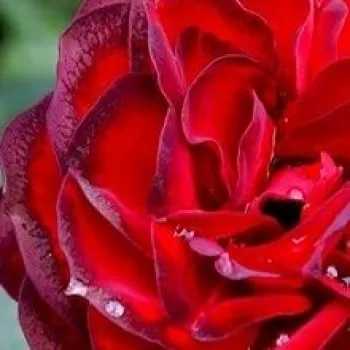
A PESTI SRÁCOK EMLÉKE – dark red bedding floribunda rose
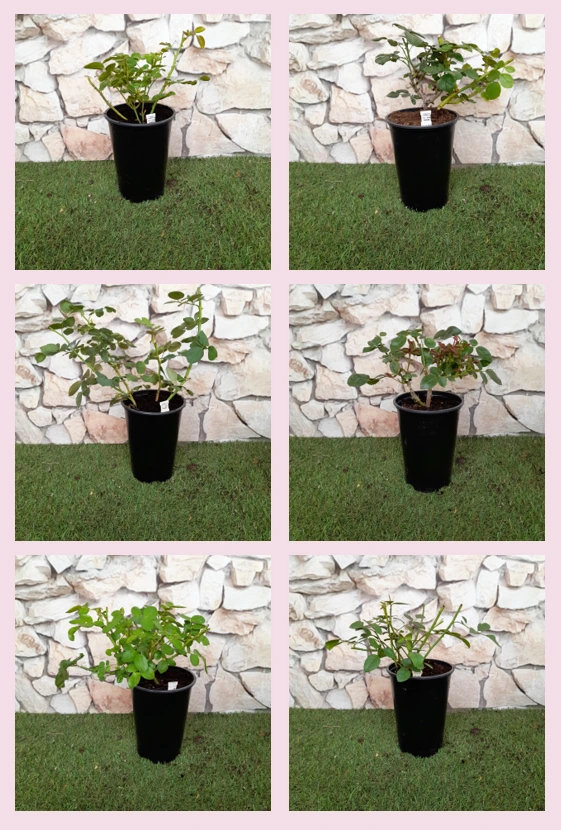
Think of a sheltered seaside veranda, sun on the shingle and a fresh breeze off the water, as A PESTI SRÁCOK EMLÉKE settles in with quietly reliable colour, compact habit and season-long rebloom. This dark red floribunda is bred for straightforward maintenance, keeping its foliage clean and healthy with notably strong disease resilience. Own-root planting supports long-term stability and steady regrowth, ideal where pots may dry quickly and borders face blustery, salty air, helping roots anchor securely and manage moisture on exposed coastal plots. In a typical family garden it fits neatly into beds, low hedging and generous containers, developing roots in the first year, structure in the second and full ornamental value by the third, so you can enjoy dependable impact and relaxed weekend refreshment.
Usage options
| Target area |
Reasoning |
| Compact front garden bed by a coastal driveway |
The bushy, compact habit and moderate height create a low, tidy edge that does not overwhelm a small plot, while the good heat and drought tolerance suit sunny Cornish or Devon driveways with free-draining soil – an easy option for the busy homeowner. |
| Coastal veranda in a large container (40–50 litres+) |
Reliable, clustered flowering and medium self-cleaning mean regular colour with only occasional deadheading in a big pot, while own-root growth helps the plant recover if containers dry or rock in the wind – reassuring for the balcony and veranda gardener. |
| Mixed border with grasses and evergreens |
The rich dark-red cups stand out against silvery or grassy textures, and the compact spread fits neatly between perennials; being partly pollinator-friendly, it adds life and movement without demanding complex care – ideal for the relaxed mixed-border planner. |
| Low flowering hedge along a path or terrace |
Regular remontant flowering and good colour retention give a long ribbon of dark red along paths, while planting at 40–50 cm apart forms a dense, manageable line that stays within easy pruning height – practical for the family-pathway designer. |
| Urban courtyard or mews garden |
The compact size, low maintenance requirement and strong disease resistance suit tight, overlooked spaces where spraying and complex routines are unwelcome, delivering dependable structure and bloom in limited soil – perfect for the time-pressed city gardener. |
| Small family lawn island bed |
Its uniform, velvety dark-red clusters provide a clear focal point visible from windows and seating, and the own-root form supports a long lifespan, allowing the shrub to mature gracefully without frequent replacement – attractive to the long-term planner. |
| Exposed but sheltered-from-the-worst coastal corner |
Good anchoring and moisture management in windy, showery sites help it cope with blustery weather near the sea, provided the spot is sunny and reasonably drained, giving reliable structure where other plants may fail – reassuring for the coastal-style enthusiast. |
| Community or shared front garden border |
The premium overall quality, steady regrowth on its own roots and straightforward pruning needs make it a dependable, low-intervention choice for spaces tended by several people, reducing the risk of loss after harder pruning – practical for the shared-space gardener. |
Styling ideas
- Crimson-Ribbon Border – run a low line of A PESTI SRÁCOK EMLÉKE along a shingle or gravel path, where its compact habit and repeating clusters frame movement – for lovers of ordered but easy-care garden structure.
- Harbour-Veranda Pot – plant one or three shrubs in a 40–60 litre container with fine-textured Festuca or Calamagrostis, letting the deep red flowers rise from a soft grass skirt – for coastal veranda owners seeking long-season colour.
- Seaside-Sundown Bed – weave this dark red floribunda through sea kale and low euonymus in a sunny, well-drained bed to echo sunset tones against cool foliage – for gardeners wanting drama with minimal maintenance.
- Family-Front Feature – place a trio in a small island bed near the front door, where tidy growth and self-cleaning blooms keep things smart between occasional tidy-ups – for busy families who prefer quick weekend gardening.
- Urban-Classic Strip – line a narrow city border with evenly spaced plants, using their uniform height and disease resistance to create a simple, formal edge that stays presentable year-round – for town gardeners favouring reliable structure.
Technical cultivar profile
| Property |
Data |
| Name and registration |
A PESTI SRÁCOK EMLÉKE – dark red bedding floribunda rose by Márk; floribunda shrub rose type for beds and borders, marketed in the Bedding rose collection with verified cultivar authenticity. |
| Origin and breeding |
Bred by Hungarian rosarian Márk Gergely around 2000 from ‘II. Rákóczi Ferenc emléke’ × ‘Ama’ (Kordes, 1955); introduced to the market by PharmaRosa® Ltd. in 2006 as a premium garden rose. |
| Growth and structural characteristics |
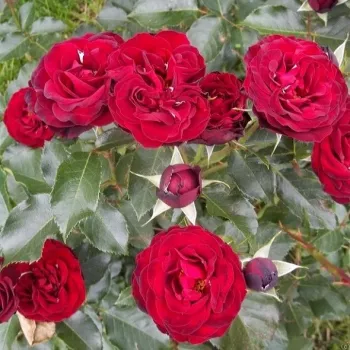
Bushy, compact shrub reaching around 60–80 cm high and 60–85 cm wide, with moderately dense, mid-green matt foliage and moderate prickliness; well suited to bedding, edging and low hedge uses. |
| Flower morphology |
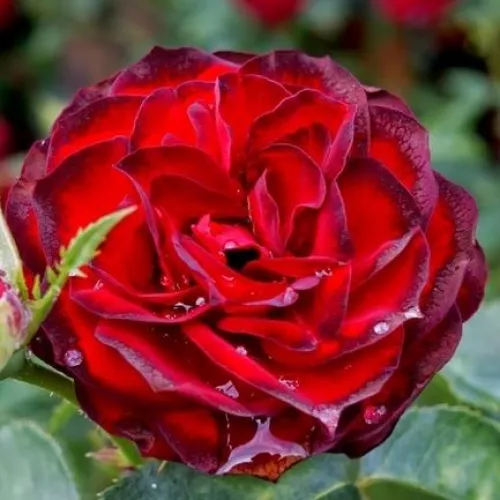
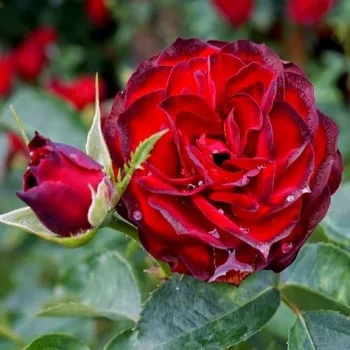
Semi-double, medium-sized cupped blooms in clusters, typically 13–25 petals per flower; remontant with a notably abundant second flush, delivering extended ornamental value across the main season. |
| Colour data and phenology |
Uniform deep dark-red to burgundy tone, ARS dark red, RHS 187A–187B; colour holds well with only slight lightening in strong sun, maintaining an intense, velvety appearance through successive flushes. |
| Fragrance and aroma |
Classified as a scentless rose with no noticeable fragrance, so it is chosen primarily for its strong visual effect, sustained colour display and practical landscape performance rather than perfume. |
| Hip characteristics |
Produces spherical red hips around 10–14 mm diameter in moderation, adding discreet seasonal interest without overwhelming the plant, useful for subtle late-season texture and wildlife support. |
| Resistance and winter hardiness |
Shows good resistance to powdery mildew, black spot and rust; hardy to approximately −21 to −18 °C (RHS H7, USDA 6b, Swedish zone 3), tolerating summer heat and moderate drought reliably. |
| Horticultural recommendations |
Best in full sun with reasonable drainage; low maintenance with simple pruning and occasional deadheading; plant 40–75 cm apart depending on hedge, mass, or specimen use and water well until established. |
A PESTI SRÁCOK EMLÉKE brings compact structure, long-season dark-red flowering and durable health in an own-root form that ages gracefully, making it a thoughtful choice for relaxed coastal or family gardens.