Aerie – hybrid tea rose for coastal-style family gardens
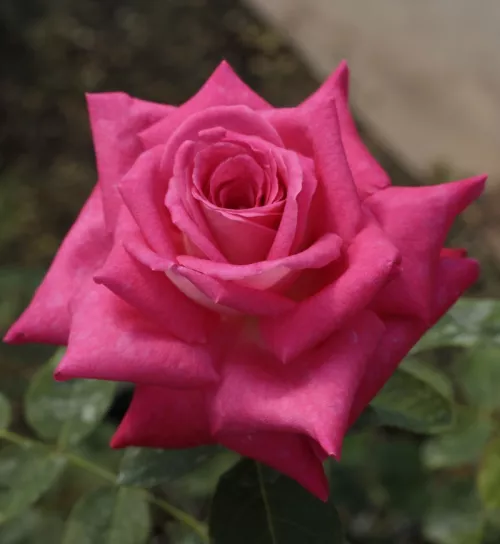
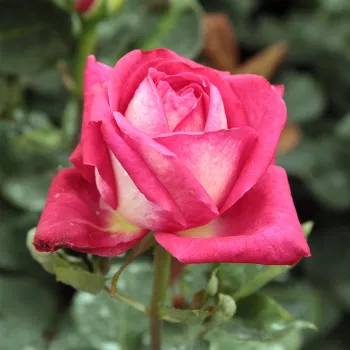
Bring a sense of windswept seaside calm to your garden with Aerie, a refined hybrid tea rose that works beautifully in compact beds and containers while coping well with breezy, exposed plots and reliably managing heavy, moisture-laden soil conditions. Its upright, well-branched habit and dense dark green foliage give a quietly architectural presence, while the large, high‑centred blooms unfurl in shades of mid‑pink with a silvery sheen, echoing sun on ripples of water. Bred by Rosen Tantau for garden and cutting use, this own‑root rose offers dependable repeat flowering and a remarkably strong perfume that drifts across a terrace or veranda, ideal for evening tea after a walk on the beach. Planted in a roomy 40–50 litre container or a well‑drained border, it establishes steadily – roots in the first year, more generous shoots in the second, and full ornamental value by the third – rewarding minimal, regular care with years of longevity.
Usage options
| Target area | Reasoning |
|---|
| Compact coastal-style flower bed near a seating area |
The very strong, garden-filling fragrance and high-centred hybrid tea blooms make Aerie perfect beside a bench or veranda where you can enjoy scent at close quarters. Consistent perfume turns short seaside evenings into an experience for scent-focused homeowners |
| Feature rose in a 40–50 litre container on a veranda |
Aerie’s upright habit and dense foliage suit deep containers, where good drainage and a sheltered wall create a calm microclimate in breezy gardens. This makes it an easy choice for those wanting impact in limited space for urban balcony gardeners |
| Small family garden focal point in mixed planting |
The strong, mid-pink flowers with silvery reverse create a distinct colour accent that pairs well with sea kale, Festuca, dwarf lavender or coastal-style planting, giving structure without overwhelming other plants for design-conscious beginners |
| Cutting patch for home-cut hybrid tea roses |
Long-stemmed, high-centred flowers and repeat flushes mean you can cut for the vase without stripping the garden of colour. Aerie bridges decorative borders and indoor arrangements with minimal effort for home flower arrangers |
| Low-maintenance own-root planting in family borders |
Being grown on its own roots supports long-term stability and reliable regrowth if stems are damaged, helping maintain an even shape and ornamental value over many seasons with straightforward pruning for time-pressed garden owners |
| Coastal garden with wind and moisture-prone soil |
The rose handles rain and wind well when planted in well-prepared, free-draining soil that copes sensibly with coastal weather and heavier ground, providing structure where other shrubs may struggle for coastal veranda gardeners |
| Heat-exposed, south-facing patio corner |
Good heat tolerance allows Aerie to flower through warm spells, provided watering is regular in prolonged drought. This keeps flowers coming from early summer onwards without complicated care routines for busy working households |
| Long-term structural rose in a maturing family garden |
Aerie’s medium maintenance needs, solid winter hardiness and own-root resilience make it a sound long-term choice, gradually building into a stable, upright shrub that anchors planting schemes as the garden develops for long-range planners |
Styling ideas
- Veranda Retreat – Place Aerie in a large clay pot with dwarf lavender and a low Festuca tuft to echo dune grass, ideal for those creating a calm, coastal-inspired sitting corner – relaxed seaside aesthetes
- Shell Walk Border – Line a shingle path with spaced Aerie plants and sea kale, letting the pink blooms rise above pale gravel for a beach-walk feel – homeowners favouring understated structure
- Tea-and-Roses – Position a single Aerie near a bistro set, underplanted with Carpathian bellflower to soften the base and extend colour – couples who savour quiet weekend mornings
- Cutting Corner – Dedicate a sunny bed to Aerie with simple green companions, so stems can be cut freely for vases without leaving gaps – practical gardeners who like flowers indoors
- Family Front Garden – Use Aerie as a focal shrub among low perennials and grasses, where fragrance and clear form welcome guests without high upkeep – families wanting smart but simple planting
Technical cultivar profile
| Property | Data |
|---|
| Name and registration |
Hybrid tea rose, registered as TANallepa, marketed as Aerie – a high-centred exhibition-type hybrid tea suited to both garden use and cutting, with verified cultivar authenticity for reliable performance. |
| Origin and breeding |
Bred by Hans Jürgen Evers for Rosen Tantau in Germany before 1991, registered in 1991 and introduced in 1994, combining classic hybrid tea form with strong colour and dependable garden behaviour. |
| Awards and recognition |
Gold Medal and Fragrance Award at Le Roeulx in 1998, First Prize at Baden bei Wien in 1999, and Silver Medal at The Hague in 2007, reflecting both ornamental quality and notable scent. |
| Growth and structural characteristics |
Upright, bushy plant 120–160 cm tall and 100–140 cm wide, with dense, slightly glossy dark green foliage and moderate prickles, forming a well-filled shrub when given sun and regular deadheading. |
| Flower morphology |
Large, fully double flowers with 26–39 petals, high-centred and pointed-budded in classic cut-rose style, borne mainly singly on stems, repeating with an especially abundant second flush in summer. |
| Colour data and phenology |
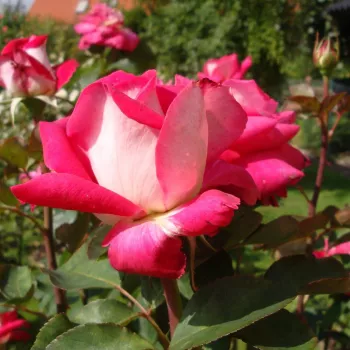
Mid-pink petals with silvery reverse; deep mauve-pink when opening, fading toward a pearly grey veil. Colour holds well in sun, with somewhat faster fading in cool, wet weather over the season. |
| Fragrance and aroma |
Very strong, garden-filling fragrance, recognised in international trials; precise scent notes are undocumented, but intensity is sufficient to perfume nearby seating areas and indoor rooms from cut stems. |
| Hip characteristics |
Hip set is limited due to very double flowers and routine deadheading; where present, hips are ovoid, 10–14 mm, orange-red, and mainly of ornamental rather than wildlife significance in most gardens. |
| Resistance and winter hardiness |
Hardy to around –21 to –18 °C (RHS H7, USDA 6b, Swedish Zone 3) with moderate resistance to black spot, mildew and rust; benefits from good air circulation and standard preventative care in damp summers. |
| Horticultural recommendations |
Best in full sun with fertile, well-drained soil; water regularly in dry spells. Suitable for beds, hedges, specimens and large containers, with medium maintenance and regular deadheading to renew flowering. |
Aerie Hybrid tea rose TANallepa brings strong fragrance, refined pink blooms and container-friendly structure, with own-root resilience for long-term coastal-style planting; a thoughtful choice if you value lasting beauty with manageable care.