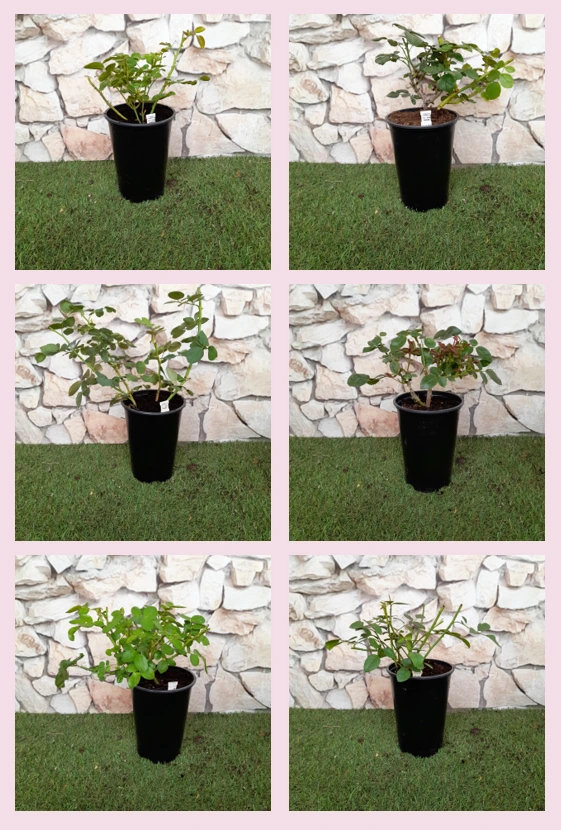
AHRENSHOOPER MÜHLENROSE – light pink bedding floribunda rose - Márk
Imagine a sheltered coastal veranda where the wind is softened by a low rose hedge and the air feels gently rinsed after rain: AHRENSHOOPER MÜHLENROSE settles in as a compact, bushy cushion of light pink blooms that cope calmly with brisk seaside days and well-drained clay that has been opened up for drainage. Its clusters of semi-double flowers repeat generously from early summer, giving a long, remontant season without complex care regimes. As an own-root rose it builds a solid framework over time, regenerating well and supporting a genuinely long lifespan in everyday family gardens. In a large 40–50 litre container or open ground it remains compact, ideal for smaller plots and shingle beds, with dense, mid-green foliage providing reliable coverage and structure. Over its first three years it quietly shifts focus from establishing roots, to building sturdy shoots, to delivering its full ornamental value in a relaxed, seaside-friendly rhythm that suits busy owners seeking simple coastal refreshment.
Usage options
| Target area |
Reasoning |
| Coastal veranda containers (40–50 litre tubs) |
The naturally compact, bushy habit keeps its shape in pots without constant pruning, making it easy to manage on windy verandas exposed to salt-laden air yet craving a softer edge; ideal for beginners. |
| Small family front garden by the drive |
Uniform growth and modest height form a tidy, long-lived foreground hedge along parking areas without blocking sightlines, giving a calm, ordered look with light pink colour that fits most house styles; perfect for homeowners. |
| Low windbreak along coastal patio or shingle path |
Dense foliage and a compact, bushy framework create a low, permeable screen that slows gusts without feeling heavy, delivering a sense of shelter in spaces where persistent wind and showers meet everyday use; designed for coastal-gardeners. |
| Mixed bed with lavender and ornamental grasses |
The airy, semi-double clusters repeat through summer, threading soft light-pink flowers between lavender and fine grasses, with moderate maintenance needs that keep the border attractive without intense schedules; reassuring for hobby-gardeners. |
| Family back garden seating area |
Mildly scented, subtly coloured blooms sit comfortably close to seating, while own-root resilience supports a long lifespan, so once planted it becomes a stable feature rather than a short-lived accent; well suited to busy-families. |
| Mass planting on coastal bank or slope |
Regular, uniform plants make it straightforward to design repeating drifts that knit together into a coherent ground-level tapestry, bringing soft colour and structure while keeping routine work at a manageable level; ideal for project-planners. |
| Clay-based garden borders with improved drainage |
Once the planting strip has been opened up with grit or organic matter, this rose rewards the effort with a long-term, stable presence that copes with coastal weather and variable moisture in typical British family plots; perfect for practical-gardeners. |
| Pollinator-friendly family play area edge |
Semi-double flowers with accessible stamens offer moderate appeal to visiting insects while staying neat and compact, adding gentle life and movement near play spaces without overwhelming the area; thoughtful for nature-lovers. |
Styling ideas
- Coastal-veranda trio – Group three large 40–50 litre tubs with this rose, sea kale and blue fescue to echo Cornish shingle tones – for relaxed coastal-style enthusiasts.
- Soft-driveway edging – Plant a single row along the drive, underplanted with low thyme, to frame cars with subtle light pink rather than hard paving – for practical homeowners.
- Wind-kissed tea corner – Use a short curve of bushes behind garden chairs to gently slow the breeze while you enjoy evening tea – for small-garden loungers.
- Pastel-mixed border – Combine with lavender, delphiniums and cranesbill for a long-flowering, low-fuss border that blends structure and softness – for colour-conscious beginners.
- Family-friendly slope – Stagger plants on a sunny bank to stabilise soil and create a low-flowering tapestry that is easy to maintain – for time-poor family gardeners.
Technical cultivar profile
| Parameter |
Data |
| Name and registration |
AHRENSHOOPER MÜHLENROSE is a bedding floribunda rose from the vivianaROSE ORIGINAL range, marketed as a light pink bed rose with verified cultivar authenticity and premium gold quality rating. |
| Origin and breeding |
Bred in Hungary in 1991 by Márk Gergely at the Horticultural Research Institute, from a cross of La Sevillana and Dauphine, and introduced commercially by PharmaRosa Ltd. as a reliable garden floribunda. |
| Growth and structural characteristics |
Compact, bushy shrub reaching about 40–60 cm in height and spread, with dense, mid-green, slightly glossy foliage and moderate prickliness, forming uniform, low cushions ideal for bedding and edging schemes. |
| Flower morphology |
Semi-double, cup-shaped blooms of medium size, typically 1.5–2.75 inches across, borne in clusters of three to five per stem, with approximately 17–25 petals and a notably abundant second flush of flowers. |
| Colour data and phenology |
Light-pink flowers with delicate raspberry-red tones that quickly soften to cream-white, then porcelain white; colour retention is very good, with a powdery, porcelain effect developing as blooms age on the plant. |
| Fragrance and aroma |
Fragrance is mild and subtle, with a soft, understated character rather than a strong perfume, making it comfortable for seating areas where a gentle background scent is preferred over intense aroma. |
| Hip characteristics |
Forms small, spherical rose hips around 10–14 mm in diameter, coloured red in RHS 46A, which can add discreet seasonal interest in late season without dominating the overall appearance of the plant. |
| Resistance and winter hardiness |
Shows moderate resistance to powdery mildew, black spot and rust, with typical Márk-rose tolerance to heat and moderate drought, and cold-hardy to approximately −26 to −23 °C (RHS H7, USDA Zone 5b, Swedish Zone 4). |
| Horticultural recommendations |
Best in sunny positions with improved drainage, especially on heavier soils; recommended spacings differ for bedding, hedging or specimen use, and occasional plant protection may be beneficial in disease-prone conditions. |
AHRENSHOOPER MÜHLENROSE offers compact, uniform growth, a long flowering season and durable own-root resilience, making it a thoughtful choice for relaxed coastal-style gardens and low-maintenance family spaces.