ADELAIDE HOODLESS – red park rose - Marshall
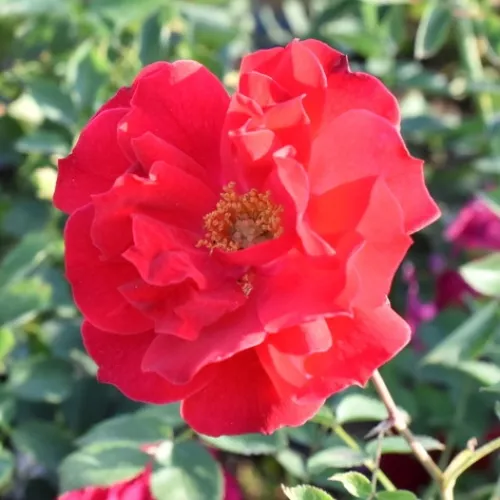
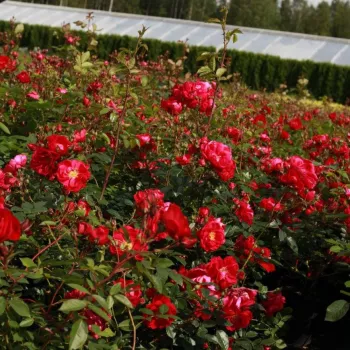
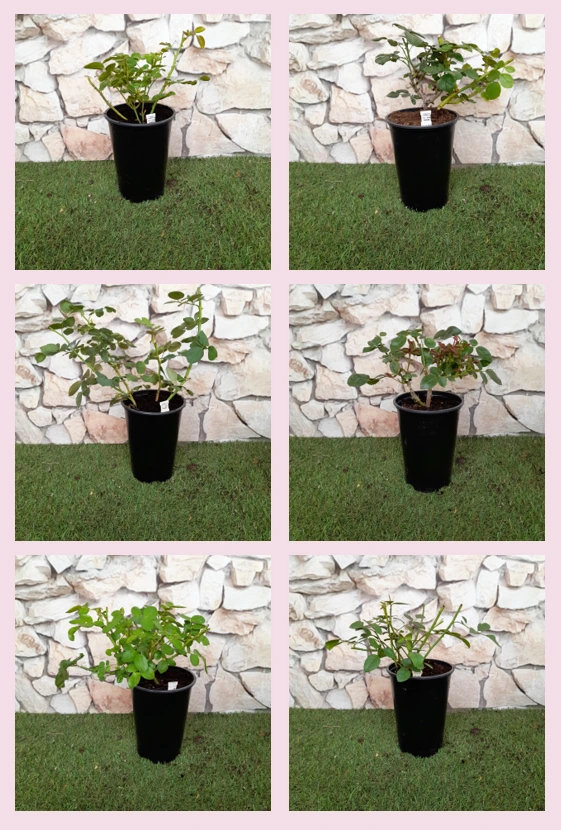
Imagine a sheltered seaside corner where you can drink tea after a blustery walk, protected by an easy, informal rose hedge that shrugs off cool winds and salt‑tinged air while keeping your garden feeling fresh and sunlit. Adelaide Hoodless is a compact park shrub rose that thrives in typical British family gardens, forming a dense, upright framework that anchors borders and screens seating areas without demanding intricate pruning skills. Its clusters of small, semi‑double blooms open in a bright, clear red that recalls beach berries against shingle, repeating in generous flushes once established and helping smaller plots feel colourful for months. As an own‑root rose it builds a durable structure underground, so if winter storms or coastal gales nip at the top growth, it readily regenerates, preserving its ornamental value and sparing you the hassle of replanting. The pharmaROSA® ORIGINAL 2‑litre format is particularly manageable on a terrace or veranda, settling steadily into larger containers or improved clay beds as it puts energy into roots in the first year, extends confident new shoots in the second, and then reveals its full garden presence by the third summer. In small family spaces this balanced habit feels reassuringly stable, offering both summer colour and leafy cover around children’s play areas or sun‑trap seating. Given a reasonably sunny position, modest deadheading and basic care, it rewards you with repeat flowering and long service life, keeping that sense of seaside refreshment close at hand even on busy weekdays when gardening time is short.
Usage options
| Target area |
Reasoning |
| Coastal veranda or balcony in large containers |
Its upright, compact shrub form works well in 40–50 litre containers, giving height and colour without overwhelming a small space, while own‑root resilience means it copes better with exposed, breezy sites and supports low‑effort upkeep for busy urban gardeners. |
| Small family front garden for easy kerb appeal |
The dense, glossy foliage and bright red flower clusters quickly create a welcoming, tidy look for typical UK front gardens, offering long‑season interest with simple pruning and helping homeowners who want colour without complex maintenance as beginner gardeners. |
| Informal wind‑filtering boundary or hedge |
Planted at hedge spacing, its upright framework and repeat flowering provide a soft visual screen that gently filters prevailing breezes, ideal where you need a light windbreak near seating or play areas but prefer a natural, flower‑rich line as family garden owners. |
| Mixed coastal border with grasses and perennials |
Adelaide Hoodless partners well with blue globe thistle, fountain grass and other drought‑tolerant companions, colouring the mid‑storey while its robust structure helps stabilise the planting in blustery weather for coastal‑style enthusiasts. |
| Clay‑based garden beds with improved drainage |
In many British plots with heavier soils, it responds well to basic soil improvement and forms a reliable framework that anchors the border and copes with variable moisture, supporting those who want dependable structure over years as practical homeowners. |
| Seasonal focal point near seating or tea corner |
Its clusters of vivid, medium‑red blooms draw the eye without becoming overpowering, bringing a cheerful, relaxed atmosphere to a favourite chair or table and encouraging everyday enjoyment of the garden for tea‑on‑the‑patio lovers. |
| Long‑term planting where replanting is inconvenient |
As an own‑root shrub, it gradually strengthens from root to shoot, regenerating well after hard pruning or winter damage, so you can expect a stable, long‑lived presence with less frequent replacement in hard‑to‑access spots for time‑pressed gardeners. |
| Sunny, low‑complexity flower bed for repeated colour |
Best in a reasonably sunny position, it rewards basic deadheading with generous repeat flowering and a good second flush, providing an extended display that suits a simple, seaside‑inspired layout beside shingle or paving for low‑maintenance seekers. |
Styling ideas
- Shingle‑chic hedge – line a coastal‑style path with Adelaide Hoodless underplanted with Festuca and sea kale to echo beach textures and create a light wind filter – ideal for coastal‑inspired family homes
- Veranda focal pot – plant one shrub in a 50‑litre tub with trailing thyme and pebbled mulch to bring seaside colour and fragrance to a compact deck – designed for balcony and veranda users
- Red‑and‑blue contrast – combine with Echinops and soft ornamental grasses for a dynamic contrast of red blooms and blue spheres in sunny beds – perfect for colour‑confident beginners
- Tea‑corner screen – use a small group behind a bench with lavender and calamint at the front to form a scented, semi‑private nook – suited to relaxed afternoon tea drinkers
- Clay‑friendly frame – position as a structural back‑of‑border shrub in improved clay, flanked by hardy perennials, to give long‑term shape with modest care – helpful for busy suburban gardeners
Technical cultivar profile
| Property |
Data |
| Name and registration |
Shrub rose marketed as Adelaide Hoodless, a red park rose from the Park - shrub rose group, used as a landscape shrub for beds, borders and informal hedging in private and public gardens. |
| Origin and breeding |
Bred by Dr Henry H. Marshall at Agriculture and Agri‑Food Canada, Morden, from ‘Fire King’ floribunda crossed with a (‘J.W. Fargo’ × ‘Assiniboine’) seedling; introduced and registered in 1973. |
| Awards and recognition |
Holds the RHS Award of Garden Merit, indicating reliable garden performance under UK conditions when grown with appropriate care, and recognised value for general landscape and domestic use. |
| Growth and structural characteristics |
Upright shrub reaching about 110–190 cm in height and spread, with dense, glossy dark green foliage and moderate prickliness, forming a well‑filled framework suitable for hedging and specimen planting. |
| Flower morphology |
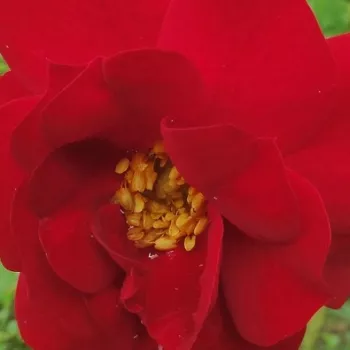
Produces small, flat, semi‑double blooms in clusters, typically 13–25 petals, with remontant flowering and a strong second flush; spent flowers fall moderately well but deadheading improves repeat display. |
| Colour data and phenology |
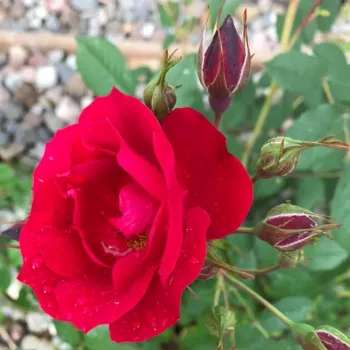
Flowers open a clear, medium red with slightly darker petal undersides, then soften towards raspberry red; colour may lighten in strong sun, yet overall remains a bright, warm mid‑red through the season. |
| Fragrance and aroma |
Fragrance is very weak and only faintly rosy, so the variety is chosen mainly for colour, structure and repeat bloom rather than scent; better suited where strong perfume is not a key design requirement. |
| Hip characteristics |
Hip set is generally low; when present, produces small, ovoid, orange‑red hips approximately 7–13 mm in diameter, which add modest late‑season interest without significant impact on overall appearance. |
| Resistance and winter hardiness |
Exceptionally frost hardy to around −40 °C (RHS H7, USDA Zone 2b) with good heat and moderate drought tolerance when established, but needs regular protection against powdery mildew and rust diseases. |
| Horticultural recommendations |
Best in full sun with well‑drained soil; allow 90–165 cm between plants depending on use, and plan regular health monitoring and plant protection, plus deadheading, to maintain strong repeat flowering. |
ADELAIDE HOODLESS offers upright structure, repeat red flowering and long-lived own-root reliability, making it a thoughtful choice for relaxed coastal-inspired gardens where you prefer steady impact over intensive care.