AGKON – pink hybrid tea rose - Agel
Imagine returning from the beach to a sheltered veranda, salt still on your skin and a mug of tea in hand, while compact, upright bushes of AGKON line your shingle beds with reliable, carmine-pink blooms. This hybrid tea is bred to be genuinely easy-care, thriving in typical family gardens where time is short but you still want a clean, orderly look. Its bushy habit stays neatly within small spaces, while the strong framework and fibrous root system help it stand firm and flower steadily even when prevailing coastal breezes test your planting and you depend on secure anchoring in changeable British weather. As an own-root rose it offers a quietly dependable lifespan, regenerating well from the base and keeping its form over the seasons, rather than exhausting itself after a handful of years. Plant once, water in, mulch, and enjoy its reliability from late spring onwards, with good repeat-bloom flushes that keep beds and containers looking freshly groomed without complicated pruning. Think in terms of a natural rhythm – in the first year AGKON focuses on roots, in the second on shoots, and by the third it settles into a full, confident ornamental presence that feels gracefully permanent in your coastal-style garden.
Usage options
| Target area | Reasoning |
|---|
| Coastal veranda containers (40–50 litre) |
AGKON’s compact, upright habit suits large pots on wind-prone verandas, where a 40–50 litre container provides stable anchorage and steady moisture. Its disease resistance means you avoid complex spray routines, ideal for a relaxed, beach-return seating area for beginners. |
| Small front gardens and narrow beds |
With a mature height of around 60–85 cm and a spread of 35–50 cm, AGKON fits neatly into tight borders along paths, drives, or under windows. It delivers a formal hybrid tea look without sprawling, helping you keep a tidy frontage that still feels soft and welcoming for homeowners. |
| Low-maintenance family flower bed |
This variety was selected for resistance to black spot, mildew and rust, so you can keep the children’s play area and main seating zone attractive without frequent spraying. Occasional deadheading and feeding are usually enough for continuous colour, convenient for busy. |
| Cutting patch for home bouquets |
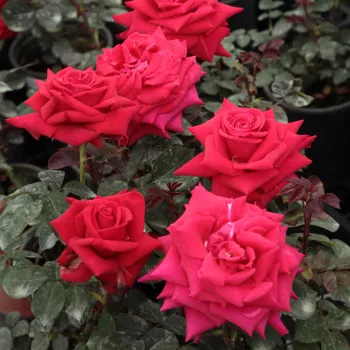
High‑centred, pointed buds on upright stems make AGKON particularly suitable for cutting, giving you classic hybrid tea blooms in vibrant carmine pink for vases indoors. Regular cutting doubles as deadheading, encouraging more flowers for enthusiastic hobby-gardeners. |
| Coastal shingle or gravel planting |
Planted into improved pockets within shingle or gravel, AGKON handles breezy, rainy coastal conditions where dependable anchoring and sensible drainage matter more than perfection. Once established, it offers robust framework and repeated colour for seaside-style gardeners. |
| Feature rose in mixed perennial border |
AGKON’s vivid cyclamen-pink flowers stand out among sea kale, blue fescues and soft mauve catmint, giving you a defined focal point in a relaxed planting scheme. Its own-root vigour supports long-term structure, suiting those planning multi-year schemes for planners. |
| Low formal edging and short hedge runs |
At 25–30 cm spacing, AGKON can form a low, rose hedge that edges paths or separates spaces in the garden with a pink, high‑tea look. Regular trimming and deadheading keep the line sharp yet floral, appealing to lovers of gentle formality who are still beginners. |
| Clay soil beds with improved drainage |
In many UK gardens with heavier clay, deep planting into improved soil and mulching allows AGKON’s own-root system to establish securely, so the bush stays upright and floriferous over many years. This long-lived steadiness suits practical, value-conscious families. |
Styling ideas
- Seaside-Veranda Trio – Pair AGKON in 50 litre tubs with blue Festuca and a low Lavandula hedge for a sheltered, salty-breeze seating corner – for coastal-style veranda owners.
- Pink-Cut Garden – Create a small cutting bed with AGKON in rows, underplanted with Nepeta x faassenii to soften the lines and provide a haze of blue – for home bouquet enthusiasts.
- Shingle-Ribbon Border – Thread AGKON through a shingle strip with sea kale and dwarf grasses to echo Cornish or Devon beaches, keeping planting low and wind‑permeable – for coastal bungalow plots.
- Formal-Entrance Pairing – Flank a front door with two large pots of AGKON and a collar of white garden feverfew around the base for a crisp, welcoming look – for neat, low‑maintenance driveways.
- Family-Mix Bed – Combine AGKON with peach‑leaved bellflower and catmint in a mixed bed so colour runs from spring to late summer, with roses as the steady centrepiece – for relaxed family gardens.
Technical cultivar profile
| Parameter | Data |
|---|
| Name and registration |
Hybrid tea rose known commercially as AGKON – pink hybrid tea rose - Agel; ARS approved exhibition name Agkon, classified within the Hybrid Tea group for both garden and cut flower use. |
| Origin and breeding |
Bred by Richard Agel in Germany and introduced in 1979 by Agel Rosen, with parentage not recorded; developed as a classic high‑centred hybrid tea suited to both garden display and cutting. |
| Growth and structural characteristics |
Compact, bushy, upright shrub reaching about 60–85 cm high and 35–50 cm wide, moderately thorny, with moderately dense, dark green foliage, forming a tidy, easily managed outline in beds and containers. |
| Flower morphology |
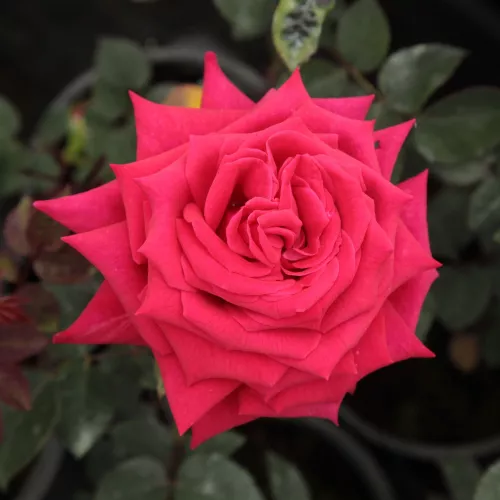
Medium sized, high‑centred, pointed-budded blooms, solitary on stems, with 26–39 petals giving a fully double, exhibition‑type flower; good remontancy provides abundant second and subsequent flushes. |
| Colour data and phenology |
Vibrant cyclamen to carmine pink with magenta tones; inner petals deeper, outer whorl paler to creamy pink at the margins; colour holds well, with only moderate fading through the life of the bloom. |
| Fragrance and aroma |
Classified as unscented, with no noticeable fragrance in normal garden conditions; selected primarily for flower form, colour and garden performance rather than for aromatic qualities. |
| Hip characteristics |
Produces occasional, small, spherical hips about 10–14 mm in diameter, coloured red in RHS 40A range, adding light seasonal interest but not a dominant ornamental feature of the variety. |
| Resistance and winter hardiness |
Rated H7 with approximate hardiness between −21 and −18 °C, suitable for most UK regions; shows good resistance to powdery mildew, black spot and rust, with moderate heat tolerance needing watering in drought. |
| Horticultural recommendations |
Best in full sun with well‑drained soil; suitable for flower beds, low hedging and cutting gardens; recommended spacing 25–45 cm depending on use, with low overall maintenance needs aside from deadheading. |
AGKON – pink hybrid tea rose - Agel offers compact form, reliable repeat flowering and long-lived, own-root robustness that suits busy coastal or urban gardens, making it a thoughtful choice when you want lasting colour with minimal fuss.