ALBÉRIC BARBIER – cream-white historic rambler, climbing-spreading rose - Barbier
Imagine stepping onto your veranda after a windy walk on the beach, salt still in the air, and being greeted by a cascade of creamy blooms from Albéric Barbier, creating a sheltered nook where you can linger with tea while its fruity perfume drifts around you. This historic rambler grows into a supple, arching screen that gently filters coastal breezes, while its glossy, dark foliage gives a quietly elegant backdrop to shingle, sea-kale and lavender plantings. Own-root plants establish with reassuring stability, settling deeply and developing a long-lived framework that asks little more than basic care, even where you need good anchoring and sensible water management in exposed gardens. Suitable for partial shade and remarkably tolerant of British coastal conditions, it rewards patience: roots in the first year, strong shoots in the second, and a full curtain of flowers by the third.
Usage options
| Target area | Reasoning |
|---|
| Coastal veranda windbreak |
Trained along a pergola or balcony frame, Albéric Barbier forms a dense, leafy screen that softens salt-laden breezes while remaining supple in strong winds and summer showers, ideal for creating a sheltered sitting area for coastal-style beginners. |
| Romantic garden arbour |
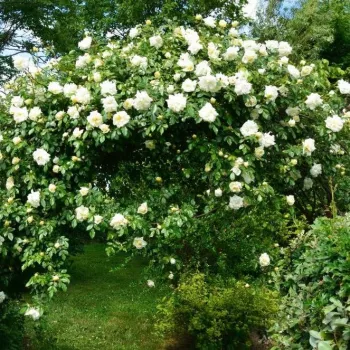
Its once-a-year flush of creamy rosettes and strong sweet, fruity fragrance turns a simple arch into a seasonal event, with minimal pruning needed once the main structure is in place, suiting busy family gardeners. |
| Shade-edge passage or side return |
Albéric Barbier copes well with partial shade, so it can brighten narrow side paths that receive only a few hours of sun, using glossy foliage and pale flowers to lift darker corners for small-plot homeowners. |
| Low-maintenance boundary or fence cover |
The long, creeping canes clothe fences and boundaries efficiently, and once established on its own roots it needs only periodic tying-in and light thinning, offering lasting coverage for hands-off gardeners. |
| Tree-climbing woodland accent |
Its flexible, sparsely thorned shoots can be guided into small trees, where the pale flowers and fragrance appear among branches without crowding the host, appealing to romantic planting enthusiasts. |
| Clay soil coastal garden backdrop |
With thoughtful drainage, this variety anchors well in heavier soils and tolerates exposed weather, making it reliable for coastal gardens where you balance wet winters and dry spells for practical-minded owners. |
| Large-container statement on terraces |
In a sturdy 40–50 litre or larger container with a trellis, Albéric Barbier offers vertical greenery and one dramatic flowering season, while own-root resilience supports long-term use for urban veranda users. |
| Historic or period-style planting |
Bred in 1900 and recognised with an RHS Award of Garden Merit, it delivers authentic old-garden character plus dependable performance, giving a sense of continuity and permanence valued by heritage-conscious gardeners. |
Styling ideas
- Seaside veranda curtain – Train Albéric Barbier along a pergola with sea kale, Festuca and low catmint at its feet for a light, shingle-beach feel – for coastal veranda owners wanting shelter and softness.
- Romantic tea arbour – Arch canes over a bench, underplant with lavender and pale Nepeta, and enjoy the once-a-year fragrant canopy – for couples and families who like seasonal garden rituals.
- Shaded side escape – Use it along a side return wall in partial shade, pairing with New Zealand flax for contrast – for homeowners turning overlooked passages into usable green corridors.
- Historic boundary sweep – Let it flow along a long fence or low wall, interplanted with blue Ceanothus for colour contrast – for those seeking a traditional yet easy-care perimeter.
- Tree-draped woodland edge – Guide canes into a small tree and underplant with shade-tolerant perennials – for gardeners who enjoy naturalistic, slightly wild compositions with minimal upkeep.
Technical cultivar profile
| Parameter | Data |
|---|
| Name and registration |
Albéric Barbier is a historical Hybrid Wichurana rambler, sold as a climbing, creeping rose for ornamental use; unregistered but traded widely under this established name. |
| Origin and breeding |
Bred by René Barbier of Barbier Frères & Compagnie in France around 1900, from Rosa wichurana crossed with the yellow tea hybrid ‘Shirley Hibberd’, then introduced commercially the same year. |
| Awards and recognition |
Recognised with the Royal Horticultural Society’s Award of Garden Merit in 1993, confirming strong ornamental impact, reliable garden performance and consistent quality under typical UK growing conditions. |
| Growth and structural characteristics |
Very vigorous rambler with creeping, arching shoots reaching 5–7.5 m high and 2.5–5 m spread; dense, dark green glossy foliage and comparatively sparse prickles make training and tying-in easier. |
| Flower morphology |
Medium-sized, fully double rosette blooms with 26–39 petals, produced singly rather than in big clusters; non-remontant, giving one main flowering period, but with spectacular seasonal display on mature plants. |
| Colour data and phenology |
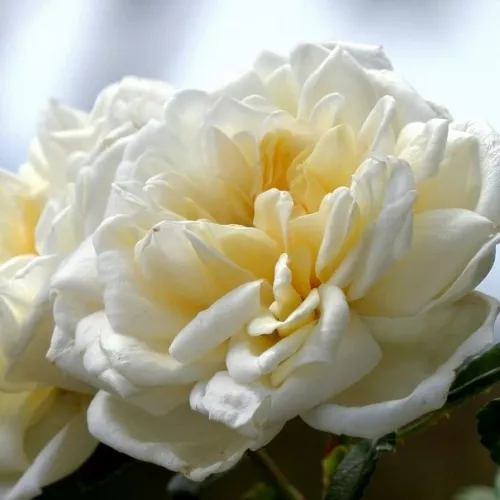
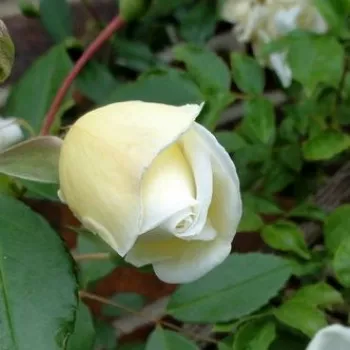
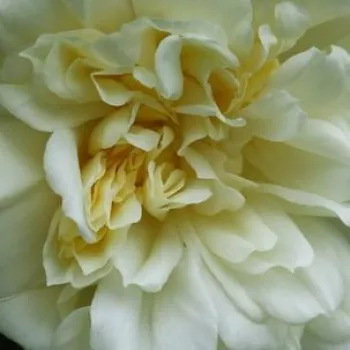
Buds show creamy-white and pinkish tints; opening flowers are cream to pale buttery yellow in the centre, quickly fading in sun to soft white with occasional greenish base tones towards full bloom. |
| Fragrance and aroma |
Notably strong fragrance with sweet, fruity and almond-like notes, especially around full flower; best appreciated where air movement carries scent past seating areas or along frequently used garden routes. |
| Hip characteristics |
Hip set is usually modest due to very double flowers; where formed, expect small, round orange-red hips about 6–10 mm across, adding occasional late-season interest without big seeding issues. |
| Resistance and winter hardiness |
Hardy to approximately –20 °C (RHS H6; Swedish Zone 2, USDA 7b); good heat tolerance, some drought resilience with watering, resistant to powdery mildew and moderate against black spot and rust. |
| Horticultural recommendations |
Best on supports such as pergolas, arches, trees or walls; prefers well-drained soil, with some spring frost protection and occasional plant protection; thrives in full sun to partial shade sites. |
Albéric Barbier offers an easy-care, long-lived cascade of scented cream-white flowers, strong growth for arches and verandas, and the resilient stability of an own-root rambler; consider it where you want lasting character with modest effort.