ALBERICH – red bedding polyantha rose – Ruiter
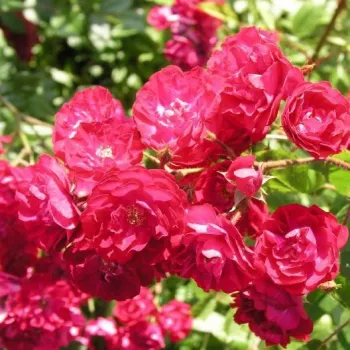
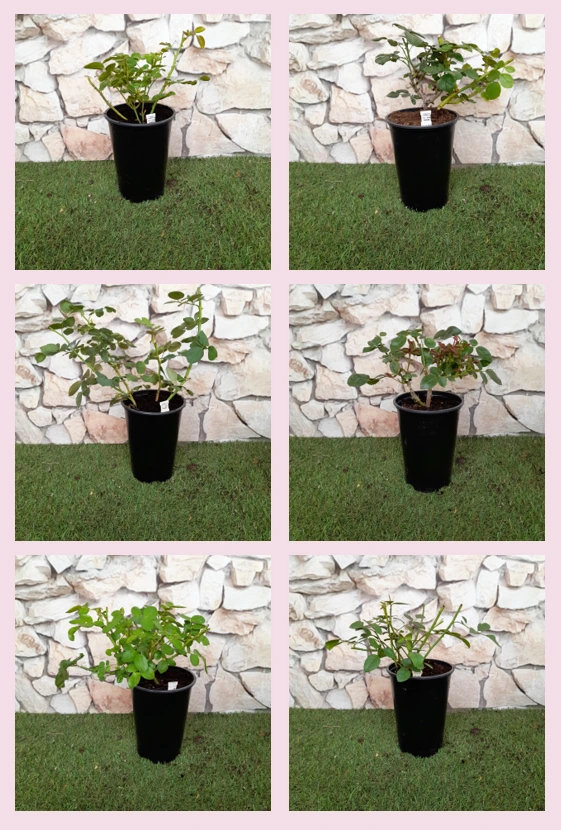
Imagine rinsing sand from your toes and settling down with afternoon tea behind a living windbreak, while this compact red rose adds a low, glinting edge of flowers along your shingle or gravel. Compact and naturally neat, Alberich sits happily in smaller beds, raised borders or generous containers, giving you reliable colour without demanding expert pruning. Its remontant nature means waves of cherry-red clusters from early summer well into autumn, and the semi-double blooms clean themselves sufficiently that only light deadheading is needed. On its own roots, this rose offers quiet longevity, rebuilding from the base and keeping its ornamental value stable over the years with little fuss. Plant once, water in well and use simple mulch to manage moisture and keep roots steady in breezy coastal weather with good drainage and firm anchoring against the wind. Over time, you will see a gentle rhythm: the first year devoted to rooting, the second to strong shoots, and by the third year Alberich settles into full presence, a tough, tidy companion to sea kale, fescues and lavender on your veranda or in a salt-tolerant family garden.
Usage options
| Target area | Reasoning |
|---|
| Front edge of a coastal flowerbed |
Its low, compact habit forms a defined edging line that stays tidy in breezy conditions, helping structure shingle or gravel beds without growing leggy or shading out smaller perennials – ideal for beginners. |
| Small family garden rose border |
Remontant flowering ensures repeated flushes of cherry-red clusters through the season, so even modest borders gain long-lasting interest without complex pruning plans – reassuring for busy-owners. |
| Container on a sheltered veranda (40–50 L) |
A generous 40–50 litre container gives enough soil volume for steady growth, letting its compact form shine on balconies or verandas where you want colour but limited maintenance – perfect for urban-gardeners. |
| Low informal hedge beside a seating area |
Planted at hedge spacing, its consistent height and moderate thorniness create a soft, low barrier that frames seating areas without feeling formal, matching relaxed coastal-style layouts for homeowners. |
| Mixed planting with grasses and sea kale |
The intense cherry-red clusters contrast beautifully with silvery sea kale and fine blue fescues, giving a lively, windswept look that still feels ordered and easy to manage for design-lovers. |
| Wind-exposed but well-drained clay bed |
Once established on its own roots, Alberich anchors firmly and copes reliably in typical British mixed-weather conditions, provided the clay is improved for drainage and moisture balance – a comfort for coastal-gardeners. |
| Low-maintenance urban front garden |
Moderate self-cleaning and simple pruning requirements keep the plant presentable between occasional tidy-ups, suiting front gardens where you want a smart look without frequent work – ideal for time-poor. |
| Long-term planting in family gardens |
The own-root form supports regeneration from the base and protects ornamental value over many seasons, following a natural arc from establishing roots to mature flowering that rewards patient gardeners. |
Styling ideas
- Shingle-Edged Walkway – line a gravel or shingle path with Alberich at regular intervals to create a low, glowing red ribbon that stays compact and easy to clip – for calm, coastal-path enthusiasts
- Veranda-Container Glow – plant one or three plants in a 40–50 litre tub with silver sea kale or blue Festuca for a neat, long-flowering accent – for veranda tea-drinkers
- Cherry-Red Carpet – mass-plant in a small bed for a dense, uniform mound of colour that needs only light shaping, ideal beside lawns or play areas – for families seeking order with ease
- Soft-Structure Hedge – use Alberich as a low, informal hedge under windows or along driveways, giving gentle separation without blocking views – for homeowners wanting subtle structure
- Mixed-Texture Corner – combine with lady’s mantle and dwarf grasses so long flowering clusters pop against frothy lime and fine foliage – for design-conscious beginners
Technical cultivar profile
| Property | Data |
|---|
| Name and registration |
Polyantha bedding rose, shrub rose exhibition class; current trade name Alberich, American Rose Society exhibition name Alberich; unregistered cultivar in formal registers. |
| Origin and breeding |
Bred by Gerrit de Ruiter in Aalsmeer, Netherlands, from the cross ‘Robin Hood’ × ‘Katharina Zeimet’; introduced by De Ruiter Innovations B.V. in 1954 for bedding use. |
| Growth and structural characteristics |
Compact shrub to about 30–45 cm in height and spread, with moderately dense, glossy dark green foliage and moderate prickling; neat, low habit suitable for edging and mass planting. |
| Flower morphology |
Semi-double, cup-shaped blooms with around 13–25 petals, produced in tight clusters of small flowers; remontant with a notably abundant second flush through the main growing season. |
| Colour data and phenology |
Vivid cherry-red flowers, ARS mR, RHS 46A outer, 46B inner; glossy on opening, lightly lightening to the centre and only slightly fading in strong sun while retaining a clear, pure red tone. |
| Fragrance and aroma |
Very weak, almost imperceptible scent with a subtly fruity character when detected; fragrance is not a dominant feature, making visual effect the primary ornamental value in plantings. |
| Hip characteristics |
Occasionally forms small, spherical red hips around 5–8 mm across; hips add a discreet seasonal accent but are not a major ornamental or wildlife feature of this cultivar. |
| Resistance and winter hardiness |
Hardy to approximately −21 to −18 °C (RHS H7, USDA 6b, Swedish zone 3); good resistance to powdery mildew and black spot, moderate rust sensitivity; tolerates moderate drought with watering in dry spells. |
| Horticultural recommendations |
Best in sunny spots with improved drainage, at 30–60 cm spacing depending on use; occasional deadheading and basic pest checks recommended to maintain compact form and sustained flowering. |
ALBERICH offers compact bedding structure, remontant flowering and long-lived own-root resilience for small family gardens and coastal-style spaces, making it a thoughtful choice if you prefer reliable colour with modest care.