ALBERTINE – salmon-pink historic rambler-climbing rose - Barbier
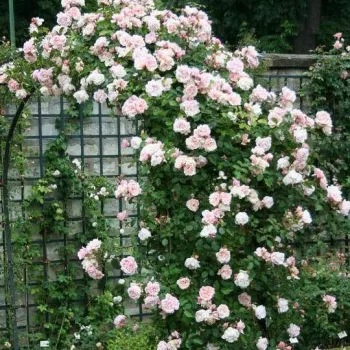
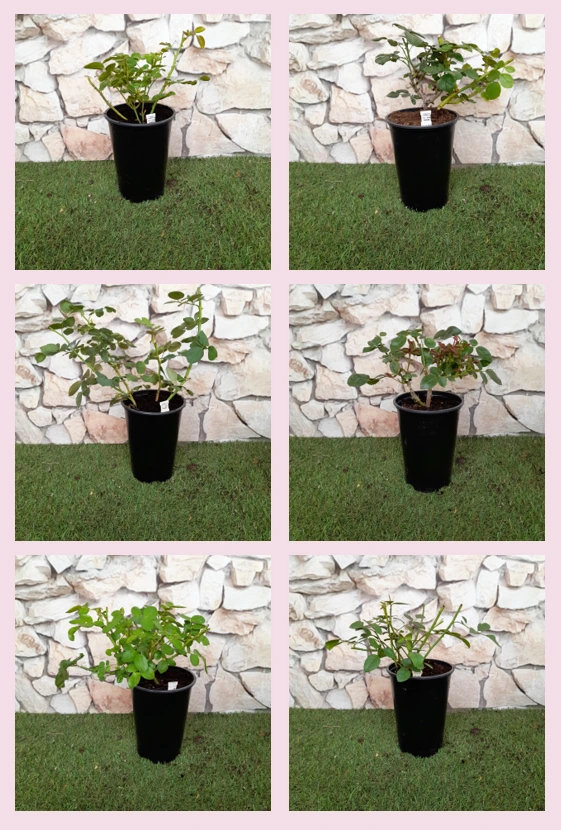
Imagine stepping onto your coastal veranda after a windy walk, greeted by the sweet, far-reaching fragrance of ‘Albertine’ drifting over a shingle-style border: this historic rambler wraps fences and pergolas in salmon-pink bloom and glossy foliage, creating a sheltered nook that softens the wind and frames your sea-inspired seating. Its vigorous growth quickly clothes arches and walls while remaining surprisingly simple to look after, with only occasional plant protection and basic seasonal pruning. Own-root resilience means the plant ages gracefully, regenerating from the base for a long-lived, reliable display without graft worries. In its first year it concentrates on roots, the second on stronger shoots, and by the third it settles into full ornamental value as a romantic, low-fuss coastal companion.
Usage options
| Target area | Reasoning |
|---|
| Coastal veranda windbreak rose |
Trained along a balustrade or screen, ‘Albertine’ creates a flower-laden, semi-transparent windbreak that softens blustery conditions while preserving light and views. Its good heat tolerance suits sunny, exposed Cornish or Devon decks, and the dense foliage helps manage blustery conditions and salty air in exposed family plots for the coastal veranda owner. |
| Pergola or arbour for family seating |
Over a pergola, this vigorous climber quickly forms a fragrant green ceiling, ideal above an outdoor table or bench where you enjoy tea after a seaside walk. Medium maintenance is limited to tying in new shoots and an annual tidy, making it realistic for time-pressed householders. |
| Flowering fence or boundary screen |
Along a garden fence, ‘Albertine’ offers generous spring flowering with a lighter second flush, giving seasonal drama yet remaining manageable. Dense prickliness adds a discreet sense of security, while own-root growth ensures gaps are filled steadily over the years without frequent replacement for privacy-minded families. |
| Historic-style coastal cottage garden |
The old-fashioned flower form and soft salmon-pink tones fit perfectly beside weathered stone, shingle, and sea kale, evoking classic Cornish cottage gardens. Medium disease resistance and good drought tolerance, once established, keep care routines simple in breezy, salt-tinged plots for romantic traditionalists. |
| Large container on terrace (40–60 litres) |
In a substantial 40–60 litre container with good drainage, ‘Albertine’ can be trained up a trellis to bring height and fragrance to compact terraces. Own-root planting in a big pot supports long-term vigour, provided you water in dry spells and refresh compost every few years for space-conscious balcony gardeners. |
| Family play garden backdrop |
Placed at the back of a border, this tall climber forms a leafy, flowered backdrop that anchors swings or play lawns without demanding constant fuss. Children enjoy the scented display, while adults appreciate that self-cleaning flowers drop neatly and pruning is needed only once or twice a year for busy parents. |
| Low-maintenance romantic archway |
Trained over a simple metal or wooden arch, ‘Albertine’ delivers an impressive flush of colour and perfume with only modest upkeep. Own-root permanence means the arch matures beautifully instead of needing frequent replanting, suiting gardeners who want impact without elaborate care routines for low-fuss romantics. |
| Mixed border with ornamental grasses |
Threaded through Festuca or low Achillea, this climber adds vertical structure and nostalgic charm to modern gravel or shingle borders. Its glossy foliage and arching stems contrast elegantly with fine grasses, while occasional pruning keeps it from overwhelming neighbours, ideal for design-aware coastal gardeners. |
Styling ideas
- Seaside-pergola retreat – Train ‘Albertine’ over a wooden pergola with sea kale and blue Festuca at the base for a breezy, shaded sitting area – for families wanting a gently sheltered outdoor room.
- Cottage-veranda romance – Clothe a veranda railing with ‘Albertine’, underplanting with lavender and low yarrow to echo coastal heaths – for homeowners seeking a nostalgic, seaside-cottage feel.
- Shingle-border screen – Let canes fan across tensioned wires over a shingle bed dotted with drought-tolerant perennials – for coastal stylists favouring low-maintenance structure and movement.
- Container-climber focus – Plant in a 50-litre pot with a simple trellis, pairing with silver-leaved herbs in smaller containers nearby – for balcony and terrace users with limited ground space.
- Arched-garden entrance – Frame the path to a lawn or play area with an ‘Albertine’-clad arch, edging with coneflowers for summer colour – for households wanting a welcoming yet practical focal point.
Technical cultivar profile
| Parameter | Data |
|---|
| Name and registration |
Historic large-flowered rambler-climber marketed as ‘Albertine’, a Barbier Frères & Cie introduction; unregistered cultivar widely recognised in collections and amateur gardens across Europe. |
| Origin and breeding |
Bred by René Barbier in France from Rosa wichurana × ‘Mrs. Arthur Robert Waddell’; introduced by Barbier Frères & Cie in 1921 and now a classic historic rambler in temperate gardens. |
| Awards and recognition |
Holds the RHS Award of Garden Merit (1993), signalling reliable performance, good ornamental value and garden-worthiness under typical United Kingdom conditions when grown with basic care. |
| Growth and structural characteristics |
Strong climbing habit reaching about 3.5–6 m high with a 3–5.2 m spread; dense, glossy dark green foliage and heavily thorned canes create a full, traditional rambler presence on supports. |
| Flower morphology |
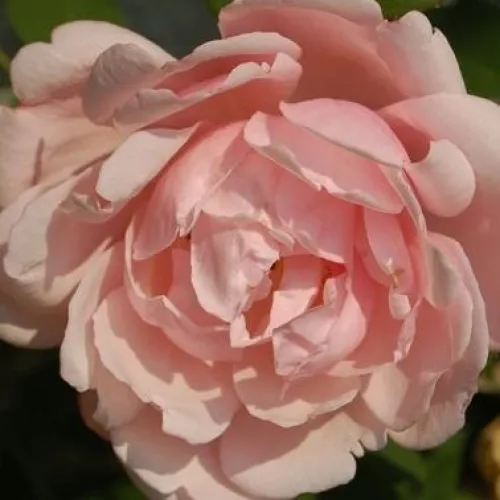
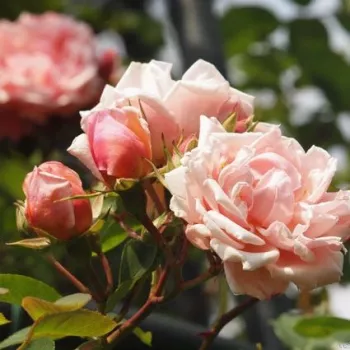
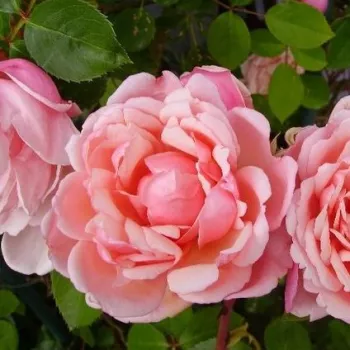
Double, cup-shaped clusters of small flowers, roughly 1–3 cm across, with 26–39 petals; produces a major early-season flush followed by lighter repeat, on medium self-cleaning trusses. |
| Colour data and phenology |
Mid salmon-pink blooms with copper tones on opening, softening to pastel and creamy edges in strong sun; colour deepens slightly in cooler weather for a variable, atmospheric display. |
| Fragrance and aroma |
Strong, far-reaching sweet, fruity fragrance typical of historic ramblers; scent is most noticeable in still, warm air and enhances seating areas, paths and entrances it is trained to frame. |
| Hip characteristics |
Forms limited numbers of small, 8–12 mm, ovoid orange-red hips; decorative effect is modest, and the plant is grown primarily for its floral and foliage display rather than fruit. |
| Resistance and winter hardiness |
Classed H7, hardy to about −26 to −23 °C; good heat and moderate drought tolerance, with resistance to powdery mildew and black spot and medium susceptibility to rust in some seasons. |
| Horticultural recommendations |
Best on well-drained soil with support from fences, pergolas or arches; suitable for partial shade, with annual pruning and occasional plant protection adequate for most UK family gardens. |
ALBERTINE offers vigorous vertical cover, romantic salmon-pink fragrance and long-lived own-root reliability for pergolas, arches and verandas; an excellent choice if you would like a historic climber that rewards simple care.