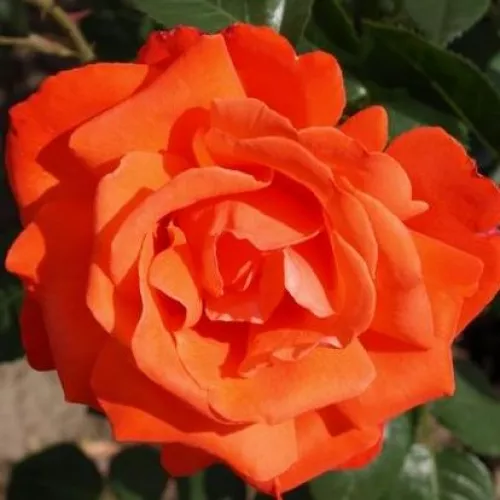
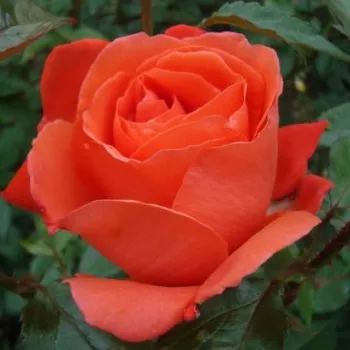
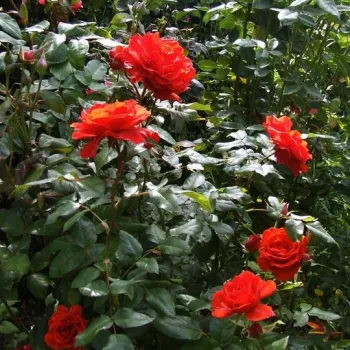
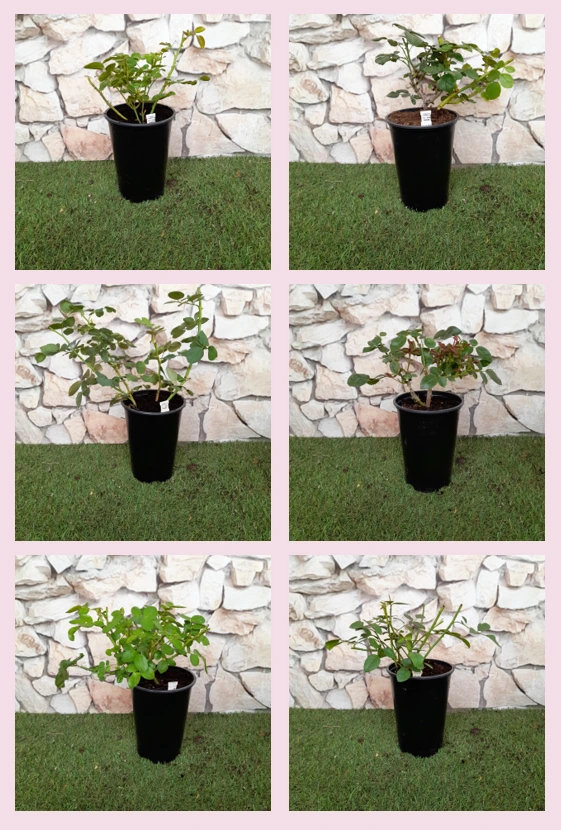
ALEXANDER™ – orange-red hybrid tea rose – HARlex
Think of an early-evening coastal breeze, the light catching vivid orange-red petals as ALEXANDER™ settles into your family garden with reassuring stability. This upright hybrid tea brings a tall, elegant outline that works beautifully as a summer wind-filter near a veranda, while its remontant flowering and reliable colour retention keep borders looking fresh from June well into autumn. Own-root planting means a naturally long-lived, resilient framework that can regenerate if cut back hard, supporting a simple “Year 1 roots, Year 2 shoots, Year 3 full show” development arc with little more than sensible watering and light deadheading. In exposed Cornish or Devon gardens you gain a secure anchor in the soil that copes steadily with blustery weather and careful drainage, giving lasting impact from a premium silver-rated cultivar, yet remaining accessible to time-poor, beginner gardeners who just want reliable flowers and a calm, salty, sunny mood.
Usage options
| Target area | Reasoning |
|---|
| Coastal veranda wind-filter in large containers |
The tall, upright habit forms a vertical screen that softens onshore gusts without overwhelming a small seating area. In 40–50 litre containers it roots deeply, remains upright in squally weather and offers a long-lived, own-root framework for coastal-style lovers and beginners. |
| Feature rose for small front gardens |
Its vivid orange-red blooms and elegant exhibition-shaped flowers give strong kerbside presence from a single plant. The balanced height and moderate spread fit neatly into modest UK front gardens, suiting busy homeowners who want maximum effect from one premium rose and beginners. |
| Mixed border with ornamental grasses |
Reliable remontant flowering and very good colour retention provide steady punctuation among Festuca or sea kale, even through changeable coastal summers. The own-root plant gradually builds a durable structure with minimal fuss for relaxed, naturalistic gardeners and beginners. |
| Cutting patch for home flower arrangements |
Long, straight stems and classic hybrid tea form lend themselves to vases, bringing garden colour indoors for informal table settings. The mild, delicate fragrance suits dining spaces, while repeat flushes provide stems over a long season for creative homeowners and beginners. |
| Salt-tolerant shingle or gravel planting |
Once established, its robust shrub framework pairs well with free-draining shingle and gravel, echoing coastal colours without demanding complex care. Thoughtful watering and drainage help it cope with blustery, salt-laden air along exposed drives for low-maintenance seekers and beginners. |
| Informal hedge or boundary accent |
Planted at recommended hedge spacing, the upright habit and moderate foliage density create a light, semi-formal line that defines spaces without feeling heavy. Own-root longevity makes it a practical medium-term boundary solution for family gardens and beginners. |
| Focal point near seating or tea corner |
The gentle scent and glowing orange-red blooms provide a refreshing visual focus beside a bench or terrace, especially in late-afternoon sun. Remontant flowering ensures interest across school holidays and family gatherings for time-poor hobby gardeners and beginners. |
| Park-style planting in private gardens |
With its proven awards and garden-merit pedigree, this cultivar performs reliably in simple, repeating groups, offering professional-looking results without expert skills. Moderate maintenance and own-root resilience reduce long-term replacement needs for quality-conscious homeowners and beginners. |
Styling ideas
- Harbour-Veranda Screen – place in 50 litre tubs flanking a balcony rail, underplanted with silver Festuca to echo sea tones – ideal for coastal-style balcony owners and relaxed tea-drinkers.
- Sunset Shingle Bed – set among pale shingle with sea kale and low Lavandula for a beachy, low-fuss strip – for homeowners turning a narrow side return into a coastal walk-through.
- Elegant Entrance – use a single specimen by the front door, backed by evergreen shrubs, to give year-on-year welcome colour – perfect for busy families wanting instant impact.
- Grasses and Glow – weave through a drift of ornamental grasses and Crocosmia so the orange-red flowers flicker among moving stems – for gardeners who enjoy a naturalistic, windy-garden feel.
- Tea-and-Roses Corner – group two or three plants by a small patio, with low obedient plant edging, to frame a bistro set – suited to those who savour quiet afternoon tea in shelter.
Technical cultivar profile
| Parameter | Data |
|---|
| Name and registration |
Hybrid tea rose, shrub group; registered as HARlex, marketed as Alexander™ Hybrid tea rose HARlex, with American Rose Society exhibition name Alexander for show and cut-flower use. |
| Origin and breeding |
Bred by Jack L. Harkness in the United Kingdom from ‘Tropicana’ × (‘Ann Elizabeth’ × ‘Allgold’); introduced and initially distributed by R. Harkness Roses & Co. Ltd. in 1972. |
| Awards and recognition |
Holds ADR classification and RHS/RNRS Award of Garden Merit; multiple international gold medals and certificates of merit underline proven garden performance and exhibition-quality flower form. |
| Growth and structural characteristics |
Tall, upright habit reaching about 145–195 cm high with 85–115 cm spread; moderately dense, light green foliage and densely thorned stems, forming a substantial, structurally strong shrub over time. |
| Flower morphology |
Medium-sized, double blooms with 26–39 petals, produced mainly singly on stems; cupped, medium high-centred hybrid tea form, remontant with abundant follow-up flowering through the season. |
| Colour data and phenology |
Vivid orange-red flowers (RHS 34B–34A) open bright with paler petal edges, then hold colour well before gently fading to a softer salmon-orange pastel towards the end of each flowering phase. |
| Fragrance and aroma |
Soft, mildly scented rose fragrance of delicate character; attractive at close range without overwhelming small seating areas, making it suitable for verandas, patios and intimate garden corners. |
| Hip characteristics |
Rose hip set is generally modest due to the double blooms, though occasional small, egg-shaped orange-red hips 12–18 mm in diameter may form, adding a subtle late-season ornamental accent. |
| Resistance and winter hardiness |
Hardy to around –21 to –18 °C (RHS H7, USDA 6b, Sweden Zone 3); good resistance to powdery mildew and black spot, moderate rust sensitivity, with fair heat tolerance given regular watering. |
| Horticultural recommendations |
Suited to beds, specimens, hedging and cutting; plant 60–110 cm apart depending on use, in well-drained soil with consistent moisture; maintenance is moderate, mainly deadheading and basic plant protection. |
ALEXANDER™ Hybrid tea rose HARlex offers tall structure, repeat orange-red flowering and enduring own-root resilience for family gardens; consider it if you wish to invest in a long-serving, easy-going coastal or urban rose.