ALEXANDRE GIRAULT – pink rambler climbing rose - Barbier
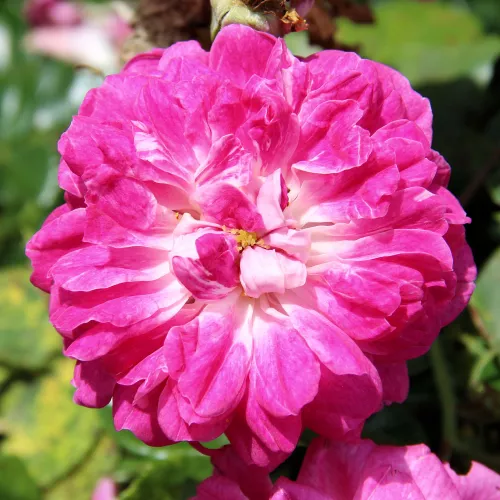
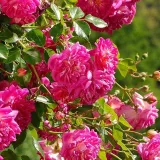
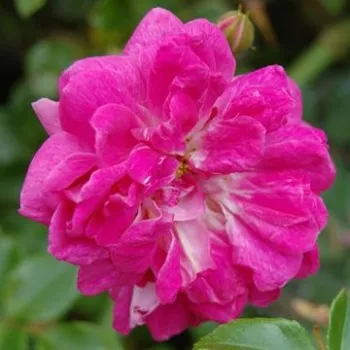
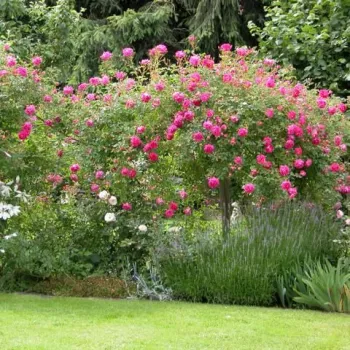
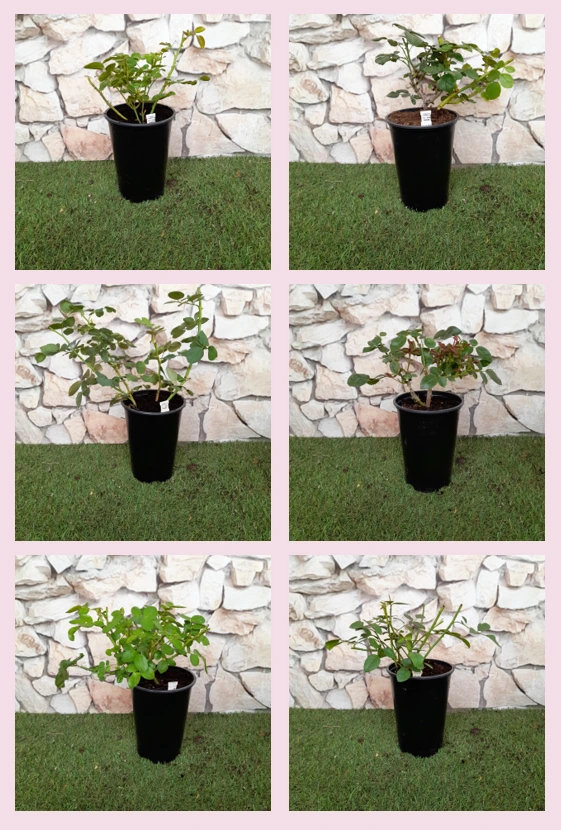
Imagine sitting with afternoon tea on a sheltered coastal veranda as Alexandre Girault drapes the wall in waves of cherry-pink blossoms, bringing a feeling of refreshment after a breezy walk on the beach. This classic rambler forms long, supple canes that anchor securely even where strong sea winds meet heavier soils, offering a natural screen and gentle shade without demanding complex care. Once it has settled, its own-root strength supports a long-lived framework that regenerates reliably after pruning, building from careful first-year roots through more confident second-year shoots to full ornamental presence by the third year. In early summer, dense clusters of very double, medium-sized flowers flood the air with a strong, fruity fragrance, while the glossy, dark foliage and barely-thorny canes make training along verandas, pergolas or walls pleasantly manageable for everyday gardeners.
Usage options
| Target area | Reasoning |
|---|
| Coastal veranda windbreak |
Trained along railings or a trellis, this tall rambler builds a soft, living screen that filters salty breezes while coping steadily with blustery, rain-laden coastal weather and heavier, moisture-holding soils. Ideal for the time-conscious coastal homeowner. |
| House wall or sunny garage flank |
Alexandre Girault’s long, flexible canes quickly cover a warm wall, where stored heat enhances its intense, cherry-pink early-summer display and strong fruity scent, giving high impact from a relatively small ground footprint for busy family gardeners. |
| Romantic pergola or arbour |
On a pergola, the once-a-year flowering becomes a dramatic seasonal moment: arches dripping with very double blooms and fragrance, then neat, glossy foliage providing shade and privacy for the rest of the season with only moderate maintenance for relaxed enthusiasts. |
| Training into a small garden tree |
Allowed to scramble into a sturdy ornamental tree, this rambling climber gives a waterfall of colour without taking extra ground space, and its own-root habit means it steadily thickens and recovers well after periodic restorative pruning for patient beginners. |
| Back-of-border focal point |
Planted at the rear of a mixed border, it lifts flower and fragrance up and over smaller shrubs and perennials, while its dark, shiny leaves form a handsome backdrop that looks cared-for even when you have little time for detailed border work. |
| Freestanding pillar or obelisk |
A sturdy pillar or tall obelisk lets you enjoy its abundant clusters in a compact vertical column; the nearly thornless canes are easier to tie in, making seasonal training and post-flower pruning less daunting for cautious but style-aware gardeners. |
| Large container on sheltered terrace |
In a minimum 40–50 litre container with good drainage, this own-root rambler can be kept in check yet still deliver a curtain of bloom and scent, provided you water and feed regularly, suiting small, paved spaces enjoyed by urban coastal families. |
| Informal hedge or boundary screen |
Along a boundary, spaced generously, it forms an informal flowering screen with glossy foliage and modest hip display later on; its sturdy root system and long lifespan reward those willing to guide its growth over the first three seasons, particularly thoughtful planners. |
Styling ideas
- Seaside-veranda screen – Train Alexandre Girault along a veranda balustrade with sea kale and blue Festuca below for a breezy, beach-hut feel – for coastal-style lovers seeking shelter and romance in one.
- Romantic pergola walk – Cover a garden arch or pergola, underplanting with soft lavenders and ornamental grasses, to create a scented summer tunnel – for families who enjoy evening strolls in their own garden.
- Tree-draped cascade – Let the rose ramble through a small ornamental tree, combining its cherry-pink clusters with dusky Cotinus foliage nearby – for creative gardeners who like naturalistic, storybook effects.
- Compact pillar feature – Grow it on a tall obelisk in a lawn or gravel circle, keeping the base neat with low mounds of Penstemon – for those wanting a striking yet manageable vertical highlight.
- Terrace statement pot – Use a 50 litre half-barrel with good drainage on a sunny, sheltered patio and fan-train the canes on a wall grid – for beginners wanting big impact from a single container.
Technical cultivar profile
| Parameter | Data |
|---|
| Name and registration |
Alexandre Girault, rambler Hybrid Wichurana climbing rose; commercial type rambler, climbing rose; ARS exhibition name ‘Alexandre Girault’; unregistered cultivar, verified authenticity for garden use. |
| Origin and breeding |
Bred by René Barbier, France, 1907; parentage Rosa lucieae × ‘Papa Gontier’; introduced 1909 by Barbier Frères & Compagnie, Olivet, Loiret, France, and still valued as a classic rambling climber. |
| Awards and recognition |
Holds the Royal National Rose Society Award of Garden Merit (2012), indicating reliable performance, ornamental quality and garden-worthiness under British conditions in the UK climate. |
| Growth and structural characteristics |
Strong, rambling climber reaching about 6–9.5 m high and 2.8–4.6 m spread; dense, glossy dark green foliage on long, flexible, barely thorny canes, ideal for walls, pergolas, arbours and trained tree use. |
| Flower morphology |
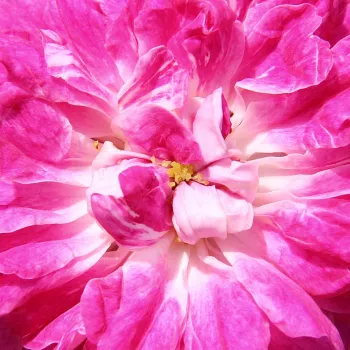
Bears very double, flat, medium-sized blooms (around 4–7 cm) in large clusters on the previous year’s wood; once-flowering rambler with a spectacular early-summer flush rather than repeat-blooming performance. |
| Colour data and phenology |
Rich cherry-pink flowers, inner petals deep pink (RHS 57A), outer almost whitish pink (RHS 53C); colour holds well, then gently pales with light edges; buds and blooms give a long, showy early-summer period. |
| Fragrance and aroma |
Strong, long-lasting fruity scent, especially noticeable in warm, still weather; highly double blooms are mainly ornamental, with low value for pollinators due to reduced stamen access despite their visual abundance. |
| Hip characteristics |
Poor hip set due to very double flowers; when formed, hips are small globular spheres about 8–12 mm across, turning red later in the season and adding only a modest secondary decorative effect. |
| Resistance and winter hardiness |
Hardy to about −21 to −18 °C (RHS H7, Swedish zone 3, USDA 6b); disease resistance moderate to powdery mildew, black spot and rust; tolerates heat well and copes moderately with longer dry spells. |
| Horticultural recommendations |
Best on walls, pergolas, arbours or trees; plant 2.2–4 m apart, allowing height; prefers sun or light shade; prune after flowering, preserving young canes; ensure good drainage and support, especially in heavy soils. |
ALEXANDRE GIRAULT offers a once-a-year cascade of cherry-pink bloom, strong fruity fragrance and impressive height, while its own-root vigour supports long-term structure and easier renewal, making it a considered choice for enduring coastal or family gardens.