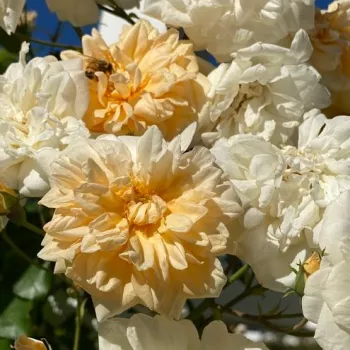
ALISTER STELLA GRAY – pale yellow rambler climbing rose - Gray & Dickson
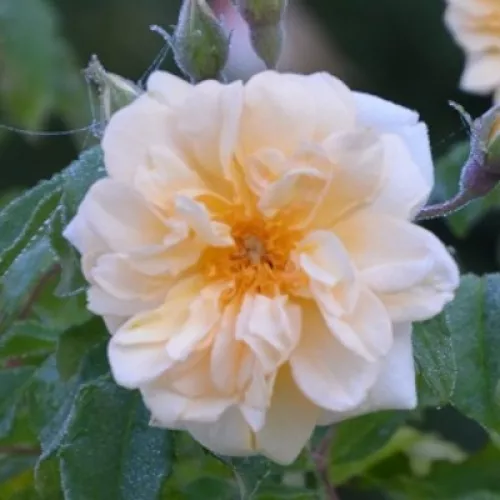
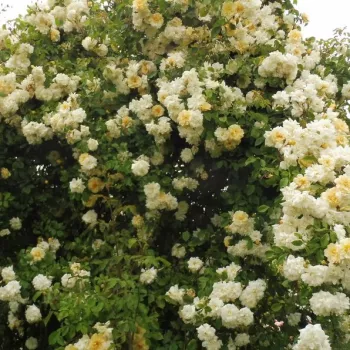
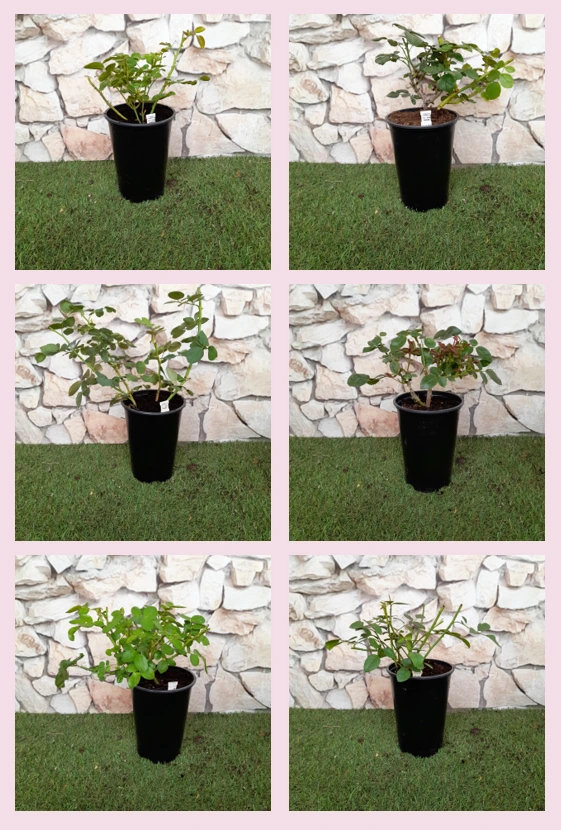
Let Alister Stella Gray bring a soft, seaside glow to your garden with clusters of pale lemon-yellow blooms that fade to cream, combining romantic charm with reassuringly low-effort care. This historic rambler settles in steadily, forming a long-lived framework that copes well with blustery, exposed gardens and calmly shrugs off persistent coastal wind and rain. Excellent disease tolerance and drought resilience keep foliage fresh-looking with minimal intervention, while its remontant, summer-long flowering offers a gently fragrant backdrop for relaxed family time. In a 2-litre own-root pot, it establishes reliable roots first, then stronger shoots, before reaching full ornamental potential by its third season, giving you a quietly dependable, enduring companion for walls, arches and verandas where you want easy beauty rather than constant maintenance.
Usage options
| Target area | Reasoning |
|---|
| Small family garden pergola near the house |
Compact height for a rambler and moderate spread make it suitable for framing a pergola in an average family garden, giving light shade and a long season of flowers with very little pruning needed, ideal for the busy beginner. |
| Coastal veranda or balcony in Cornwall/Devon |
Well-suited to breezy, salt-kissed sites, it tolerates exposed, rain-lashed positions without sulking, keeping foliage healthy and flowers coming so you can enjoy a sheltered, seaside feel on your veranda as a coastal homeowner. |
| Climbing rose for north-east or partial shade wall |
Its tolerance of partial shade allows good flowering on cooler walls where other climbers struggle, extending your options on townhouses and side passages while avoiding fussy care routines for the time-pressed urban gardener. |
| Low-maintenance cottage-style arch in clay soil |
Once established, strong roots and good drought tolerance provide steady growth even in heavier soils with sensible drainage, giving a billowing arch of bloom that copes with summer dry spells for the practical home gardener. |
| Long-term framework on fences and pillar structures |
Own-root plants age gracefully, regenerating from the base if stems are damaged, so your investment in training along fences or pillars lasts for many seasons with reliable flowering for the forward-thinking garden planner. |
| Large container (40–50 litres or more) on terrace |
In a generous, well-drained container of at least 40–50 litres, its moderate vigour, disease resistance and remontant flowering combine to create a manageable vertical accent with limited pruning needs for the container-focused patio owner. |
| Relaxed “girly” coastal shingle bed with perennials |
Soft lemon-to-cream clusters pair beautifully with sea kale, blue Festuca and lavender, creating a light, feminine palette that stays attractive over many years with modest care for the style-conscious coastal gardener. |
| Family seating area backdrop for summer scent |
Medium-strength tea-fruity fragrance and repeat flushes give a gentle scented background rather than overpowering perfume, ideal beside terraces where you sit often, maturing from strong roots in year one to full display by year three for the comfort-seeking family. |
Styling ideas
- Seaside-arch – Train over a timber arch with sea kale, Festuca and soft grasses beneath, echoing Cornish dunes in a light, wind-tolerant palette – for lovers of relaxed coastal style.
- Veranda-screen – Grow in a large 50-litre pot and fan along balustrades to create a soft privacy veil of lemon-cream blooms – for balcony and veranda owners wanting charm without complexity.
- Tea-corner – Clothe a pergola beside a small seating area, underplant with lavender and Salvia nemorosa for colour and low-care structure – for families who enjoy lingering over afternoon tea outdoors.
- Heritage-wall – Use against old brick or stone, letting the pale flowers highlight the texture, with Crocosmia ‘Lucifer’ at the base for a hot accent – for gardeners who appreciate historic character.
- Shingle-border – Combine with hare’s-ear Bupleurum and silvery foliage in a free-draining shingle bed, keeping maintenance light while flowers soften the scheme – for busy gardeners wanting easy elegance.
Technical cultivar profile
| Parameter | Data |
|---|
| Name and registration |
Alister Stella Gray is a historic rambler/climbing rose sold as a climbing rose by Gray & Dickson; also known in exhibition circles as Alister Stella Gray and Alexander Hill Gray. |
| Origin and breeding |
Bred in the United Kingdom around 1894 from ‘William Allen Richardson’ × ‘Madame Pierre Guillot’, associated with Alexander Hill Gray and Alexander Dickson II, introduced by several British and Australian firms. |
| Growth and structural characteristics |
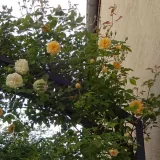
Climbing rambler with moderately dense, mid-green glossy foliage, reaching about 200–360 cm high and 200–400 cm spread, moderately thorny, forming flexible canes suited to arches, pergolas and wall-training systems. |
| Flower morphology |
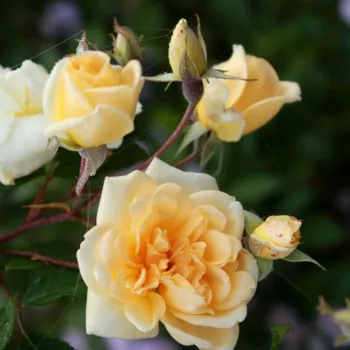
Semi-double, small cup-shaped blooms in clusters, typically 13–25 petals per flower, remontant with a strong first flush and an equally generous second flowering, providing repeated seasonal display on trained growth. |
| Colour data and phenology |
Buds open egg-yellow to buttery pale lemon, coded approximately RHS 8C outer and 11D inner, then fade to creamy white; colour lightens faster in strong sun yet retains an even, soft yellow-cream impression in full bloom. |
| Fragrance and aroma |
Medium-strength fragrance combining soft tea and fruity notes, noticeable at close range without being overpowering, contributing a gentle scent suitable for seating areas, entrances and paths used frequently in daily life. |
| Hip characteristics |
Rose hips are rarely significant on this cultivar; occasional small hips may form but overall fruiting is minimal and does not materially affect ornamental value or maintenance demands in the garden. |
| Resistance and winter hardiness |
Shows good resistance to black spot, powdery mildew and rust, with excellent heat and drought tolerance; reliably hardy to around -26 to -23 °C (RHS H7, USDA 5b), suiting much of the UK and comparable climates. |
| Horticultural recommendations |
Ideal for pergolas, arches, walls and pillars, with low maintenance needs; tolerates partial shade, best planted 225–380 cm apart depending on use, at roughly 0.2 plants/m² in massed schemes or hedging layouts. |
ALISTER STELLA GRAY offers softly fragrant, repeat pale-yellow flowering, reliable disease resistance and the regenerative security of an own-root climber; consider it as a long-term, low-effort feature for your family garden structure.