AMADEUS® – red climbing rose - Kordes
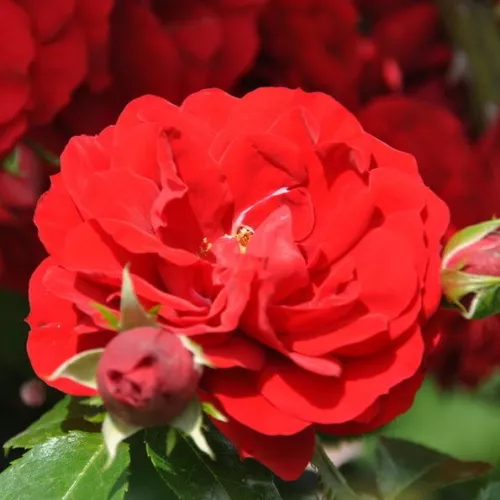
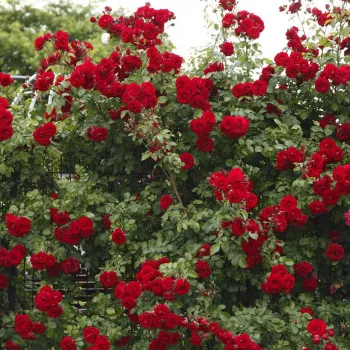
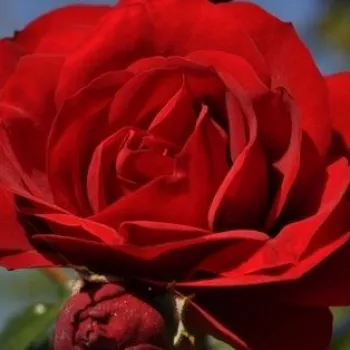
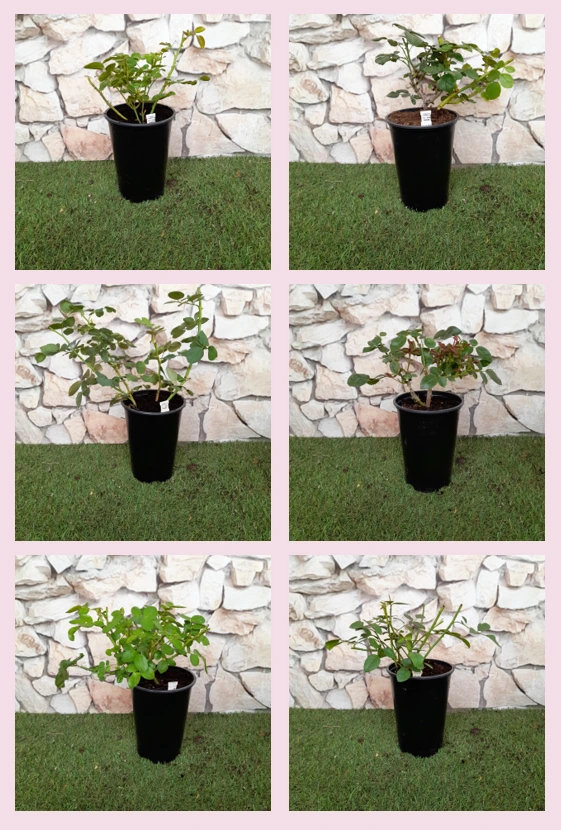
Bring a touch of coastal drama to your family garden with AMADEUS®, a dependable climbing rose that thrives where sea breezes meet sunny walls. Its lustrous deep-red blooms give instant impact on pergolas, arches and verandas, while the compact footprint suits smaller plots and townhouse gardens. Bred by Kordes and supplied as a pharmaROSA® ORIGINAL 2‑litre own‑root plant, it is designed for long‑term stability and reliable regrowth after pruning or weather setbacks. Over time, its strong framework and dense, glossy foliage help it stand firm in gusty, rain‑laden weather with improved anchoring in well‑drained soil. In your first year it concentrates on roots, the second brings bolder shoots, and by the third season you enjoy full ornamental presence. Semi‑double, cup‑shaped clusters offer a gentle rose fragrance and an inviting structure for visiting pollinators, enhancing the relaxed, seaside‑inspired character of a shingle courtyard or balcony. The colour remains rich and unfaded even in strong sunlight, giving months of bright flowers without the washed‑out look that many reds develop near the coast, making it an easy companion to silvery grasses and sea‑side planting.
Usage options
| Target area |
Reasoning |
| Small coastal veranda in Cornwall or Devon |
AMADEUS® climbs strongly but keeps a moderate spread, so it can be trained neatly up a trellis or post without overwhelming a compact veranda. Rich red clusters hold their colour in bright light, giving a cheerful backdrop to morning tea after a walk on the beach. Over time, its strong framework and dense foliage help it stay steady in blustery, rain‑laden weather with improved anchoring in well‑drained soil, reassuring the beginner. |
| Family garden pergola or rose arch |
The vigorous climbing habit and dense leaf canopy make it ideal for clothing a pergola or arch where you want shade and summer colour together. Semi‑double, cup‑shaped flowers appear in generous flushes, softening timbers and providing a welcoming tunnel for family gatherings and play. Own‑root plants regenerate reliably from the base after hard pruning, giving long‑term structure and enjoyment for the busy homeowner. |
| Sunny house wall in an urban garden |
On a warm south or west‑facing wall, AMADEUS® offers vertical colour without stealing ground space, perfect for narrow city plots. Its glossy dark foliage looks smart against brick or render, while the long flowering season adds interest from early summer into autumn. The mild, fresh rose fragrance is noticeable without overwhelming small patios, suiting scent‑sensitive residents. |
| Partially shaded corner with afternoon sun |
This cultivar tolerates partial shade, so it performs well where neighbouring houses or fences limit direct light. Provided it receives some afternoon sun, it still produces sizeable semi‑double clusters, bringing life to an otherwise dull boundary. The persistent deep‑red colour prevents flowers from looking flat or muddy in lower light, an advantage for time‑pressed gardeners. |
| Coastal-style shingle bed with grasses |
Planted at the back of a shingle bed, AMADEUS® adds height and structure behind low sea kale, Festuca and lavender, creating a relaxed, maritime look. Its clusters of bright red blooms stand out against stone and pale foliage, evoking seaside sunsets. Own‑root vigour supports a long lifespan in well‑prepared soil, rewarding style‑conscious designers. |
| Large container (40–60 litres) on a sheltered balcony |
In a generous 40–60 litre container with good drainage, this climber can be trained up a slim obelisk or balcony rail, giving privacy and colour where ground planting is impossible. The remontant habit means repeated flushes if you deadhead lightly. Own‑root resilience helps it recover from occasional dry spells, appreciated by busy commuters. |
| Feature plant near a seating area |
AMADEUS® produces showy, cup‑shaped clusters that draw the eye from your seating area without demanding close maintenance. The mild, fresh rose scent suits relaxed conversation and evening drinks, while the semi‑double form offers some interest for passing bees. Because it is own‑root, the framework can be renovated over time, reassuring long‑term‑thinking owners. |
| Decorative screen along a boundary or fence |
Trained along tensioned wires or a sturdy fence, this rose forms a leafy, flower‑spangled screen that softens property lines and offers extra privacy. Its dense foliage and height help disguise eyesores, while repeat flowering keeps the boundary attractive through much of the season. The balanced growth habit suits those seeking visual structure with moderate upkeep, ideal for practical couples. |
Styling ideas
- Seaside-Arch – Train AMADEUS® over a simple wooden arch flanked by sea kale and Festuca for a coastal walkway that frames beach‑day returns – for families who love seaside nostalgia.
- Veranda-Screen – Use a 40–60 litre pot and trellis to create a flowering windbreak beside outdoor chairs, pairing with lavender in tubs – for balcony owners seeking shelter and colour.
- Courtyard-Drama – Against pale render, underplant the red climber with Geranium macrorrhizum to soften the base and add fragrance – for urban homeowners wanting impact in tight spaces.
- Pergola-Canopy – Cover a slim pergola beam with AMADEUS® and let grasses ripple beneath, contrasting vertical roses with flowing foliage – for relaxed entertainers planning summer suppers.
- Boundary-Gallery – Space plants along a fence on horizontal wires, interwoven with Japanese euonymus for evergreen structure – for planners aiming at long‑term garden structure.
Technical cultivar profile
| Parameter |
Data |
| Name and registration |
Climbing rose from the Klettermaxe® collection; registered as KORlabriax, marketed as AMADEUS® Klettermaxe® and Amadeus™ in shows; large‑flowered climber class. |
| Origin and breeding |
Bred by W. Kordes III, W. Kordes’ Söhne, Germany; breeding completed 2003, registered 2003, introduced 2007; parentage undisclosed, selected for colour and garden effect. |
| Awards and recognition |
Highly decorated exhibition climber with gold medals at The Hague, Geneva and Lyon International Rose Trials (2004–2005) plus Certificate of Merit at Bagatelle, Paris. |
| Growth and structural characteristics |
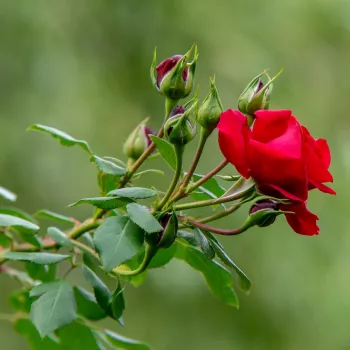
Vigorous climbing habit with dense, glossy dark green foliage; typical height 240–380 cm and spread 90–160 cm; moderately thorny canes, moderate self‑cleaning of spent blooms. |
| Flower morphology |
Semi‑double, cup‑shaped, cluster‑flowered blooms with around 13–25 petals; large 2.75–3.95 inch flowers; remontant, producing an initial flush followed by plentiful later flowering. |
| Colour data and phenology |
Lustrous deep red flowers, ARS code DR; outer petals RHS 53A, inner 46A; colour holds exceptionally well in strong sun, darkening slightly with age without bluing, browning or heavy spotting. |
| Fragrance and aroma |
Fresh, classic rose fragrance of mild intensity; semi‑double structure with partly open centres offers moderate attraction for bees and other pollinators in mixed planting schemes. |
| Hip characteristics |
Forms spherical orange‑red hips, approximately 9–15 mm diameter, in moderate quantities; can add seasonal interest and support wildlife for those who avoid deadheading late in the year. |
| Resistance and winter hardiness |
Fully hardy to about −26 to −23 °C (RHS H7, USDA 5b, Swedish Zone 4); rain‑resistant blooms; disease‑prone to powdery mildew, with moderate black spot and rust, so protection is advisable. |
| Horticultural recommendations |
Suited to walls, pergolas, arches and urban green spaces; allow 140–240 cm spacing depending on use; prefers well‑drained soil, regular feeding, careful watering in drought and proactive disease control. |
AMADEUS® offers vivid, non-fading red flowers, a strong climbing framework and long-lived own-root reliability, making it a thoughtful choice if you want lasting colour and structure with considered care.