AMBROISE PARÉ – pink historical Gallica rose - Vibert
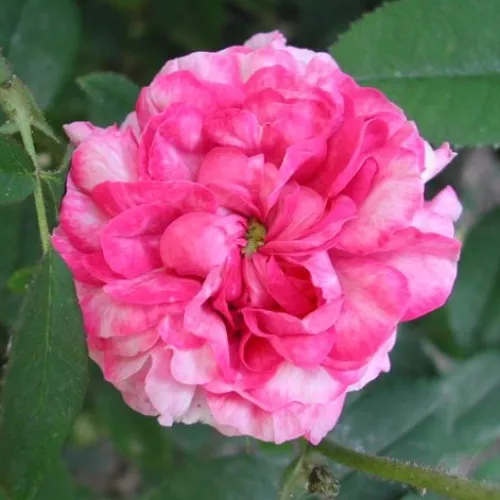
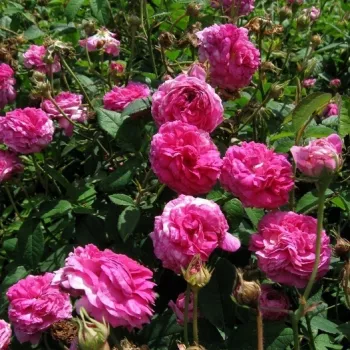
Imagine stepping in from the wind after a blustery coastal walk, making tea and catching the scent of strongly perfumed, violet‑pink rosettes drifting across the garden: AMBROISE PARÉ brings that sense of refreshment to compact, family‑sized plots and sheltered Cornish or Devon verandas. This historical Gallica rose forms a naturally bushy, upright hedge with well‑anchored roots that cope steadily even where soil needs better drainage and water management after heavy rain. Its once‑a‑year summer display is dense with medium‑sized, very double flowers in romantic marbled pink shades, followed by a long‑lived, stable framework of mid‑green, matt foliage. As an own‑root rose it regenerates reliably from the base, quietly extending its lifespan and ornamental value without complicated pruning, so you can simply settle in and enjoy the evolving structure over the years.
Usage options
| Target area |
Reasoning |
| Coastal veranda in large containers |
In a 40–50 litre container, its upright, bushy habit gives height and privacy without overwhelming a small veranda, and the strong fragrance carries beautifully on salty, breezy days for relaxed coastal-style evenings for the beginner. |
| Small family front garden focal point |
Planted as a specimen by the path or gate, its richly marbled pink rosettes and strong, spicy rose perfume create a traditional welcome with minimal shaping needed, developing steadily into a characterful shrub over several seasons for the homeowner. |
| Informal flowering hedge or wind-filter |
At 85 cm spacing it forms a tall, bushy line that softens winds while allowing some air movement, its dense summer flowering giving a romantic screen and reliable structure in typical exposed British plots for the family. |
| Mixed historical rose border |
In a flowerbed with heritage perennials, its once‑a‑season but abundant bloom and good self‑cleaning fit a low‑intervention scheme, with own‑root durability supporting a long‑term planting that matures gracefully for the collector. |
| Shingle or coastal-style planting strip |
Set into improved soil within shingle, its well‑anchoring root system and upright framework help it stand steady in blustery weather while you enjoy that sense of shelter after collecting seashells for the coastal‑garden lover. |
| Partially shaded side garden |
Its suitability for partial shade allows you to use narrower, less sunny side areas, where the strong fragrance and vivid flower colour still stand out against fences or walls with only moderate care from the busy gardener. |
| Low-maintenance period-style planting |
Once established, the long‑lasting woody framework and own‑root resilience need only occasional pruning and pest checks, offering a traditional, time‑honoured look without high upkeep in typical UK family gardens for the time-poor. |
| Background shrub in a clay-based border |
With sensible soil improvement for drainage, its bushy height and moderate spread form a stable backdrop, while self‑cleaning flowers keep the display tidy without constant deadheading, supporting relaxed enjoyment for the urban‑plot owner. |
Styling ideas
- Coastal-Veranda Duo – grow AMBROISE PARÉ in a 50 litre tub with a skirt of sea kale or blue Festuca to echo shingle and surf – ideal for veranda owners wanting structure and scent.
- Heritage-Hedge Walk – plant a loose hedge along a path, underplanting with Waldsteinia for golden groundcover – for those who like a romantic, period feel with easy care.
- Tea-Corner Accent – place a single shrub near a seating nook, paired with a simple terracotta pot of Lavandula – perfect for small gardens needing one reliable, fragrant statement.
- Shingle-Bed Tapestry – combine with Lonicera nitida ‘Maigrün’ and Japanese spurge to contrast pink blooms against calm green mounds – suited to coastal-style enthusiasts seeking year-round structure.
- Part-Shade Retreat – use as the tall backdrop in a side garden with ferns and pale perennials in front – good for homeowners turning a forgotten strip into a scented refuge.
Technical cultivar profile
| Parameter |
Data |
| Name and registration |
Historical Gallica rose marketed as AMBROISE PARÉ, from the Heritage rose collection; unregistered cultivar with no separate registered name, sold under its long-established trade name. |
| Origin and breeding |
Bred in France around 1845 by Jean‑Pierre Vibert and introduced in 1846; parentage and institutional breeder data are unknown, reflecting its status as an historic, nineteenth‑century garden rose. |
| Growth and structural characteristics |
Forms a bushy, upright shrub 150–210 cm tall and 80–120 cm wide, with moderately dense, matt mid‑green foliage and dense prickling; petals of spent blooms usually fall away, aiding its self‑cleaning habit. |
| Flower morphology |
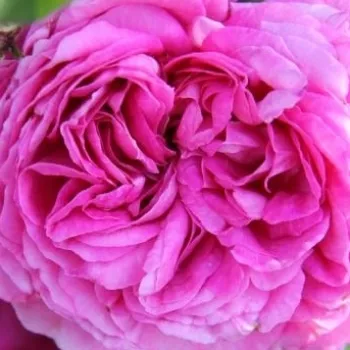
Medium-sized, strongly double rosette blooms with over 40 petals, carried mostly in clusters; a non-remontant variety that produces a single, concentrated main flowering period in early summer. |
| Colour data and phenology |
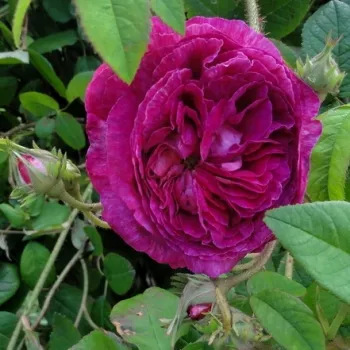
Base colour vivid lilac-pink with mauve tone, ARS PB and RHS 75A/75C; buds deep crimson-pink, opening purplish-pink with darker striping, then softening to pastel pink and finally whitening in strong sun. |
| Fragrance and aroma |
Strong, distinctly scented rose with a spicy character; the full, very double rosettes release an intense, traditional perfume that is particularly noticeable in still, mild weather and enclosed garden corners. |
| Hip characteristics |
Produces relatively few hips because of its very double flowers; when present, hips are bright red, spherical, about 10–15 mm across, adding subtle late-season interest without becoming visually dominant. |
| Resistance and winter hardiness |
Fully hardy to about −32 to −29 °C (RHS H7, Swedish zone 5, USDA 4b); disease profile shows resistant black spot with moderate tolerance to powdery mildew and rust, plus only moderate heat and drought tolerance. |
| Horticultural recommendations |
Best used in beds, parks or as a specimen; allow 95 cm for mass planting, 85 cm for hedges, 170 cm as a specimen; tolerates partial shade and medium maintenance, including regular watering and occasional pest control. |
AMBROISE PARÉ offers richly scented historical summer blooms, a tall, bushy structure and long-lived own-root resilience, making it a thoughtful choice if you value characterful roses that reward patient, low-fuss care.