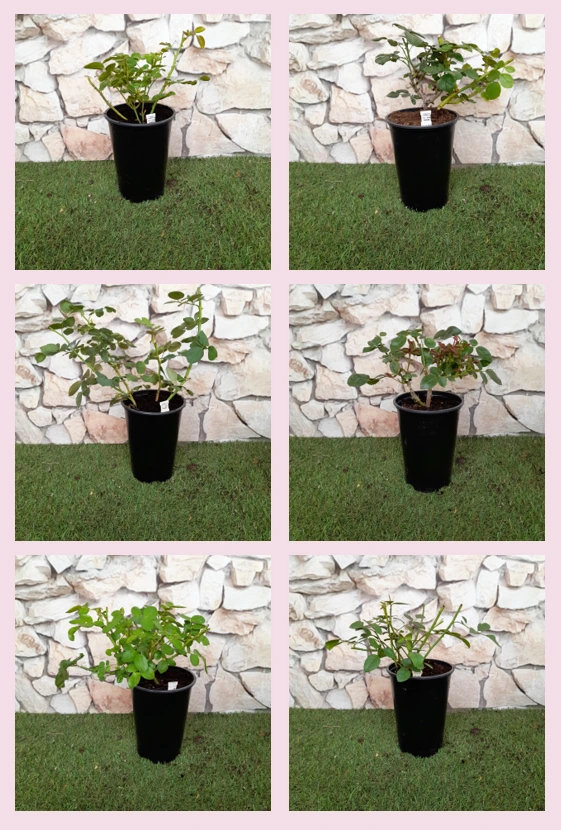
Hybrid Tea rose

40-154-1
40-154-2

Anna Pavlova

Hybrid tea rose

- – Peter Leslie Beales

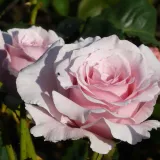
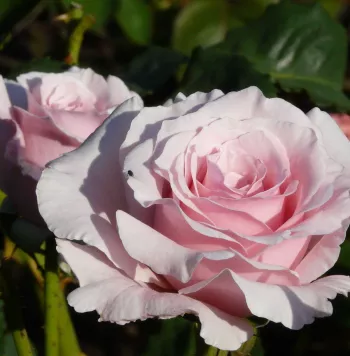
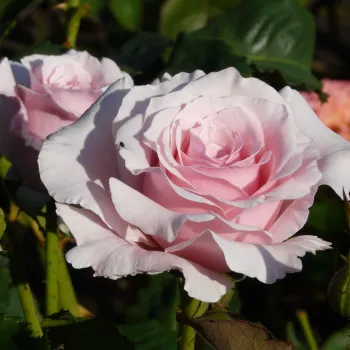
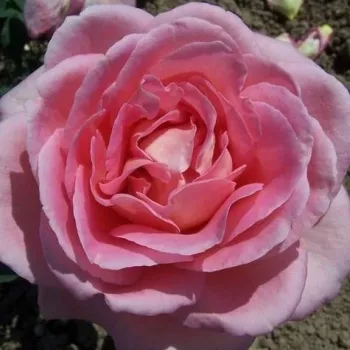
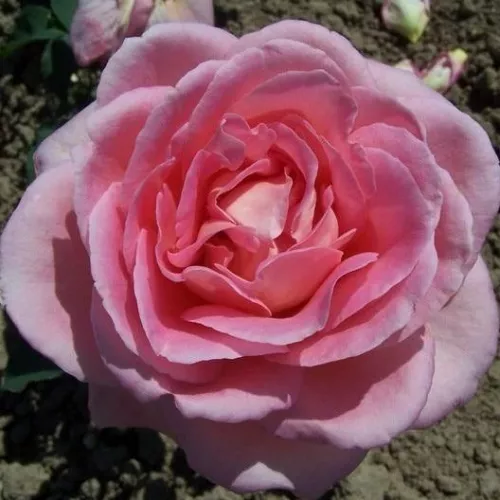
The petals’ delicate pastel pink is enriched with a slightly deeper shade at the centre. - hybrid tea rose - very strong, garden-filling scented rose - sweet, classic rose-scented

– Lush, classic Hybrid Tea form
– Very strong, garden‑filling rose fragrance
– Reliable repeat flowering through the season
– Dark green, glossy foliage with few thorns
– Excellent disease resistance, low maintenance
Special feature: Silver medal winner at Genoa Rose Competition 1986
Long lifespan – Responsible plant selection
Anna Pavlova
vivianaROSE® ORIGINAL 2-litre own-root potted rose
23,00 £
Unfortunately, we are currently unable to ship to the United Kingdom; we only deliver to countries within the European Union. For more information, please contact us!
3 (3228)
facebook   twitter

Anna Pavlova hybrid tea rose – vivianaROSE® ORIGINAL 2-litre own-root

Imagine returning from a breezy walk along the shore, settling down with afternoon tea behind a gently sheltering rose that copes calmly with wind-brushed coastal weather. Anna Pavlova is a hybrid tea whose high-centred, pastel-pink blooms open on an upright, moderately leafy framework, bringing both visual elegance and rich perfume to compact family gardens and verandas. Its very strong classic fragrance drifts through shingle and paved spaces, pairing beautifully with sea-kale and blue grasses in a soft, “girly” coastal scheme. Bred by Peter Beales, this variety is notably resistant to the main rose diseases, so you spend less time spraying and more time enjoying its repeat waves of flower. As an own-root rose it builds a deep, stable root system and can regenerate from the base, supporting a long ornamental life with minimal fuss. In the first year it concentrates on roots, in the second on stronger shoots, and by the third year it reaches its full, satisfying garden presence in your planting.


Usage options

Target area Reasoning
Coastal veranda windbreak The upright, moderately dense framework lends itself to forming a gentle, shoulder-height screen on Cornish or Devon verandas, taking the edge off salty breezes without dominating the space. Strong, classic fragrance makes evenings more atmospheric, while own-root vigour means the shrubs anchor firmly and recover well after exposure, suiting coastal-style beginners.
Small front garden focal point A single shrub at specimen spacing develops into a tidy, vertical accent that fits narrow front beds without overhanging pavements. The soft pastel pink reads clearly from the street and pairs well with cool greys and white pebbles. Once established, its low maintenance and disease resistance keep kerb appeal high with limited time investment for busy homeowners.
Cut-flower corner by the patio As an exhibition-quality hybrid tea, Anna Pavlova delivers long-stemmed, solitary blooms ideal for cutting. Repeating flushes through the season provide regular vases for the house, with the very strong, traditional scent enhancing indoor spaces. Own-root plants re-sprout reliably after hard pruning, simplifying annual renewal for home flower arrangers.
Romantic “girly” shingle bed Set against shingle or pale gravel, the porcelain-pink, cup-shaped blooms soften hard surfacing and echo seashell tones. Combine with sea kale, lavender and fine fescues for a light, feminine coastal palette. The long-lived own-root framework and upright habit mean the planting keeps its structure over years for style-conscious gardeners.
Urban courtyard rose in a large container In city settings where soil is poor or compacted, this rose performs well in a substantial container of at least 40–50 litres, with good drainage. Strong fragrance and repeat flowering give high impact in a small footprint, while own-root resilience reduces the risk of long-term decline, suiting balcony and courtyard owners.
Low-intervention family border The combination of good resistance to black spot, powdery mildew and rust with a modest maintenance requirement simplifies rose growing for families wanting colour without constant care. Occasional deadheading and annual pruning are typically sufficient, giving reliable flowering while leaving time for other activities for time-poor parents.
Long-lived backbone in mixed planting Planted at the recommended spacing, own-root Anna Pavlova forms a durable framework that integrates with perennials such as garden phlox, meadow cranesbill and oxeye daisy. Over successive seasons the deepening root system supports steady top growth, creating a stable, long-lived structure that underpins evolving schemes for patient garden planners.
Sheltered tea spot near the house Positioned close to a sunny south- or west-facing wall, the rose’s upright habit and generous scent create an intimate backdrop for a seating area, enhancing the feeling of refreshment after walks or gardening. Here it benefits from a bit of shelter from the stiffest onshore winds, mirroring coastal conditions where smart planting and siting aid relaxed veranda users.

Styling ideas

  • Seashell Border – Combine Anna Pavlova with sea kale, blue Festuca and pale shingle to echo shell and sand tones, using its upright habit as a fragrant accent beside paths – ideal for coastal-style lovers seeking softness.
  • Veranda Screen – Plant two or three shrubs in large 40–50 litre containers along a railing to create a scented, semi-transparent windbreak – suited to homeowners wanting privacy without heavy structures.
  • Romantic Mix – Thread this pastel hybrid tea through drifts of meadow cranesbill and oxeye daisy for a loose, cottage feel with strong fragrance – appealing to gardeners who like relaxed but refined borders.
  • Cream & Blush – Pair with white roses or pale perennials so the fading pink-to-cream flowers blend seamlessly, extending the visual harmony of each flush – perfect for fans of calm, tonal planting.
  • Cutting Strip – Line a sunny fence with well-spaced plants to harvest long-stemmed blooms all summer, while disease resistance and own-root sturdiness keep upkeep manageable – useful for keen but busy arrangers.

Technical cultivar profile
Parameter Data
Name and registration Hybrid tea rose; registered as BEAann, marketed as Anna Pavlova hybrid tea rose BEAann, ARS exhibition name Anna Pavlova; part of the Hybrid tea rose commercial group.
Origin and breeding Bred by Peter Leslie Beales in the United Kingdom and introduced in 1981 by Peter Beales Roses Ltd., with parentage unknown; developed as a classic hybrid tea garden and exhibition variety.
Awards and recognition Honoured with a Silver medal at the Genoa Rose Competition in Italy in 1986, recognising its ornamental and exhibition value; appreciated by enthusiasts for its colour and powerful fragrance.
Growth and structural characteristics Upright bush, around 80–120 cm high and 100–140 cm wide, with moderately dense, glossy dark green foliage; sparsely thorned stems. Self-cleaning is weak, so regular deadheading improves appearance and repeat flowering.
Flower morphology Hybrid tea type with solitary, high-centred, cup-shaped, double blooms bearing 26–39 petals. Large flower size (approximately 7–10 cm), on long, elegant stems ideal for cutting and exhibition-style garden display.
Colour data and phenology Soft pastel pink with slightly deeper centre; ARS code LP, RHS 65D outer, 62C inner. Buds open porcelain-pink with warmer inner tones, then gradually fade to creamy pink with a powder-pink centre over time.
Fragrance and aroma Very strong, classic rose scent that readily fills the surrounding garden space in still conditions. Flowers are bred primarily for ornamental and sensory effect rather than pollinator support, due to their double form.
Hip characteristics Rose hips form only occasionally because of the double flowers; when present they are small, about 8–12 mm in diameter, orange-red, ovoid, and mainly of incidental ornamental interest rather than for harvest.
Resistance and winter hardiness Good resistance to powdery mildew, black spot and rust, reducing need for chemical control. Hardy approximately to −21 to −18 °C (RHS H7, Swedish Zone 3, USDA 6b), suiting most UK and similar temperate climates.
Horticultural recommendations Best in full sun with well-drained soil; recommended spacings: 120 cm for mass planting, 110 cm for hedging, 200 cm as specimen. Plant at about 0.7–0.8 plants/m² depending on square or hexagonal layout.

Anna Pavlova hybrid tea rose BEAann offers fragrant, repeat-flowering pastel blooms on a disease-resistant, long-lived own-root shrub that settles in steadily and rewards patient gardeners; consider it if you enjoy gentle structure with classic scent.
Detailed product attributes

Product Identification Data

Product Name: ANNA PAVLOVA – pink tea-hybrid rose - Beales
Product Type: vivianaROSE® ORIGINAL - 2-litre own-root potted rose
Cultivar Authenticity: Verified:07.04.2025
Cultivar Quality Rating: premium silver
Item Number: [1108] 40-154 (14.02.2026) vivianarose.co.uk

Name and Registration

Meaning of Cultivar Name: The name is a female given name.
Original Trade Name: Anna Pavlova
Current Trade Name: Anna Pavlova Hybrid tea rose BEAann
Rose Group: Hybrid Tea
Commercial Type: hybrid tea rose
Commercial Group: Hybrid tea rose
Exhibition Category: cut flower; exhibition tea hybrid
Collection: Hybrid tea rose

Origin and Breeding

Initial Distributor: Peter Beales Roses Ltd. (United Kingdom)
Breeder: Peter Leslie Beales
Breeding Company / Institution: Peter Beales Roses Ltd.
Breeding Year: United Kingdom, 1981
Parentage: unknown

Awards and Honours

Competition and Show Awards: Genoa Rose Competition – Silver medal (Italy, 1986)

Growth and Structural Characteristics

Height: 2.6-3.9ft (80-120 cm)
Spread: 3.3-4.6ft (100-140 cm)
Growth Habit: upright
Foliage: The variety has moderately dense foliage. The leaves have a glossy surface and a dark green shade.
Prickliness: sparsely thorned
Self-Cleaning Description: According to the descriptions, most faded flowers remain on the plant and require subsequent removal.
Self-Cleaning Intensity: self-cleaning: weak

Flower Morphology

Petal Count: 26-39
Flower Fullness: double-flowered
Flower Shape: cup-shaped
Flower Size: L (2,75-3,95 in)
Inflorescence Type: solitary
Colour Code: ARS code: LP RHS code: 65D (outer), 62C (inner)
Repeat Flowering: It is a good repeat-bloomer and its second flowering is abundant.

Colour Data and Phenology

Colour: pink
Flower Colour Description: The petals’ delicate pastel pink is enriched with a slightly deeper shade at the centre.
Closed Bud: The closed bud is a silky pale pink, with a slightly more intense shade at the tip.
Newly Opened Flower: On opening, the outer petals are almost porcelain-pink, with a warmer salmon-pink tinge inside.
Full Bloom: When fully open the petals are a uniform, soft light pink, with a subtle, deeper pink flush towards the throat.

Before Fading: The pink slowly fades to cream, leaving only a soft powder-pink in the centre.

Colour Fading Description: During opening, the pale pink gradually fades to a creamy colour, with only a subtle powder-pink centre remaining at the final stage.

Fragrance and Aroma

Fragrance Strength: very strong, garden-filling scented rose
Fragrance Character: sweet, classic rose-scented
Pollinator Attraction: This variety bears strongly double, high-cupped blooms with concealed stamens that are poorly accessible to pollinators, since double (versus simple or semi-double) flower forms and reduced stamen accessibility diminish pollinator attraction.
Pollinator-Friendly Rating: Its double, high‑cupped flowers are largely inaccessible to pollinators, so its pollinator‑friendliness is limited; it is primarily an ornamental variety.

Hip Characteristics

Hip Shape: egg shaped
Hip Colour: orange-red
Hip Comment: Rose hip formation is expected to be scant due to the double flowers; occasionally formed, 8–12 mm in diameter, ovoid, orange‑red hips.

Resistance and Hardiness

Hardiness (°C): -21–-18 °C
Heat and Drought Tolerance Description: No data are available on heat–drought tolerance.
Disease Resistance: resistant
  • powdery mildew – resistant
  • black spot – resistant
  • rust – resistant

Horticultural Recommendations

Recommended Planting Distance: for mass planting 120 cm, for hedging 110 cm, as a specimen 200 cm
Planting Density: in square planting 0,7 plants/m², in hexagonal arrangement 0,8 plants/m²
Partial Shade Tolerance: Preferably in full sun
Maintenance Requirement: Maintenance requirement low; good disease resistance, generally requires little intervention.
Primary Uses: flower bed, cut flower, urban green space

Comments

Strengths: Long lifespan – Responsible plant selection
Companion Plants: Phlox paniculata - garden phlox Geranium pratense - meadow crane's-bill Leucanthemum vulgare - oxeye daisy
Comment: -
ANNA PAVLOVA – pink tea-hybrid rose - Beales
The petals’ delicate pastel pink is enriched with a slightly deeper shade at the centre. - hybrid tea rose - very strong, garden-filling scented rose - sweet, classic rose-scented
Online rose order - hybrid tea rose - Anna Pavlova - pink - (2.6-3.9ft (80-120 cm))
Inflorescence: solitary Height: 2.6-3.9ft (80-120 cm) Flower shape: cup-shaped Winter hardiness: 5b pink - Peter Beales Roses Ltd. (United Kingdom) hybrid tea rose - Flower size: L (2,75-3,95 in) Flower size: L (2,75-3,95 in) - Height: 2.6-3.9ft (80-120 cm) Height: 2.6-3.9ft (80-120 cm) - Flower fullness: double-flowered Anna Pavlova - Roses in the garden | vivianaROSE® Original - premium silver Peter Leslie Beales

We showcase the external appearance of the roses available for online purchase from our webshop.


Which product type is right for you?


Information

In what condition do we send the rose from our online webshop?

Let us ask ourselves the question: What do I want to use the rose for?
Flower? - Location? - Screening? - Fragrance? - Height? - Breeder? - Rose hips?

Rose purchasing information
Payment methods - Delivery costs - Delivery - Complaints handling

Care guide

Our product is a rose grown with PharmaRosa®’s unique cultivation technology!

2 litre, own-root, potted rose.
With seasonal shoots appropriate to the time of year.
With a well-developed root system that permeates the growing medium.
Quality compliant with E.N.A. (European Nurserystock Association) requirements.
Supplied in unique, damage-preventing packaging.
Can be planted at any frost-free time.
True-to-variety rosebush, with unique identifier.

The own-root, potted PharmaRosa® rose is a well-rooted plant that guarantees reliable establishment for you, so it can be planted at any time of year during frost-free periods.


Crop: several varieties and several stages of development in one short crop section.
Shoot system: intense growth of fresh basal shoots on a young plant.
Root system: demonstration of the vigorous root system permeating the growing medium, with the pot removed.
Balance: mature plant with a root system and shoot system that are in harmony.

Information about the videos
This video series is not a “seasonal showcase”, but a way to make the essence of PharmaRosa®’s own-root production tangible: how the plant is built, what the root system looks like and how the shoot system renews itself. The footage was therefore taken at different times and of plants at various stages of development, so mixed levels of foliage and differing stages of growth may appear. These clips are not a ‘sample’ of the batch delivered to you, but an illustration of how the technology works. The current condition of the rose you are purchasing – typical for the given time of year and what you can realistically expect to receive in your parcel – is shown at the top of the product page.

pharmarosa.ptpharmarosa.hupharmarosa.dkdenisarose.frfrancescarose.itcharlotterose.bekimrose.nlpharmarosa.skpharmarosa.atpharmarosa.co.ukpharmarosa.czpharmarosa.depharmarosa.ropharmarosa.sipharmarosa.hrpharmarosa.grpharmarosa.iepharmarosa.espharmarosa.plpharmarosa.lupharmarosa.bgpharmarosa.ltpharmarosa.sepharmarosa.lvpharmarosa.eepharmarosa.fipharmarosa.ru

Product types

Pages for private customers
Garden roses for the family garden, with minimal care  → ORIGINAL®
Premium garden roses – instant impact, a truly showpiece garden  → EXTRA®
Pages for professionals and private customers
Roses for public spaces – large areas, sustainable maintenance  → NATURAL®
Roses for projects – hedge and row planting, fast implementation  → RAPID®
For professional partners only
Production – propagation material for garden roses, wholesale  → NEONATAL®

Company details

PharmaRosa Ltd.
Company registration number: 01-09-717479
VAT number: 13075314-2-43
Plant health registration no.: HU130721
Bank account (IBAN):
HU85117631891388688400000000
BIC (SWIFT): OTPVHUHB
Bank name: OTP Bank Nyrt.