ANNELIES – pale pink park rose - Lens
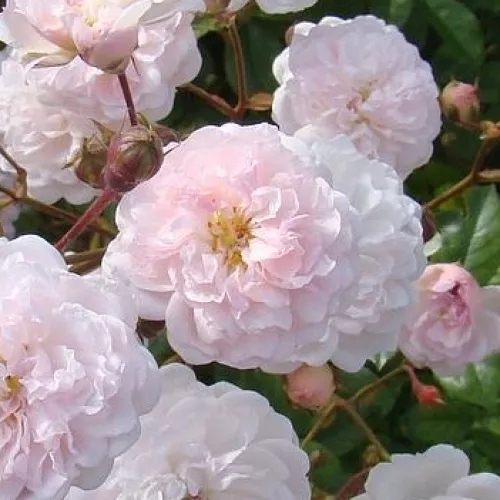
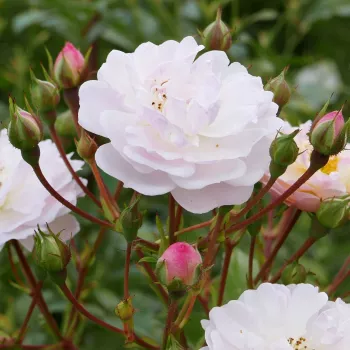
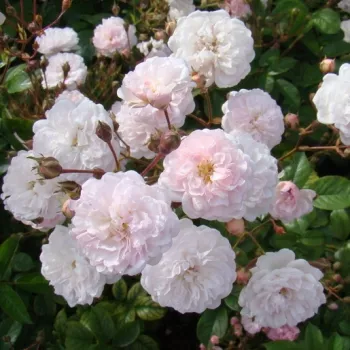
Let ANNELIES bring a sense of coastal refreshment to your garden, with airy, pastel clusters that sit beautifully against shingle, decking and light gravel. This compact, upright shrub gives a reliable display of very double, pale pink rosettes in repeated flushes from early summer, brightening smaller plots without overwhelming them. Its medium maintenance needs are straightforward: sensible watering, a light annual tidy and the odd check for problems, leaving more time for relaxation on your veranda after a blustery beach walk. As an own‑root rose it develops steadily, settling its roots in year one, building confident shoots in year two and reaching full ornamental value by year three for long-term stability and charm. Planted in well‑drained soil, it copes calmly with breezy, exposed plots where good anchoring and thoughtful water management keep it secure in windswept, salt‑touched conditions. Its compact habit makes it easy to place in family gardens, whether as a low hedge, a soft screen or a relaxed, small climber on railings. For containers, a generous 40–50 litre pot is ideal, giving roots space and helping the shrub stay balanced in coastal gusts. Soft, pearlescent blooms that age gently to near white create a subtly romantic look that flatters sea kale, ornamental grasses and lavender. Over time, this steady, own‑root structure supports a quietly enduring planting that suits beginners, busy homeowners and anyone seeking a breeze‑friendly rose with an easygoing nature.
Usage options
| Target area |
Reasoning |
| Low, informal hedge along a coastal path |
The upright yet compact habit and 120–170 cm height lend themselves to an airy, semi‑transparent hedge that marks boundaries without blocking sea views, while repeated flowering keeps the line pretty for months, ideal for the family-garden owner. |
| Feature shrub near a veranda seating area |
The pale, powder‑pink rosettes read clearly even in evening light and fade gracefully to white, giving a calm, romantic backdrop to outdoor chairs and tables without strong scent overpowering your tea or supper, suiting the relaxation-seeker. |
| Mass planting in a small front garden |
Regular, cluster-flowered blooming and moderate maintenance needs make ANNELIES a good choice for repeating in small beds, where its consistent colour and height create a unified look that stays neat with simple pruning, reassuring the busy-beginner. |
| Lightly trained as a small climber on railings |
The combination of upright growth and flexible shoots allows gentle tying onto veranda railings or a short trellis, giving a soft privacy veil and pastel flower curtains without needing complex training, attractive to the coastal-veranda owner. |
| Large container on sheltered balcony or terrace |
In a 40–50 litre container with good drainage, the compact frame and own-root resilience develop steadily into a long-lived potted shrub that can be repositioned as your outdoor layout changes, appealing to the urban-space gardener. |
| Mixed border with drought-aware, seaside planting |
Moderate water needs and tolerance of warm spells suit a water-conscious border, provided the soil does not fully dry out; it partners well with coastal-tolerant perennials where good anchoring and thoughtful water management keep it secure, supporting the eco-minded planner. |
| Soft-focus backdrop for children’s play areas |
The moderately dense, light green foliage and modest spread give a gentle, green backdrop that frames play spaces without enclosing them, while the rose’s medium care level remains manageable for those juggling family life, benefiting the time-poor parent. |
| Seasonal interest near paths or entrances |
After flowering, the moderate crop of small orange-red hips adds quiet autumn colour along paths and doorways, extending the ornamental season and rewarding simple annual pruning with months of visual interest for the long-term homeowner. |
Styling ideas
- Shingle-soft hedge – Line a coastal gravel path with ANNELIES at hedge spacing, underplant with sea kale and low Festuca for a breezy, salt-kissed feel – perfect for seaside-style enthusiasts.
- Veranda tea corner – Place a 50 litre pot by a bistro set, adding Lavandula and silvery herbs for scent, letting the pale blooms glow against timber or white railings – ideal for relaxed balcony users.
- Romantic front border – Mass-plant ANNELIES with Digitalis and white Liatris to frame a cottage-style entrance in powder pink and cream – suited to homeowners wanting gentle kerb appeal.
- Light screen railings – Train several shrubs loosely along metal railings to create a semi-transparent screen without losing views, pairing with ornamental grasses – good for privacy-conscious coastal residents.
- Autumn interest mix – Combine ANNELIES with late perennials and small shrubs so its orange-red hips and soft foliage blend into warm seasonal tones – attractive to gardeners valuing long-season structure.
Technical cultivar profile
| Parameter |
Data |
| Name and registration |
Registered as LENplero, marketed as ANNELIES – pale pink park rose - Lens; shrub, Hybrid Musk park rose in the Park - shrub rose collection, approved for exhibition as ‘Annelies’. |
| Origin and breeding |
Bred by Louis Lens, Lens Roses, Belgium, with parentage not recorded; introduced and registered in 2000, distributed initially by Lens Roses Nursery as a shrub rose for garden and landscape use. |
| Awards and recognition |
Awarded a silver medal at the Rome rose trials in 2000, confirming reliable garden performance and ornamental value under continental conditions, adding confidence for long-term planting decisions. |
| Growth and structural characteristics |
Upright, compact shrub reaching around 120–170 cm high and 60–100 cm wide, with moderately dense, light green, slightly glossy foliage and moderate prickliness, forming a tidy, vertical outline in beds or hedges. |
| Flower morphology |
Clusters of small, very double rosette blooms, typically 0.5–1.5 inches across with 40+ petals; strongly remontant with abundant second flush, giving repeated, full, soft-textured flowering over the season. |
| Colour data and phenology |
Pale powder-pink flowers, ARS code lp, RHS 65C outer and 155D inner; buds open milky pink, then fade towards cream-white in strong sun, creating a delicate, pearlescent effect across successive flowering waves. |
| Fragrance and aroma |
Very weak, discreet fragrance with an elegant, understated character; bred primarily for visual and structural effect rather than scent, suiting seating areas where strong perfume might otherwise be intrusive. |
| Hip characteristics |
Develops a moderate display of small, spherical orange-red hips, around 6–10 mm diameter, following flowering; adds subtle autumn interest and seasonal structure, especially visible against lighter gravel or paving. |
| Resistance and winter hardiness |
Hardy to approximately −21 to −18 °C (RHS H7, Swedish zone 3, USDA 6b); moderate resistance to powdery mildew, black spot and rust, benefiting from good air flow and balanced watering in humid periods. |
| Horticultural recommendations |
Best in sunny sites with well-drained soil; plant 50–55 cm apart for hedges and masses, 90 cm as specimen, at 3.3–3.8 plants/m²; medium maintenance, with occasional pest and disease monitoring and routine pruning. |
ANNELIES – pale pink park rose - Lens offers compact structure, repeat flowering and gentle colour on a resilient own-root framework, making it a thoughtful choice for long-lived, easygoing coastal or family gardens.