ANNY DUPREY® – lemon-yellow landscape shrub rose – Meilland
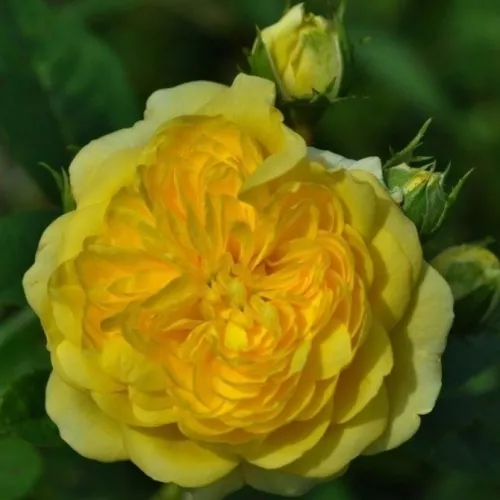
Imagine returning from a breezy coastal walk to sit with tea, sheltered behind a low hedge of ANNY DUPREY®, its softly fragrant, lemon-yellow blooms catching the light in your garden or veranda. This compact, bushy shrub is ideal for typical family plots and small coastal spaces, where reliable structure and colour matter more than complicated care. With excellent disease resistance and naturally low-maintenance growth, it copes well with brisk weather, offering reassuring stability in blustery seaside conditions and managing moisture around the roots with ease. The long, repeat-flowering season brings fresh clusters of very double, cup-shaped blooms, while its own-root longevity supports steady regeneration and a reassuringly long life. In its first years it builds roots, then stronger shoots, until by the third year it reaches full ornamental impact that fits effortlessly into relaxed coastal-inspired planting schemes.
Usage options
| Target area |
Reasoning |
| Compact front-garden bed |
The bushy, upright habit and dense foliage give a tidy, substantial presence in small spaces without overwhelming the frontage. Low maintenance needs and good disease resistance keep it presentable with minimal work – ideal for the time-poor beginner. |
| Coastal veranda container (40–60 L) |
Performs well in a generous 40–60 litre container where the rootball can stay evenly moist yet well drained, offering reliable flowering and stable anchoring even in frequent coastal winds – a reassuring choice for exposed balcony-owners. |
| Low, informal hedge along a path |
Regular, repeat flowering and compact, hedge-suitable spacing (around 50 cm) create a soft, lemon-yellow boundary that looks good for most of the season, with only light pruning needed – perfect for relaxed family-garden owners. |
| Mixed border with sea-style perennials |
The romantic lemon-yellow blooms blend easily with silver foliage and grasses, pairing well with plants like Festuca and Lavandula to echo an airy, beach-inspired look while remaining easy to manage – appealing to coastal-style enthusiasts. |
| Small shingle or gravel garden |
The compact framework and dense canopy sit comfortably in a shingle setting, where good drainage and the plant’s robust structure allow it to stand up to breezy, salty air and capricious showers – reassuring in changeable seaside weather for coastal-garden keepers. |
| Family play-area backdrop |
Moderate height and bushy form provide a gentle visual screen behind seating or play zones without casting heavy shade, while the mildly citrus fragrance adds a subtle sensory layer – attractive for practical-minded parents. |
| Partial-shade side return |
Tolerates partial shade, so it will still flower reliably where sun reaches only part of the day, such as between houses or beside garages, giving colour where many roses struggle – useful for space-limited urban gardeners. |
| Long-lived structural planting |
As an own-root shrub with strong health ratings, it builds a durable framework that recovers well from weather damage or occasional neglect, preserving ornamental value year after year – ideal for low-intervention homeowners. |
Styling ideas
- Coastal-Hedge – plant a loose line along a shingle path, interspersed with sea kale and low grasses to mimic dune edges – for lovers of soft, wind-shaped seaside borders
- Veranda-Pots – set one or two in 50–60 litre tubs with gravel mulch and blue Festuca for a neat, easy-care seating corner – for balcony and terrace owners needing simple structure
- Yellow-Drift – mass-plant in a small front bed with Calamintha and bluebeard for a shimmering mix of lemon yellow and cool blues – for those who enjoy gentle colour contrast without fuss
- Family-Nook – use three shrubs behind a bench or children’s sand area, backed by taller shrubs, to frame a sheltered, fragrant sitting space – for families wanting calm, low-pruning planting
- Side-Return – line a narrow, part-shaded passage with staggered plants and pale gravel, where their compact habit brightens a tricky spot – for urban gardeners making use of every metre
Technical cultivar profile
| Parameter |
Data |
| Name and registration |
Modern Shrub (Landscape Shrub) rose, registered as MEItongas, marketed as Anny Duprey® / Anny Duperey, Romantica® collection; bush rose type for repeat-flowering ornamental use. |
| Origin and breeding |
Bred by Alain Meilland, Meilland International, France; breeding year and registration 2006, introduced commercially after 2006, parentage not disclosed by the breeder. |
| Awards and recognition |
Holds ADR certification in Germany (2008); awarded first prize in Barcelona rose trials (2005) and a certificate at St Albans, United Kingdom, in 2008 for garden performance. |
| Growth and structural characteristics |
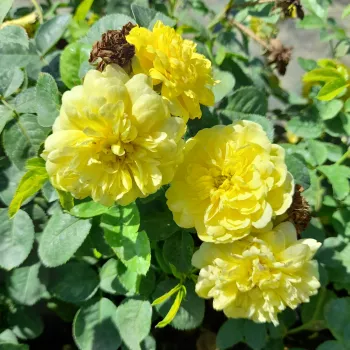
Bushy, upright and compact shrub, around 90–130 cm high and 65–95 cm wide, with dense, slightly glossy, medium to dark green foliage and moderate prickliness on the shoots. |
| Flower morphology |
Large, 2.75–3.95 inch, very double, cup-shaped flowers with over 40 petals, borne mainly in clusters; reliably remontant, producing a generous second flush and further scattered blooms. |
| Colour data and phenology |
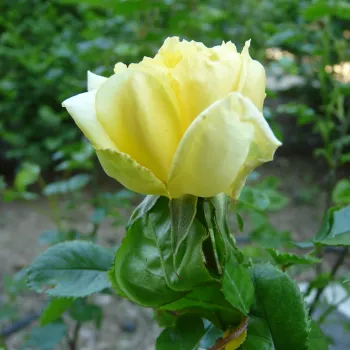
Intense lemon-yellow blooms (RHS 9B–9A, ARS Y) opening from vivid yellow buds, gradually fading towards creamy yellow with buttery edges; colour appears brighter in cooler weather, paler in strong sun. |
| Fragrance and aroma |
Mild yet noticeable sweet citrus scent, adding a light freshness without overwhelming nearby seating areas; primarily grown as an ornamental shrub, not selected for perfume extraction or culinary use. |
| Hip characteristics |
Due to very double flowers, hip set is modest; occasionally forms small, spherical, orange-red hips about 6–10 mm in diameter, providing limited but decorative late-season interest. |
| Resistance and winter hardiness |
Rated H7, hardy roughly to −21 to −18 °C and USDA zone 6b; demonstrates strong resistance to powdery mildew, black spot and rust, with moderate heat tolerance needing watering in prolonged drought. |
| Horticultural recommendations |
Suited to beds, borders, containers, hedges and park plantings; low maintenance with minimal pruning and feeding; plant 50–90 cm apart depending on hedge or specimen use, at around 3 plants per m². |
ANNY DUPREY® offers compact structure, repeat lemon-yellow flowering and strong health in a durable own-root form, making it a thoughtful choice for relaxed, long-term planting.