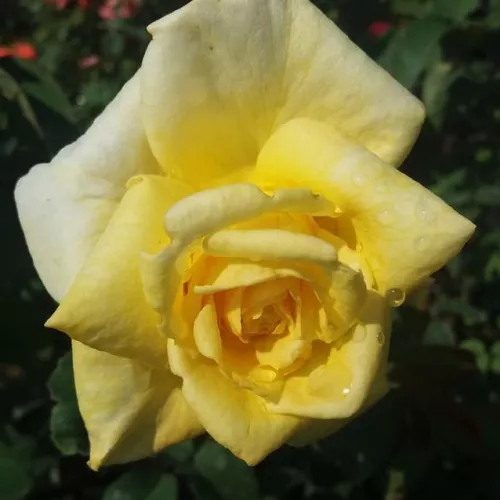
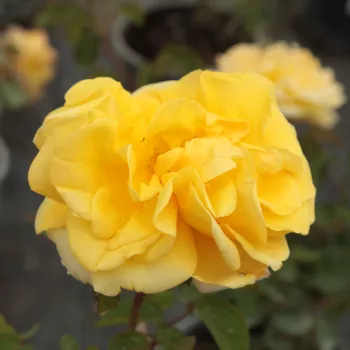
APACHE – yellow park rose - Abrams
Bring a touch of coastal sunlight to your family garden with APACHE, a tall, upright shrub rose that feels at home in breezy, open spaces yet remains remarkably manageable for everyday care. Its dense, glossy foliage and richly thorned stems give reassuring anchoring, ideal where winds funnel between houses or along shingle paths, while lemon-gold blooms fade gently to buttery cream for a soft, romantic glow from early summer well into autumn. Grown on its own roots, this rose offers long-term resilience and the ability to regenerate from the base, supporting a calm, low-fuss routine rather than constant replacing and nursing. In a large pot of at least 40–50 litres, it becomes a striking veranda feature that is easy to reach, prune and water, and it settles steadily over time – roots in the first year, more shoots in the second, then full character and ornamental value by the third. Think of sheltered corners where you can sit with a mug of tea, watching its colour shift like sun on sand while it copes reliably with blustery, salt-kissed conditions and you simply enjoy the view.
Usage options
| Target area | Reasoning |
|---|
| Coastal veranda in a large container |
APACHE’s upright habit and dense foliage turn a 40–50 litre pot into a living windbreak that softens salty breezes without demanding expert care. The shifting lemon-to-cream flowers create a sunny focus for relaxed outdoor seating, suiting coastal-style beginners. |
| Small family garden focal point |
Reaching around 130–190 cm, this shrub rose gives instant vertical interest without sprawling, so it fits neatly beside patios, play areas or garden benches. Its rounded, bushy form and dark green leaves look “finished” even between flushes, ideal for busy homeowners. |
| Low-effort long-season colour |
The remontant flowering habit means a generous first flush followed by abundant repeats, extending soft yellow colour well into autumn with only routine deadheading and occasional feeding. This supports a bright but undemanding display for time-poor gardeners. |
| Wind-aware boundary or screen |
The tall, thorny, bushy framework and dense foliage help break up gusts and provide a sense of shelter along paths or seating nooks, while the strong root system offers reassuring stability in exposed spots and copes well where wind and rain regularly sweep through for coastal families. |
| Nature-inspired, “girly” coastal border |
Softly fading yellow blooms pair beautifully with silvery grasses and blue-toned planting, creating a seaside feel without heavy maintenance. The subtly sweet fragrance adds charm at close quarters, giving a romantic yet practical highlight for veranda stylists. |
| Own-root, long-lived feature rose |
Being grown on its own roots supports a longer lifespan, steady regrowth from the base after hard pruning or weather damage, and more consistent flowering shape over the years, giving reliable value and fewer replacements for long-term planners. |
| Structured mixed planting with grasses |
Its upright grandiflora habit and glossy foliage provide a solid backbone among looser grasses such as feather reed grass or sedges, helping the border look intentional rather than messy while still feeling naturalistic for design-conscious beginners. |
| Gradually maturing family garden rose |
This cultivar rewards patience: it settles roots in year one, builds framework and more flowering shoots in year two, then reaches full ornamental presence from year three onward, suiting those happy to watch their garden develop, especially new rose enthusiasts. |
Styling ideas
- Seaside-Veranda Nook – Position APACHE in a 50-litre container by a south or south-west facing wall, underplanted with trailing sea thrift for a soft, beach-hut feel – ideal for coastal veranda owners.
- Honey-and-Grass Border – Combine with Calamagrostis ‘Karl Foerster’ and blue sedges so the fading yellow blooms float above cool grasses, giving structured movement with low input – suited to design-led small gardens.
- Wind-Kissed Seating Corner – Plant a loose trio at 90 cm spacing behind a bench to form a light screen that tempers breezes while offering long-season colour – perfect for tea-in-the-garden moments.
- Girly-Sunrise Palette – Mix APACHE with soft pink perennials and pale lavender in a narrow bed, letting its lemon-cream tones link pastels into a cohesive, feminine scheme – good for romantic front gardens.
- Anchor-Point Feature – Use a single specimen at 150 cm spacing near a gate or path junction, where its tall, glossy presence and repeat flowering give a clear focal point with modest maintenance – ideal for busy households.
Technical cultivar profile
| Parameter | Data |
|---|
| Name and registration |
APACHE (registered as Apache) is a park–shrub rose within the shrub group, used primarily as a garden and landscape rose; commercial listing: Apache – yellow park rose - Abrams, exhibition category shrub rose. |
| Origin and breeding |
Bred in the USA in 1961 by Gordon J. Von Abrams; parentage data are not available and introduction and registration years are unrecorded, but it has established itself as a reliable landscape shrub. |
| Growth and structural characteristics |
Upright, bushy grandiflora habit, typically 130–190 cm high and 70–110 cm spread, with dense, dark green, glossy foliage and heavily thorned stems, forming a substantial, wind-resistant shrub framework. |
| Flower morphology |
Double, high-centred blooms with 26–39 petals, usually borne singly on stems; flower size large at approximately 2.75–3.95 inches, with remontant flowering and a notably abundant second flush in suitable conditions. |
| Colour data and phenology |
Sun-yellow overall impression; buds open lemon-golden, then petals fade from bright lemon-gold to buttery yellow and creamy tones, ending in a honey–straw-yellow centre, with colour retention rated as moderate. |
| Fragrance and aroma |
Fragrance is pleasantly sweet but mild, best appreciated at close range on still days; primarily planted for colour and structure rather than perfume, yet it offers a gentle, classic rose scent in warm weather. |
| Hip characteristics |
Hip set is generally low due to double flowers; when present, hips are spherical, 16–24 mm across, orange-red (RHS 40A), adding a discreet decorative accent in late season without overwhelming the shrub. |
| Resistance and winter hardiness |
Classified as H7 and USDA zone 6b, tolerating approximately −21 to −18 °C; resistant to powdery mildew and black spot, with moderate susceptibility to rust, generally giving robust garden performance with routine care. |
| Horticultural recommendations |
Best planted 80–150 cm apart depending on use, at 1.2–1.4 plants/m²; medium maintenance, requiring periodic pruning, feeding, and occasional pest or disease control, plus consistent watering and good drainage in heavier soils. |
APACHE offers tall, glossy structure, long-season lemon-to-cream blooms and dependable own-root longevity, making it a thoughtful choice for relaxed, wind-aware gardens where you prefer to enjoy the view rather than fuss over plants.