APRIKOLA® – peach-orange bedding floribunda rose
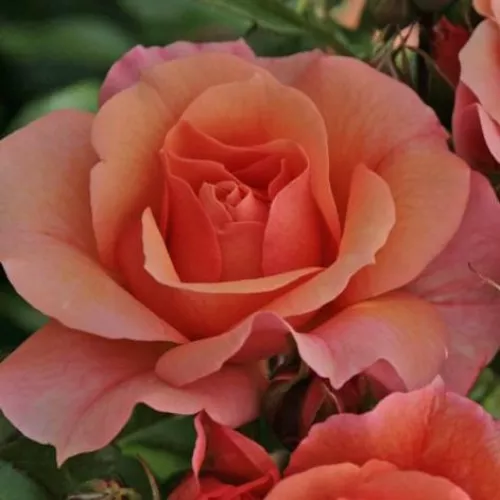
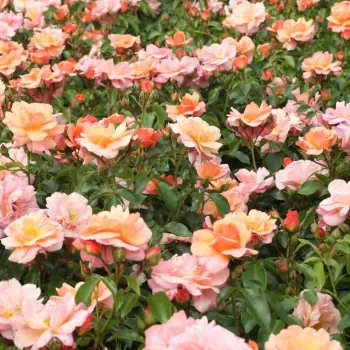
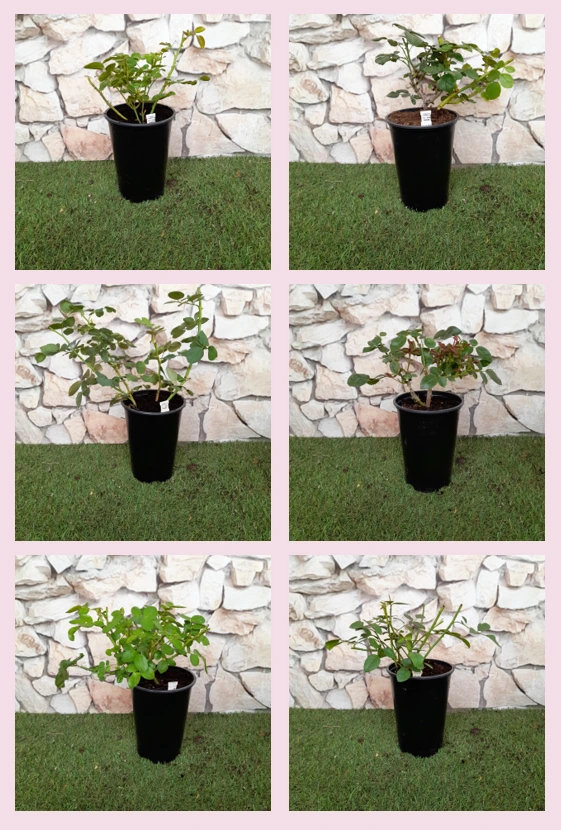
Imagine returning from the seaside, salt on your skin and a light breeze in the air, to a veranda edged with low, glowing APRIKOLA® roses that stay compact and orderly without complicated pruning. This Kordes floribunda forms neat, upright bushes that fit perfectly into small coastal gardens and sheltered patios, where you want colour but not a constant gardening to‑do list. Its warm peach‑orange blooms come in generous clusters, repeating from early summer well into autumn, while good heat tolerance and sensible water use mean it copes reliably with coastal sun and drying winds, provided the soil is prepared to manage heavy clay with careful drainage and moisture control. Being an own‑root plant, it keeps its shape and flowering habit for many years, quietly regenerating after winter and reshooting if ever cut back hard. In a 40–50 litre container or a front‑of‑border ribbon, it offers a long, low hedge of colour with self‑cleaning blooms and tidy foliage that minimise deadheading. Over time its year‑on‑year longevity builds: first establishing roots, then filling out with shoots, and by the third season delivering its full ornamental impact in your family garden.
Usage options
| Target area | Reasoning |
|---|
| Small coastal front garden bed |
The naturally upright yet compact habit creates a low, structured frontage that does not swamp narrow plots or cottage-style bays, while its water-wise nature suits breezy sites that dry quickly after rain and need thoughtful moisture management in heavier coastal soils – ideal for the time-pressed homeowner. |
| Veranda or balcony container (40–50 litres) |
APRIKOLA® performs reliably in a generous 40–50 litre pot, where its neat, bushy growth and modest height offer colour without shading seating areas, and own-root resilience helps it recover well if watering is occasionally irregular – a reassuring choice for the busy beginner. |
| Low, informal flowering hedge |
Planted at hedge spacing, it knits into a softly undulating ribbon of warm peach-orange, and the good self-cleaning habit keeps the line looking tidy even when you cannot deadhead regularly, giving a long season of impact with very few tasks for the practical family-gardener. |
| Mixed coastal-style border with grasses |
The dense mid-green foliage and glowing clusters of flowers contrast beautifully with fine grasses and silvery perennials, while good heat and moderate drought tolerance help it cope with sunny, windy aspects that are typical of UK coastal borders, rewarding design-focused garden-owners. |
| Urban front garden with heavy clay soil |
Once the planting hole is prepared with drainage-conscious soil improvement, this variety anchors well and forms a steady, upright shrub that keeps its compact outline and self-cleaning flowers, reducing the need for frequent tidying in everyday streetscapes for the practical town-dweller. |
| Family play garden edging |
Its moderate height and dense, glossy foliage form a clear visual edge without creating a tall barrier, and the steady repeat flowering through the season adds colour around lawns and play areas, with little more than an annual trim required by the busy parent. |
| Long-season colour ribbon along paths |
Planted in a line at the recommended distances, APRIKOLA® offers months of warm-toned flower clusters that refresh the garden scene from early summer to autumn, with fading blooms dropping cleanly so paths remain presentable even between visits from the practical weekend-gardener. |
| Long-term own-root planting scheme |
As an own-root floribunda, APRIKOLA® grows into a stable, non-grafting shrub that keeps its flowering character for many years, quietly renewing shoots from the base and building up into a reliable, low-maintenance feature for the forward-planning coastal-resident. |
Styling ideas
- Seaside-veranda trio – Group APRIKOLA® in 50 litre tubs with sea kale and blue Festuca to echo Cornish beach tones – ideal for coastal-style lovers seeking low-fuss containers.
- Peach-parterre edging – Use as a low edging rose around a small lawn or gravel square, creating a soft, structured frame – perfect for beginners wanting order without formality.
- Sunset-shingle bed – Combine with Helichrysum italicum and dwarf Lavandula for a silver-and-peach palette that thrives in sun – suited to busy owners of shingle gardens.
- Family-path ribbon – Plant a single row along paths for months of colour that stays compact and neat – good for families who need clear sightlines and simple upkeep.
- Urban-pocket border – Slip APRIKOLA® into small front beds with Verbena and compact Ceanothus, gaining layered interest without clutter – attractive for hobby gardeners in tight city plots.
Technical cultivar profile
| Property | Data |
|---|
| Name and registration |
APRIKOLA® (Registered as KORorbe) is a floribunda bed rose from the RigoRosen® collection, recognised as a compact shrub or exhibition floribunda for garden and show use. |
| Origin and breeding |
Bred by W. Kordes & Sons in Germany from Bernstein-Rose® × unknown seedling; registered in 1999 and introduced commercially in 2000 by W. Kordes’ Söhne. |
| Awards and recognition |
Holds the ADR 2001 award, indicating proven garden performance, reliable flowering and tested robustness under Central European trial conditions over several seasons. |
| Growth and structural characteristics |
Forms an upright, bushy shrub 60–85 cm high and 50–70 cm wide, with dense, mid-green glossy foliage and moderate prickles, maintaining a neat, compact outline in beds. |
| Flower morphology |
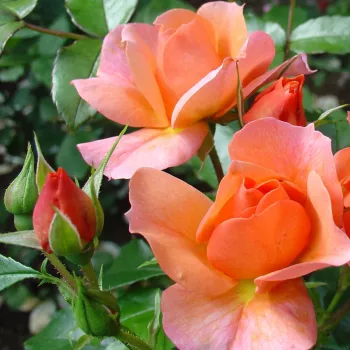
Semi-double, cup-shaped to flat-opening blooms, medium-sized at 1.5–2.75 inches, borne in clusters; around 13–25 petals, with good self-cleaning as most spent flowers drop naturally. |
| Colour data and phenology |
Peach-orange flowers (RHS 24A outer, 24C inner) show intense peachy buds, soft warm blooms, then gradually fade towards pinkish tones in strong sun, flowering repeatedly through summer. |
| Fragrance and aroma |
Presents a mild, fresh, fruity fragrance; the scent is subtle rather than overpowering, adding a light note around seating areas without dominating nearby planted combinations. |
| Hip characteristics |
Produces small, spherical orange-red hips about 7–10 mm across in moderate numbers, adding late-season detail but not significantly affecting the plant’s neat overall appearance. |
| Resistance and winter hardiness |
Rated H7, hardy to about -26 to -23 °C (USDA 5b); good heat tolerance and moderate drought resistance, with moderate disease resistance and clear strength against rust. |
| Horticultural recommendations |
Best in sunny, well-ventilated spots; avoid enclosed, humid courtyards. Space 35–65 cm depending on use, with 5–6 plants/m² for mass plantings, ensuring reliable air movement. |
APRIKOLA® offers compact, tidy growth, generous repeat flowering and long-lived own-root reliability, making it a thoughtful choice for effortless coastal or urban beds and containers.