ARIEL – orange hybrid tea rose – Bees
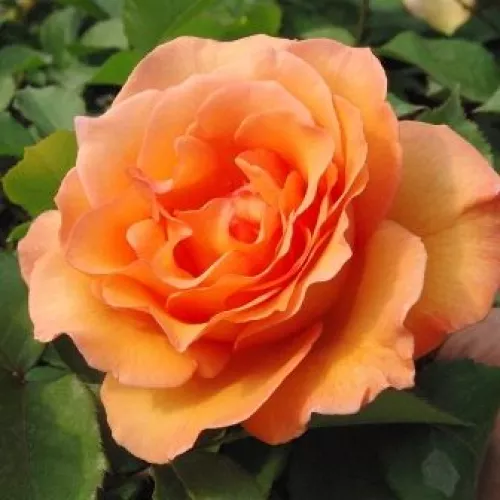
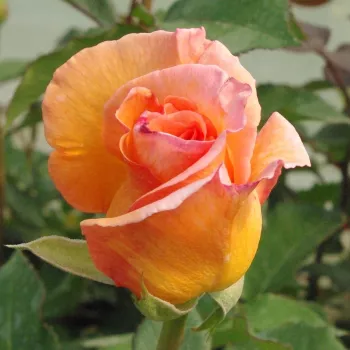
Bring coastal refreshment to your garden with ARIEL, a classic hybrid tea that thrives in breezy UK plots where good drainage helps it stand firm against strong, shifting weather. Its upright, bushy habit and semi-double blooms make it ideal for small family gardens and neat veranda planters, offering an elegant, sunrise-orange display that fades to softer, creamy tones. Own-root vitality supports a long-lived plant that regrows reliably from the base, giving you stable ornamental value with less worry over time. Enjoy a medium, sweet-and-spicy fragrance as you sit out with tea after a windy walk, and appreciate the remontant flowering that brings a generous second flush. In year one it settles and roots, in year two it builds shoots and shape, and by year three it offers its full, established coastal charm.
Usage options
| Target area | Reasoning |
|---|
| Coastal veranda container (40–60 litre) |
ARIEL’s compact, upright frame suits large pots on sheltered Cornish or Devon verandas, where good drainage and a heavy container keep it steady against brisk sea breezes; an easy focal point for relaxed evenings for busy homeowners. |
| Small front garden feature by the path |
The medium-height, bushy habit and neatly shaped flowers create a tidy, welcoming accent near your front door without crowding the space, adding classic structure that remains manageable for beginner gardeners. |
| Sunny flower bed in a family garden |
Planted in a well-drained, sunny border, its remontant flowering provides repeated colour through the season, while moderate disease resistance helps keep maintenance at a sensible level for time-pressed families. |
| Cutting patch for home bouquets |
As a traditional hybrid tea, ARIEL offers long-stemmed, solitary blooms with a refined form and warm colouring, giving you reliable stems to cut for vases and teatime tables, ideal for home flower lovers. |
| Specimen rose near a seating area |
Its sweet, spicy medium-strength scent and changing orange-yellow tones invite you to sit close and enjoy the detail at eye level, providing a gently indulgent experience for garden relaxers. |
| Structured rose border with perennials |
The upright outline and moderate spread make ARIEL easy to space with low grasses and coastal-style perennials, creating a well-organised planting that stays legible and elegant for design-conscious owners. |
| Traditional mixed cottage-style bed |
Introduced in 1922, this heritage rose adds a period feel and timeless colour blending, integrating naturally with classic cottage companions while still being straightforward to care for for heritage-rose admirers. |
| Sheltered, well-drained coastal strip |
In a light, protected spot with improved drainage, ARIEL copes well with typical coastal wind exposure while its own-root vigour supports recovery after rough spells, suiting practical yet style-minded coastal gardeners. |
Styling ideas
- Seaside Veranda Nook – combine ARIEL in a 50–60 litre tub with sea kale and blue fescues for a soft, dune-like feel beside outdoor seating – ideal for coastal-style veranda owners.
- Sunny Cottage Path – flank a front path with spaced ARIEL bushes and airy lavender, using its upright habit to frame the walkway – perfect for lovers of romantic yet orderly entrances.
- Heritage Tea Corner – plant ARIEL as a focal rose beside a bistro set, underplanted with low herbs, to enjoy fragrance and cut flowers within arm’s reach – suited to tea-time traditionalists.
- Structured Family Border – place ARIEL at mid-border with ornamental grasses and hardy perennials to give reliable seasonal colour without dominating play space – good for young-family gardens.
- Cut-and-Come-Again Patch – dedicate a small bed of ARIEL in rows, so you can harvest stems without spoiling the main garden display – attractive for home florists and bouquet enthusiasts.
Technical cultivar profile
| Parameter | Data |
|---|
| Name and registration |
ARIEL hybrid tea rose (Pernetiana group), exhibition-quality cut flower and garden rose; unregistered variety with American Rose Society exhibition name ARIEL and verified cultivar authenticity. |
| Origin and breeding |
Bred by Bees Ltd., United Kingdom, around 1920 from ‘Madame Edouard Herriot’ × ‘Natalie Boettner’; introduced in 1922 by Bees Ltd. and Sealand Nurseries for garden and cutting use. |
| Awards and recognition |
Royal National Rose Society Gold Medal awarded in 1920, reflecting its early twentieth-century acclaim as an exhibition-quality hybrid tea and reinforcing its value as a heritage garden rose. |
| Growth and structural characteristics |
Compact upright, bushy shrub typically 60–90 cm high and 50–70 cm wide, with moderately dense, mid-green, slightly glossy foliage and moderate prickliness, forming a tidy, manageable garden rose. |
| Flower morphology |
Semi-double, ball to pompon-shaped blooms, 13–25 petals, large-flowered on mainly solitary stems; remontant, with a generous second flush that supports both garden display and cutting over the season. |
| Colour data and phenology |
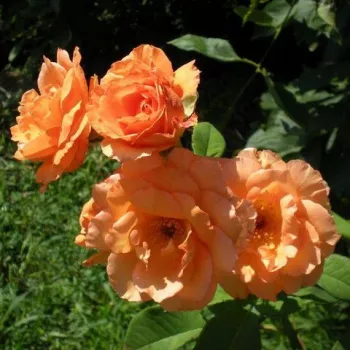
Medium-bright orange blend: golden-yellow base with orange and scarlet tones; opens vivid, then softens to buttery yellow with pinkish edges as blooms age, offering subtle colour shifts through flowering. |
| Fragrance and aroma |
Clearly perceptible, medium-strength scent with a sweet, spicy character; noticeable near seating or when cut for indoor arrangements, adding a traditional perfumed-rose element without overpowering nearby plantings. |
| Hip characteristics |
Occasional small, egg-shaped hips, around 10–14 mm, in an orange-red tone; decorative late in the season but not typically a dominant ornamental or wildlife feature compared with the main flowering display. |
| Resistance and winter hardiness |
Hardy to approximately −21 to −18 °C (RHS H7, USDA 6b, Swedish Zone 3); moderate general disease resistance with good black-spot resistance but only moderate tolerance to powdery mildew and rust. |
| Horticultural recommendations |
Best in full sun with well-drained soil; moderate maintenance, requiring periodic pest and disease checks, pruning, and deadheading, with spacing of roughly 40–65 cm depending on mass planting or specimen use. |
ARIEL offers compact, upright growth, remontant colour and a sweet, spicy fragrance on a durable own-root framework; consider it if you would like a long-lived, classically styled rose with manageable care.