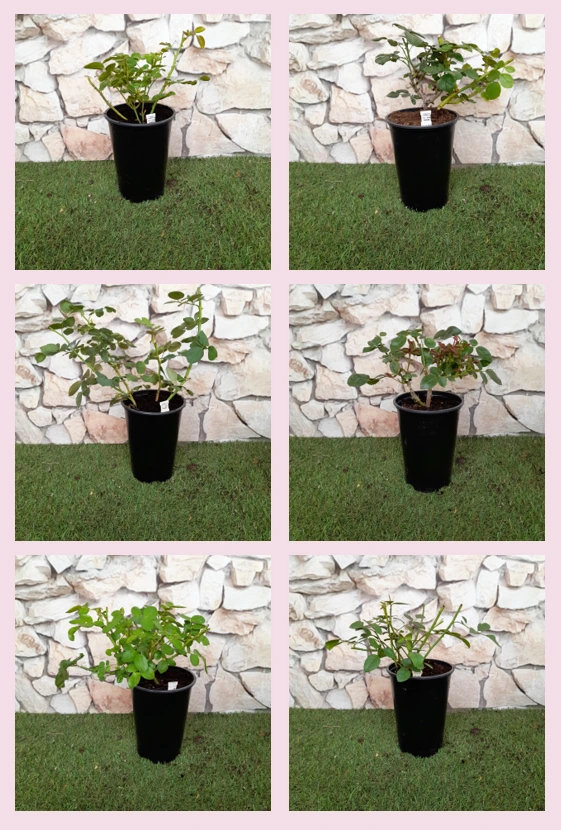
ARTHUR BELL – yellow bedding floribunda rose - McGredy
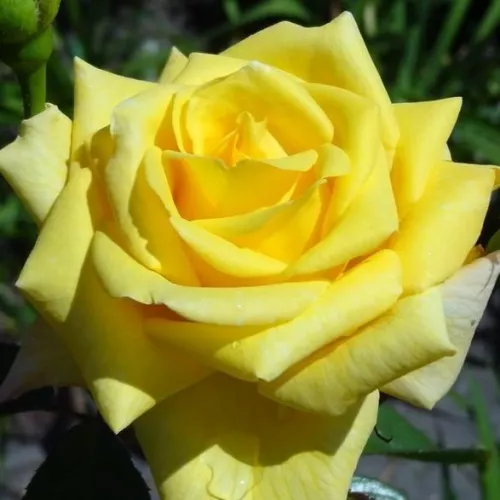
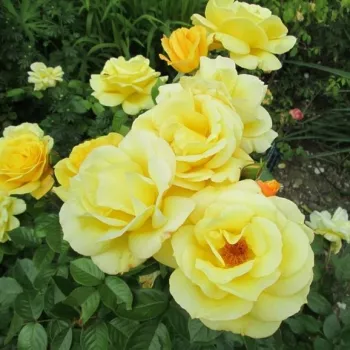
Imagine stepping onto your coastal veranda with a mug of tea, sheltered from the breeze by clusters of golden flowers that hold their colour best in cooler UK summers, while their strong, fruity fragrance drifts on the air even after rainfall. ARTHUR BELL settles quickly into family gardens as a compact, upright shrub that anchors beds and small borders without demanding expert care, and its naturally good self-cleaning reduces deadheading, leaving you more time to enjoy the view across shingle, sea kale and Festuca. As an own-root plant it builds a dependable framework below ground, supporting long-term health, easier regeneration after pruning and stable performance season after season. In a 40–50 litre container on a Cornish or Devon balcony it offers generous clusters of blooms for cutting, while semi-double flowers remain accessible enough to offer moderate interest to visiting pollinators. Over time you will see roots establish first, then stronger shoots, and by the third year a full, reliable display that copes well with typical coastal winds and showers, including the challenge of exposed sites where good drainage and firm anchoring are vital for lasting structure. Its glossy, dark-green foliage frames the lemon-to-butter yellow cups beautifully, and moderate disease resistance suits gardeners who prefer simple, seasonal routines rather than constant spraying. This classic McGredy floribunda, honoured with the RHS Award of Garden Merit, brings a quietly reliable, long-lived presence to relaxed, seaside-inspired planting, whether you are a beginner, a busy family, or simply want fragrance and colour without complicated maintenance.
Usage options
| Target area | Reasoning |
|---|
| Small coastal flower bed near a seating area |
Compact, upright growth and medium height make ARTHUR BELL ideal beside a bench or terrace, giving structure without blocking views, while the strong, fruity fragrance enhances everyday use of the space for beginners. |
| Shingle-style coastal border with salt-tolerant companions |
The rose’s reliable framework and moderate disease tolerance suit breezy, exposed gardens, and its ability to cope with coastal wind and rain complements sea kale and ornamental grasses for coastal-style owners. |
| 40–50 litre container on a sunny veranda or balcony |
A sizeable container supports the own-root system, helping long-term health and reducing drying out; the upright habit fits narrow spaces and gives a long flowering season on verandas for busy homeowners. |
| Family front garden boundary or low flowering hedge |
Recommended hedge spacing and dense foliage allow a neat, low screen that marks boundaries without becoming overbearing, while self-cleaning flowers cut down time spent tidying petals for time-poor families. |
| Mixed shrub group with climbers and perennials |
Clustered golden blooms and glossy leaves sit well with Clematis or Hydrangea petiolaris, creating layered interest; moderate height keeps views open yet anchors the planting for hobby gardeners. |
| Cutting patch for fragrant home arrangements |
Large, semi-double clusters provide plenty of stems through the season, and the strong, far-scented fragrance gives indoor arrangements real presence, even from a modest planting, suiting fragrance-lovers. |
| Urban courtyard with limited soil depth |
Own-root plants gradually build a durable base, supporting regeneration after harder pruning; in constrained beds this means a longer-lived shrub that maintains decorative value for urban gardeners. |
| Rain- and wind-exposed corner of a family garden |
Good self-cleaning and rain tolerance keep the plant presentable in unsettled weather, while its stable, upright framework copes well with wet, windy spells typical of many UK sites for practical planners. |
Styling ideas
- Seaside-courtyard – Plant in a 40–50 litre clay pot with blue Festuca and sea kale on a sheltered, sunny patio for a Cornish-harbour feel – ideal for coastal-style lovers.
- Golden-hedge – Use at the recommended hedge spacing along a front path, underplant with low lavender to echo the lemon-yellow blooms – suitable for families wanting gentle structure.
- Veranda-nook – Place one or two plants by outdoor chairs with maritime ornaments and light gravel mulch to enjoy fragrance on breezy evenings – perfect for tea-on-the-balcony owners.
- Shingle-mosaic – Combine with silver foliage, sea kale and dwarf grasses in a free-draining shingle bed to emphasise its wind- and rain-tolerant character – good for exposed UK gardens.
- Cutting-corner – Group several bushes in a sunny back plot with simple perennials for foliage, giving season-long fragrant stems for the house – attractive for home floristry beginners.
Technical cultivar profile
| Parameter | Data |
|---|
| Name and registration |
Floribunda bed rose ARTHUR BELL, honoured for Arthur Kinmond Bell; commercial form as a bedding shrub and cut-flower floribunda, marketed as ARTHUR BELL – yellow bedding floribunda rose - McGredy. |
| Origin and breeding |
Bred in Ireland in 1959 by Samuel Darragh McGredy IV, from ‘Cläre Grammerstorf’ × ‘Piccadilly’; introduced by Samuel McGredy & Son, Nurserymen, with registration in 1964 and launch in 1965. |
| Awards and recognition |
Holder of the RHS Award of Garden Merit (1993), Royal National Rose Society Certificate of Merit (1964) and R. J. Frizzell Award for Most Fragrant Rose at the Belfast Rose Trials in 1967. |
| Growth and structural characteristics |
Compact, upright shrub reaching about 75–105 cm in height and 65–95 cm spread, with dense, glossy dark-green foliage and plentiful prickles, forming a solid, balanced structure for beds and borders. |
| Flower morphology |
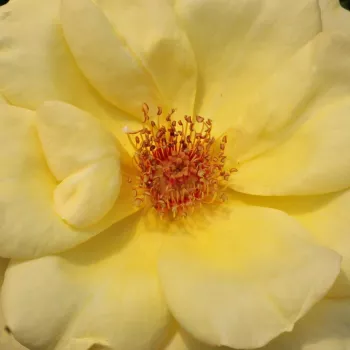
Semi-double, cup-shaped floribunda blooms with 13–25 petals, produced in clusters on strong stems; large flower size around 2.75–3.95 inches, with remontant habit and abundant second flush in season. |
| Colour data and phenology |
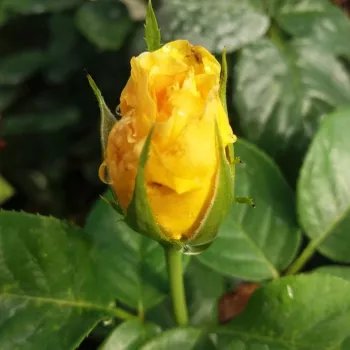
Intense golden-yellow flowers (RHS 12A outer, 10C inner) opening bright sun-yellow, paling towards cream and butter tones, gradually fading in heat and strong sun but retaining colour better in cooler conditions. |
| Fragrance and aroma |
Strong, far-reaching scent with a slightly sweet, fruity character; fragrance performance recognised in trials, providing notable impact around seating areas and in vases when used as a cut flower indoors. |
| Hip characteristics |
Develops spherical red hips about 10–14 mm across in moderate quantities, adding seasonal autumn interest and potential wildlife value without overwhelming the overall appearance of the compact shrub. |
| Resistance and winter hardiness |
Hardy to approximately −26 to −23 °C (RHS H7, Swedish Zone 4, USDA 5b), with moderate resistance to powdery mildew, black spot and rust, and good rain tolerance but only moderate heat and drought tolerance. |
| Horticultural recommendations |
Best in a sunny position with free-draining soil; allow 55 cm in mass plantings, 50 cm for hedges or 90 cm as a specimen, and provide regular watering plus occasional pest and disease checks where needed. |
ARTHUR BELL offers compact structure, strong fragrance and long-season flowering in a durable own-root form that settles in for years of reliable coastal or urban garden colour, making it a thoughtful choice for relaxed UK spaces.