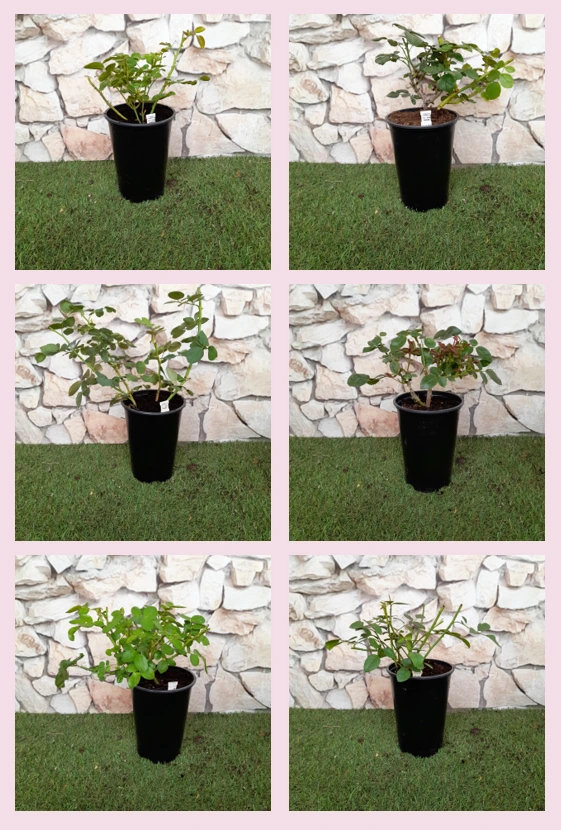
AUSREEF – pale pink English rose - Austin
Imagine sitting behind a gentle coastal windbreak, tea in hand, while petals sway softly and the air carries a fragrance of sweet fruit and myrrh. This romantic English shrub rose brings a surprisingly easy sense of elegance to small family gardens and verandas, coping reliably even where breezes meet moisture and you need roots that anchor well in challenging soil and drain steadily after rain. Its repeat-flowering habit keeps the colour going throughout the season with large, rosette blooms that age gracefully to creamy blush. As an own-root rose, it offers reassuring long-term stability, regrowing strongly from its base rather than relying on a graft, ideal for busy gardeners who prefer simple, low-intervention care. Planted once and given a good start, it quietly develops from establishing roots in the first year, to confident top growth in the second, and full ornamental impact by the third, becoming a calm, sea-breeze-ready presence in your garden.
Usage options
| Target area |
Reasoning |
| Coastal veranda containers |
Performs well in a large pot (minimum 40–50 litres) where its bushy, upright habit stays neat and contained, ideal for a sheltered veranda with sea views and steady breeze; own-root form gives long-lived structure in one spot for coastal-style beginners. |
| Small front gardens and town plots |
Compact 80–120 cm height and 70–100 cm spread keep it proportionate to modest UK front gardens, offering a refined focal point without overcrowding paving or paths, and giving long-term structure with minimal pruning for busy urban homeowners. |
| Romantic cottage-style flower beds |
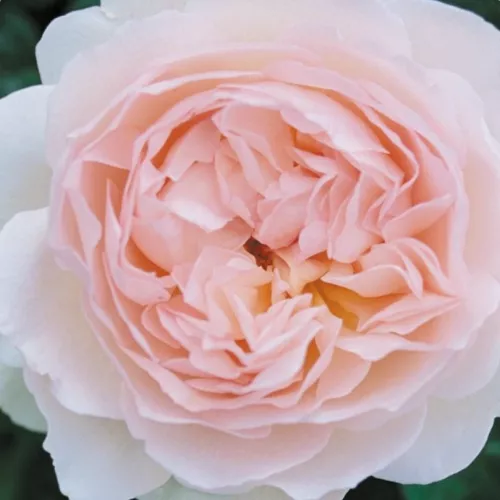
Very full, rosette flowers in pale pink to cream give a traditional English look, making it easy to create a cottage-style border with a single, reliable shrub that repeats through summer for nostalgic garden lovers. |
| Cut flowers from the family garden |
Large, strongly scented blooms on an upright framework are ideal for short-stemmed indoor vases, allowing you to bring its sweet, fruity, myrrh-like scent indoors regularly through the season for home fragrance enthusiasts. |
| Season-long colour near seating areas |
Remontant flowering, with a generous second flush, keeps colour near seating terraces and patios so there is always something to enjoy beside your tea table, rather than a short, single show, suiting relaxed evening sitters. |
| Low-intervention family borders |
Moderate maintenance needs, reasonable disease performance and own-root resilience mean it copes well with ordinary, well-prepared garden soil and routine care, without demanding intensive spraying schedules, ideal for time-pressed families. |
| Exposed but sheltered coastal corners |
Bushy, anchoring growth and rain-tolerant blooms suit UK coastal gardens where wind and showers often arrive together, especially when planted in a well-drained, enriched pocket within heavier ground for Cornwall-and-Devon gardeners. |
| Statement specimen in lawn or gravel |
Planted singly at about 1 m spacing, it forms a rounded, upright feature that matures steadily year on year, with own-root strength supporting rejuvenation pruning as it ages, making it a sound long-term choice for investment-minded planters. |
Styling ideas
- Seaside-Nook – Place one plant in a 50-litre clay pot on a sunny veranda, surrounded by pale shingle and a low bench, to echo a Cornish cove mood – ideal for coastal balcony owners.
- Shell-Path – Line a short garden path with evenly spaced shrubs and underplant with blue Festuca and sea kale for a soft, dune-like edge – perfect for family gardens near the sea.
- Tea-Corner – Position as a single specimen beside a small bistro set, with Lavandula and compact sage at its feet, so every cup of tea is scented – suited to weekend relaxers.
- Romantic-Drift – Group three plants in a loose triangle in a mixed border, letting their repeat blooms weave pale pink through summer among airy grasses – for soft-border enthusiasts.
- Pastel-Potager – Add one shrub at the end of a vegetable or herb bed in a large container, tying productive and ornamental areas together with gentle colour and scent – appealing to kitchen-garden keepers.
Technical cultivar profile
| Parameter |
Data |
| Name and registration |
English shrub rose from the English Rose Collection; registered as AUSreef, also traded as Sharifa Asma; classified as a romantic English rose for garden and exhibition use. |
| Origin and breeding |
Bred by David C. H. Austin in the United Kingdom from ‘Mary Rose’ × ‘Admired Miranda’, introduced and distributed in 1989 by David Austin Roses Ltd. as part of his English shrub rose range. |
| Growth and structural characteristics |
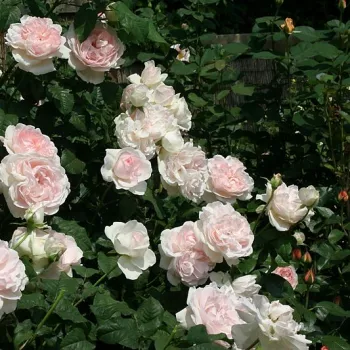
Bushy, upright shrub reaching about 80–120 cm in height and 70–100 cm in spread, with moderately dense, mid-green, slightly glossy foliage and a well-branched, thorny framework suitable for borders and containers. |
| Flower morphology |
Large, very full rosette blooms with over 40 petals, typically borne singly on stems, producing an abundant first flush followed by a strong repeat flowering phase across the season under normal garden conditions. |
| Colour data and phenology |
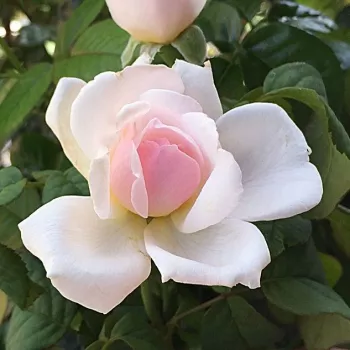
Pale pink flowers with a powder-pink centre and ivory outer petals, gradually fading to off-white and cream at the edges; colour retention is modest, giving a softly weathered, antique effect as each bloom matures. |
| Fragrance and aroma |
Strong, clearly perceptible scent combining sweet, fruity notes with a distinctive myrrh-like character; designed primarily as an ornamental, rather than pollinator-focused, variety due to its very double flower form. |
| Hip characteristics |
Rosehip production is limited by the highly double flowers; occasional small, egg-shaped, orange-red hips around 10–14 mm in diameter may form, adding a light autumn accent without heavy seeding. |
| Resistance and winter hardiness |
Hardy to approximately −26 to −23 °C (RHS H7, USDA 5b) with moderate overall disease tolerance, good resistance to black spot, and better performance when watered during extended dry spells and protected from spring frosts. |
| Horticultural recommendations |
Best in a sunny, reasonably well-drained position; plant 55–100 cm apart depending on use, enriching heavier clay soils and watering regularly in dry periods; occasional deadheading and light pruning maintain flowering and shape. |
AUSREEF – pale pink English rose - Austin offers long-season repeat flowering, strong fragrance and compact, easy-care growth on a resilient own-root framework, making it a thoughtful choice for a lasting, gently romantic garden feature.