BABSZEM JANKÓ – white dwarf miniature rose - Győry
In a small coastal garden or sunny veranda, BABSZEM JANKÓ offers a miniature, white-ivory rose that feels perfectly at home beside shingle, driftwood and sea-kissed grasses, thriving even where breezes demand good anchoring and thoughtful drainage. Its compact, 20–30 cm habit and dense, glossy foliage make it an easy rose to place in pots or rockeries, while the semi-double blooms repeat generously from summer onwards, adding gentle refreshment and a light, raspberry-like fragrance without overwhelming a small space. As an own-root shrub it builds strength from below, promising a long-lived, regenerating investment that settles in steadily – roots in the first year, more shoots and flowers in the second, and full ornamental value by the third – ideal for busy but design-conscious gardeners.
Usage options
| Target area | Reasoning |
|---|
| Coastal veranda container, 40–50 litre pot |
A compact, 20–30 cm plant with dense foliage and steady repeat flowering is easy to manage in a larger pot, where regular watering can be controlled and roots are sheltered from salt-laden breezes and well anchored in blustery weather for coastal veranda owners. |
| Small family patio or balcony |
The miniature stature fits comfortably into tight seating areas, giving a neat white focus without blocking light or views; in a 40–50 litre container one plant becomes a long-lived feature that can be enjoyed daily by urban balcony users. |
| Rock garden or gravel bed |
Its dwarf, compact growth habit nests naturally among stones and low perennials, while the clean white flowers brighten shingle-style or gravel gardens; own-root durability means it settles in and returns reliably for hobby rock-garden keepers. |
| Low edging along a path |
Planted at 20 cm spacings, the uniform height creates a tidy miniature hedge that frames paths or driveways without outgrowing its place, offering repeated flushes of white against mid-green foliage for family garden path designers. |
| Feature plant near seating area |
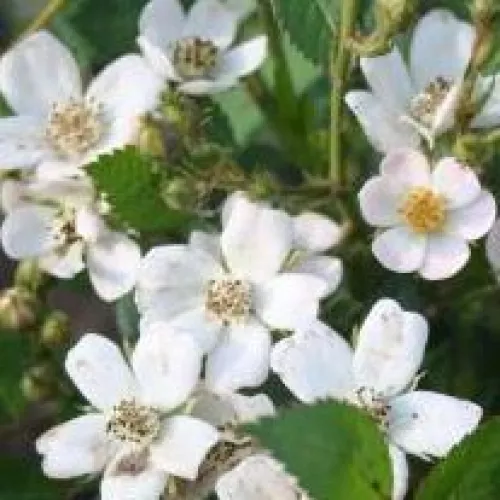
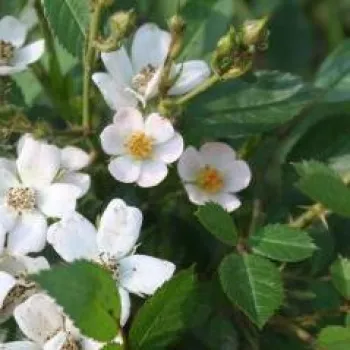
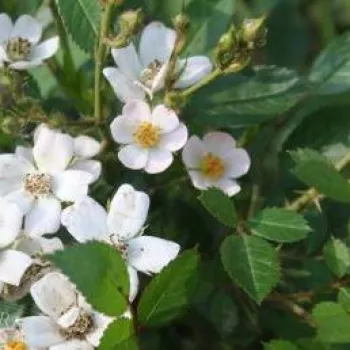
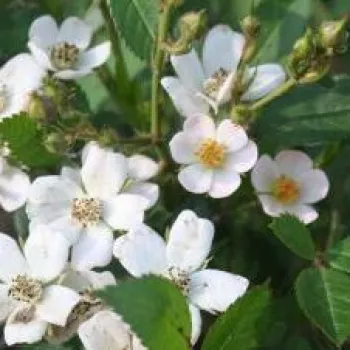
The semi-double, ivory-white flowers with a golden eye draw the eye at close range, while the very light raspberry fragrance remains unobtrusive; its manageable size keeps maintenance and pruning straightforward for relaxed terrace sitters. |
| Memorial or cemetery planting |
Bright, pure white to ivory blooms express clarity and remembrance, and the compact, formal outline remains respectful and easy to keep in order over the years when planted as an own-root shrub for long-term grave tenders. |
| Mixed container with coastal-style companions |
Combining Babszem Jankó with low grasses or sea-kale-style foliage in a wide container highlights its fine, glossy leaves and clean flowers, providing a stable, enduring focal point with one plant that ages gracefully for design-focused container owners. |
| Collector’s miniature rose grouping |
The named Hungarian miniature adds character and story to a specialist collection, its very small scale and distinct ivory-white colour complementing stronger hues, while own-root growth supports long-term, sustainable display for dedicated rose collectors. |
Styling ideas
- Driftwood Nook – set one plant in a 40–50 litre tub with pale gravel mulch and a piece of sun-bleached driftwood, for coastal-style veranda owners seeking a calm, beachy focal point.
- Shell Border – line several plants at 20 cm spacing along a shingle path, interplanting with low Festuca for a soft, dune-like edge that suits family gardens near the sea.
- Teacup Terrace – place a single container beside outdoor chairs, pairing with lavender and a small table for relaxed afternoon tea for homeowners wanting a gentle, low-scale accent.
- Rock Pocket – tuck Babszem Jankó into a crevice of a rock garden among Tagetes and Crocosmia for a bright, miniature white contrast aimed at hobby rock gardeners.
- Memory Corner – use one or three plants in simple stone planters with light gravel mulch to create a quiet, reflective corner suitable for those designing a modest remembrance space.
Technical cultivar profile
| Parameter | Data |
|---|
| Name and registration |
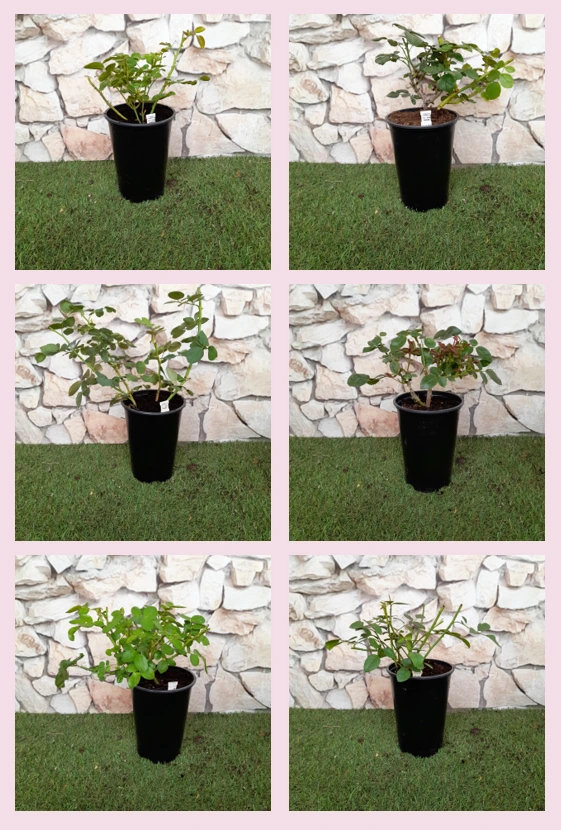
Babszem Jankó miniature rose, commercial Mini – dwarf rose; exhibition miniature shrub rose, own-root, marketed by vivianaROSE in 2-litre containers for garden and container use. |
| Origin and breeding |
Bred by Győry Szilveszter in Hungary around 2013, with unknown parentage; introduced to the market by PharmaRosa Ltd., distributed as an own-root container rose for consumer gardens. |
| Growth and structural characteristics |
Very compact, dwarf shrub 20–30 cm high and wide, with dense, mid-green, glossy foliage and sparse prickles; suitable for close spacing in beds, borders, rock gardens and containers. |
| Flower morphology |
Semi-double, cluster-flowering miniature blooms, 0.5–1.5 inches across, with 13–25 petals and a flat outline; repeats well through the season, with abundant second flush after initial bloom. |
| Colour data and phenology |
Pure white to ivory petals, ARS code R; RHS 46A, 45B; buds ivory-cream, opening with a butter-yellow throat and golden stamens, fading to creamy beige with deepening ochre-brown centre tones. |
| Fragrance and aroma |
Very weak but fresh scent with a faint raspberry character detectable at close range only; grown primarily for visual effect rather than perfume, especially suitable near small seating areas. |
| Hip characteristics |
Hip set usually limited due to semi-double flowers; where present, small spherical bright red hips, around 4–6 mm in diameter, can appear after flowering and add a discrete seasonal interest. |
| Resistance and winter hardiness |
Hardy to about −21 to −18 °C (RHS H7, USDA 6b, Swedish zone 3); disease resistance medium to weak, especially to rust, so regular monitoring and protective treatments are recommended. |
| Horticultural recommendations |
Best in full sun with free-draining but moisture-retentive soil; ideal for 40–50 litre or larger containers and close spacing beds; avoid prolonged drought and plan regular plant protection where diseases are common. |
Babszem Jankó mini – dwarf rose offers compact size, repeat flowering and long-lived own-root reliability in containers or small gardens, making it a thoughtful choice for those planning enduring yet manageable planting.