BAD HOMBURG – cream hybrid tea rose - Liebig
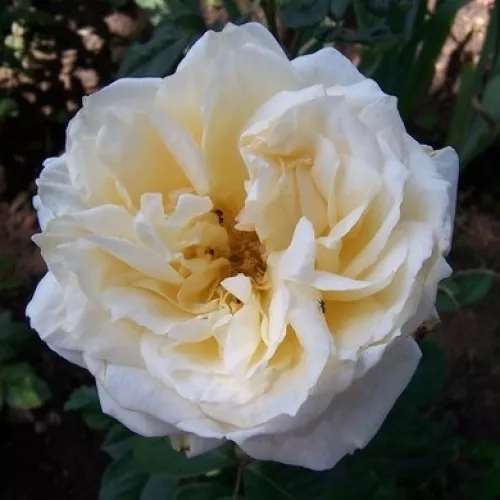
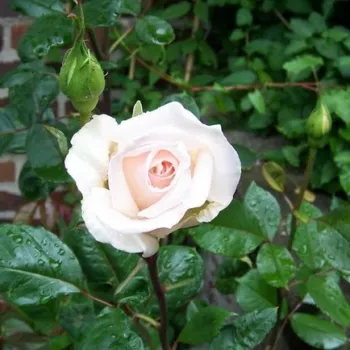
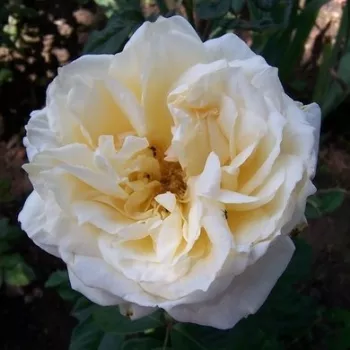
Bring a sense of seaside calm to your garden with BAD HOMBURG, a reliable hybrid tea whose warm cream-and-butter tones echo soft sand and shells. Bred for strong health and low-input maintenance, it offers upright, bushy structure that stands steady even where breezes pick up from the coast, giving you a sheltered nook that feels like a natural windbreak. Its long, elegant stems carry large, very double flowers for weeks on end, ensuring generous repeat flowering for cutting and display on a small veranda table. As an own-root rose it develops deep, stable roots and ages into a long-lived feature, quietly regenerating after pruning or rough weather. In a 40–50 litre container it anchors beautifully on a balcony or terrace, while in beds it forms a compact hedge line or single focal point with lasting ornamental value, moving from subtle lemon tints to refined porcelain cream over the season.
Usage options
| Target area |
Reasoning |
| Small coastal front garden bed |
The compact, upright habit fits narrow Cornish or Devon front gardens without overwhelming paths or parking areas, while its stable, long-lived own-root system copes well once established in breezier sites, appealing to the practical homeowner. |
| Wind-sheltered veranda in large container |
Planted in a 40–50 litre pot on a sheltered veranda, its neat structure and good disease resistance give you refined flowers with little intervention, ideal for creating a calm, seaside-tea corner for the time-poor beginner. |
| Cut-flower row in family garden |
Bad Homburg’s large, elegant blooms on sturdy stems are excellent for cutting, with repeat flushes across the season so you can take armfuls indoors without denuding the bush, suiting the creative garden florist. |
| Low-maintenance mixed rose bed |
Its generally resistant foliage reduces the need for spraying or constant checks, so a mixed rose bed can stay attractive through wet, windy spells with only occasional deadheading, matching the needs of the busy gardener. |
| Compact cream-toned hedge |
At around 80–110 cm high and 50–70 cm spread, it forms a tidy, repeat-flowering line along drives or paths, softening boundaries with creamy blooms while remaining easy to access and prune for the organised planner. |
| Feature rose alongside sea kale and grasses |
Paired with sea kale, Festuca and lavender, the warm cream flowers sit beautifully against silver foliage and blue tufts, creating a gentle coastal palette that feels both fresh and romantic for the style-conscious designer. |
| Long-term focal point in clay-based border |
Once the planting hole is improved for drainage, its own-root form and bushy build give a durable, anchor-like presence that holds the eye for years, complementing the needs of gardens dealing with heavier soils for the practical planner. |
| Developing family garden over several seasons |
It spends the first year building roots, the second year bulking up shoots and branching, and by the third season delivers its full ornamental display, making progress easy to follow and enjoy for the patient garden starter. |
Styling ideas
- Seaside-Tea Border – Plant Bad Homburg with sea kale, Festuca and pale pink annuals for a gentle, salty-breeze feel – ideal for coastal-style lovers wanting low-fuss refinement.
- Cream-Veranda Pot – One plant in a 40–50 litre tub with gravel mulch and a simple bistro set creates an instant wind-sheltered tea spot – perfect for busy veranda owners.
- Calm-Cut Row – Line a short bed with three plants at 60 cm spacing for regular cutting without gaps in the display – suited to home florists who want effortless stems.
- Soft-Hedge Edge – Use a row at 50 cm intervals to edge a drive, underplant with low lavender for scent and structure – for families wanting tidy boundaries with minimal work.
- Porcelain-Focus Bed – Make a single specimen the centrepiece among blue grasses and white pebbles to highlight its colour transitions – attractive to design-led beginners.
Technical cultivar profile
| Parameter |
Data |
| Name and registration |
Hybrid tea rose, registered as PLAcharm; marketed as Bad Homburg Hybrid tea rose PLAcharm, an exhibition-type hybrid tea primarily valued for its refined cut flowers and garden performance. |
| Origin and breeding |
Bred by Ewald Liebig in Germany from ‘Goldina’ × (‘Arthur Bell’ × ‘Prominent’); introduced and registered in 1997 by Pflanzen-Kontor, with hybrid tea garden and exhibition use in mind. |
| Growth and structural characteristics |
Upright, bushy shrub 80–110 cm tall and 50–70 cm wide, with dense, dark green, slightly glossy foliage and moderate thorns; faded blooms often require manual deadheading due to weak self-cleaning. |
| Flower morphology |
Large, very double, cup-shaped hybrid tea blooms with 40+ petals, mostly borne singly; remontant, producing a generous second flush, suited to cutting and formal planting where classic form is desired. |
| Colour data and phenology |
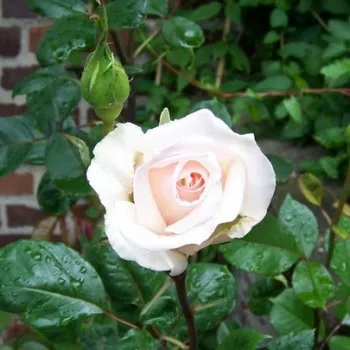
Warm creamy butter-yellow buds open to cream-white outer petals and soft lemon centres; colour lightens to ivory-porcelain with a pastel yellow heart, maintaining good colour retention throughout each flush. |
| Fragrance and aroma |
Soft, elegant fragrance with mild intensity; a restrained, classic rose scent that complements its visual refinement without overwhelming nearby seating areas or confined veranda spaces. |
| Hip characteristics |
Occasional spherical hips 9–15 mm across, orange-red when mature; ornamental but sparse, as regular deadheading for repeat flowering will usually limit hip formation in garden situations. |
| Resistance and winter hardiness |
Hardy to around −21 to −18 °C (RHS H7, USDA 6b, Swedish Zon 3); rated resistant to powdery mildew, black spot and rust under normal garden conditions when planted with reasonable airflow. |
| Horticultural recommendations |
Best at 50–60 cm spacing in beds or hedging; thrives in well-drained, improved soil with regular feeding and deadheading; own-root 2-litre plants establish reliably and suit both beds and large containers. |
BAD HOMBURG offers compact structure, reliable repeat flowering and long-lived own-root durability in creamy hybrid tea form, making it a thoughtful choice for relaxed, elegant family gardens and verandas.