BARALIGHT® – yellow hybrid tea rose - Barni
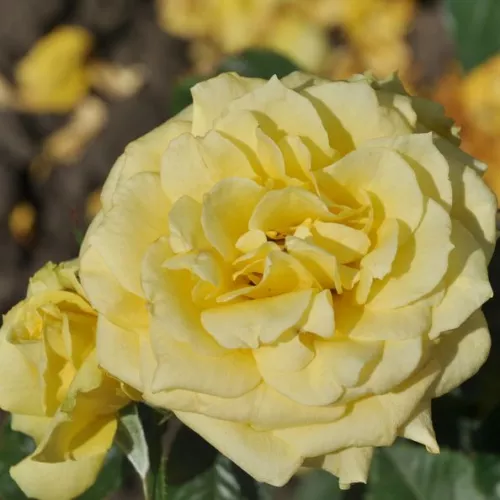
Imagine stepping onto your coastal veranda after a day of shells and sea breeze, greeted by softly glowing lemon-yellow blooms that feel like captured sunlight. BARALIGHT® settles quickly into British family gardens, coping calmly with blustery weather and helping your beds feel reassuringly anchored even when Atlantic fronts roll in. Its upright, bushy habit keeps planting schemes looking orderly in small shingle plots or compact town gardens, while the medium-height stems are perfect for easy, impromptu bouquets for the kitchen table. Flowers return in generous flushes through the season, building a sense of continuity without demanding constant attention. As an own-root plant it develops a deep, resilient framework for a long life with steady regrowth if ever cut back hard, so you can rely on a stable display rather than short-lived spectacle. Think in simple stages – first year quietly building roots, second year filling out with more shoots, and third year revealing its full character of luminous, tea-scented flowers, bringing a gentle sense of coastal refreshment to your garden retreat.
Usage options
| Target area | Reasoning |
|---|
| Coastal veranda container (40–50 litre) |
Ideal for a generous pot on a sheltered Cornish or Devon veranda, where its luminous lemon-yellow flowers read clearly against shingle and sea-grey skies while the bushy habit keeps the planting looking neat for beginners. |
| Small front garden focal point |
The upright, compact structure creates a tidy, vertical accent beside a path or drive, offering a bright welcome without overshadowing windows, and stays visually stable as the own-root framework matures for busy homeowners. |
| Mixed border in windy spots |
Its dense foliage and medium height help the plant hold its shape when exposed to brisk coastal air, giving you a solid, wind-resilient anchor among looser grasses and perennials that suits family gardeners. |
| Cutting row near the back door |
Long, sturdy hybrid tea stems and double, cup-shaped blooms with a citrusy tea fragrance make it an easy source of home-cut flowers without the fuss of show-bench cultivation, ideal for hobby florists. |
| Repeat-flowering feature bed |
Planted in a small group, BARALIGHT® delivers successive flushes of pastel yellow flowers that keep the bed looking alive from early summer into autumn, with no need for elaborate routines for time-pressed gardeners. |
| Easy-care specimen on heavy soil |
In typical British clay it performs well once drainage is improved, building a robust root system that supports consistent flowering and reliable structure, reducing the risk of gaps or failures for cautious newcomers. |
| Family seating area border |
The medium-strength citrus-tea scent is noticeable but not overpowering around seating and play spaces, providing a gentle, uplifting background fragrance that suits shared outdoor moments for relaxed families. |
| Structured hedge-style row |
When planted at hedge spacing, its bushy, upright growth knits into an orderly, low rose row that filters wind and echoes coastal planting, adding subtle privacy and rhythm along paths for design-conscious gardeners. |
Styling ideas
- Coastal Veranda Glow – site BARALIGHT® in a 50-litre clay pot with pale shingle mulch and a backdrop of weathered timber, ideal for seaside balcony owners seeking low-fuss evening brightness – coastal-style lovers
- Lemon Tea Border – weave it through a mixed border with Lavandula and Festuca to contrast cool blues and silvery grasses against warm yellow blooms – relaxed hobby gardeners
- Orderly Front Garden – line a short path with evenly spaced plants for a neat, structured look that stays compact and welcoming – busy homeowners
- Soft Cut-Flower Corner – group three plants near the kitchen door for easy access to fragrant stems for jugs and vases indoors – beginners
- Wind-Kissed Family Nook – place as a calm focal point beside a seating area, framed by sea kale or dwarf pines for texture and gentle shelter – family garden users
Technical cultivar profile
| Parameter | Data |
|---|
| Name and registration |
Hybrid tea rose, registered as BARalight and marketed as BARALIGHT® yellow hybrid tea rose; part of the Hybrid Tea commercial group for garden and cutting use. |
| Origin and breeding |
Bred by Enrico Barni in Pistoia, Italy, around 2011, representing the renowned Rose Barni breeding line; introduced later as a branded garden rose for ornamental planting. |
| Growth and structural characteristics |
Bushy, upright shrub reaching about 70–95 cm in height and 50–70 cm spread, with dense, mid-green, slightly glossy foliage and moderate prickles, forming a compact, structured plant. |
| Flower morphology |
Large, double, cup-shaped hybrid tea blooms, typically solitary on stems, with approximately 26–39 petals and reliable remontant flowering, including a notably generous second flush in season. |
| Colour data and phenology |
Pastel lemon-yellow flowers with creamy pale-yellow tones; strong yellow centre on opening, then softening to straw-cream and almost white toward senescence, giving a gentle, light-evolving display. |
| Fragrance and aroma |
Clearly noticeable, medium-strength fragrance with a fresh, citrusy tea character, providing a clean, uplifting scent suitable for seating areas and for enjoying as cut flowers indoors. |
| Hip characteristics |
Hip set generally limited due to double flowers, but may occasionally form small, globular orange-red hips about 10–14 mm in diameter, adding a discreet late-season ornamental touch. |
| Resistance and winter hardiness |
Hardy to approximately -21 to -18 °C (RHS H7, USDA 6b, Swedish zone 3) with medium resistance to black spot, powdery mildew and rust; may occasionally benefit from standard rose protection. |
| Horticultural recommendations |
Best in full sun with improved drainage on heavier soils; plant at 45–55 cm for rows or beds, or 90 cm as a specimen, and consider 40–50 litre containers for long-term potted cultivation. |
BARALIGHT® offers luminous yellow hybrid tea blooms, reliable repeat flowering and a compact, wind-resilient form on a long-lived own-root plant, making it a thoughtful choice for relaxed coastal and family gardens.