BARGIRA® – yellow-pink hybrid tea rose - Barni
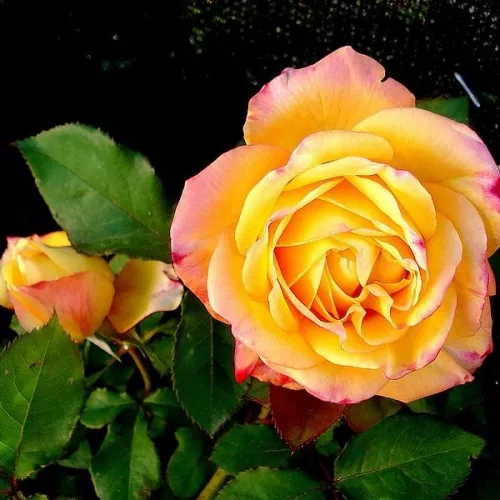
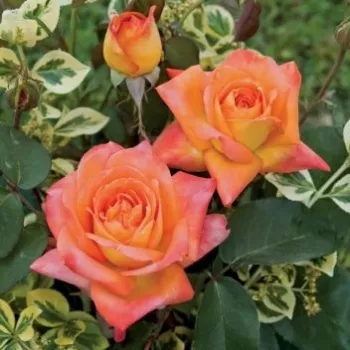
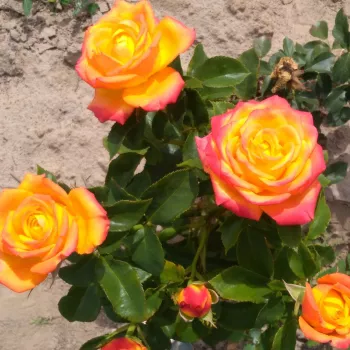
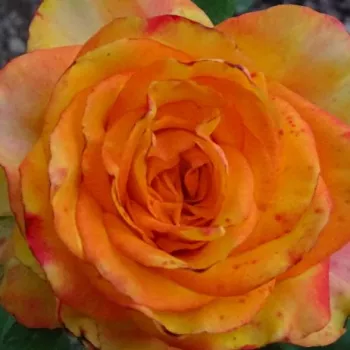
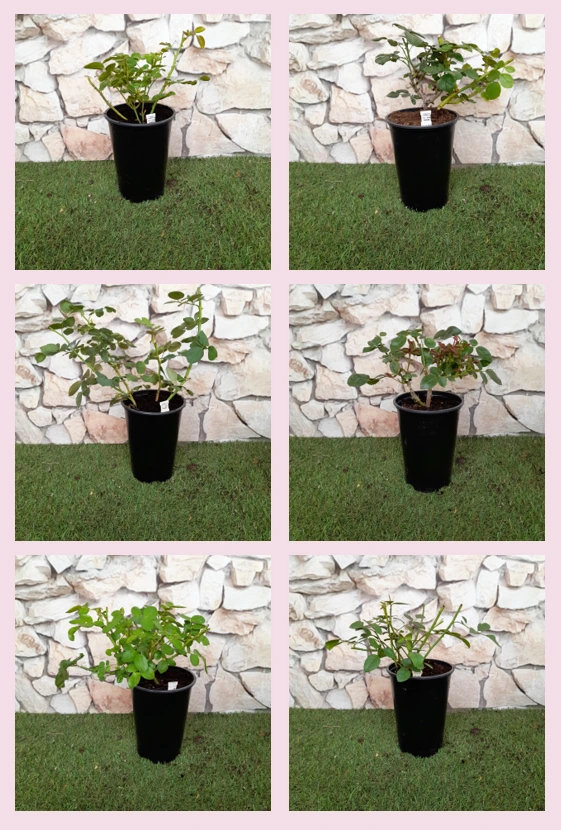
Imagine sitting by the coast with afternoon tea, sheltered from the breeze, while BARGIRA® turns its high‑centred blooms like a playful girandola in the sun. This hybrid tea’s large, exhibition-style flowers open from golden amber buds into butter‑yellow and cream petals traced with raspberry edges, echoing shingle, sand and sunset in one plant. The upright, compact habit suits modest beds and patios, giving reliable, remontant flushes from summer into autumn even where gardens are exposed to brisk, salty winds and need planting that stands firm and drains freely in heavier soils. Barely thorny, with dense, glossy foliage that frames every stem, BARGIRA® adapts well to life in a 40–50 litre container on a coastal veranda or as a bright focal point in small family plots. As an own‑root rose it is grown for longevity, building roots in year one, strong shoots in year two and rewarding you with full ornamental impact by year three, giving dependable, repeat colour without complicated routines for the busy seaside homeowner.
Usage options
| Target area | Reasoning |
|---|
| Small coastal front garden bed |
The upright, compact habit fits narrow borders along drives or low walls, while its hybrid tea form brings clear structure among gravel, shingle or paving. Good anchoring and drainage help it cope where salty breezes roll in over heavier soils, ideal for the time-pressed coastal beginner. |
| Feature rose in a 40–50 litre container |
BARGIRA® thrives in a generous pot, where quality compost and consistent watering keep its root zone stable and productive. On a balcony or veranda it offers large, showy blooms at eye level, with barely any thorns to snag cushions or clothing, suiting style-conscious homeowners. |
| Cutting patch near the patio |
Long, straight stems and high‑centred blooms make it excellent for cutting, so a small row by the terrace can supply vases without sacrificing garden display. Regular deadheading for indoor use also helps maintain repeat flowering, rewarding creative but busy gardeners. |
| Formal edging along a path |
Planted at recommended spacings, its upright shape and dense foliage build a neat, low line that frames paths and seating areas. Repeating plants in a simple rhythm keeps the design elegant yet easy to manage in everyday family spaces, suitable for practical-minded owners. |
| Mixed border with perennials |
The yellow‑to‑cream flowers with pink edges blend smoothly into coastal-style schemes with grasses and perennials, offering a sunny focal note from mid-season onwards. Its remontant habit adds colour between peak perennial waves, appealing to relaxed, naturalistic gardeners. |
| Specimen rose in a lawn island bed |
As a single, well-placed specimen, the refined hybrid tea shape reads clearly from a distance, while dark glossy foliage gives the plant presence even between flushes. Own‑root growth supports long-term structure, rewarding those planning stable focal points, ideal for intentional investors. |
| Sheltered urban courtyard |
In enclosed spaces, the dense foliage and upright habit maximise impact without taking much ground space. With good air circulation and a regular protection routine, it will repay care with exhibition-style blooms all summer, suiting detail-oriented urban gardeners. |
| Coastal veranda with companion planting |
In a large container paired with sea kale, Festuca or Lavandula, BARGIRA® creates a seaside feel on decks or verandas, its bright flowers rising above silvery or grassy textures. The own‑root form supports recovery if stems are wind-damaged, reassuring long-term coastal owners. |
Styling ideas
- Shingle-Romantic – Combine BARGIRA® in a gravel bed with low sea kale and silver Festuca to echo sand, foam and dune grasses – perfect for those softening a small coastal front garden.
- Teacup-Terrace – Place one plant in a 40–50 litre clay pot by a bistro set, underplanted with trailing thyme to perfume stepping stones – ideal for veranda tea-drinkers who favour simple elegance.
- Sunset-Showpiece – Mass three plants as a lawn island, underplanting with white Physostegia to reflect the rose’s yellow and pink hues – suited to homeowners wanting a single, dramatic focus.
- Cornish-Cuttings – Run a short row near the back door, edging with Hypericum for berries and contrast foliage – appealing to creative gardeners who love arranging home-grown bouquets.
- Breeze-Border – Weave BARGIRA® through a mixed strip of Lavandula and Agapanthus for a blue-and-gold seaside palette – ideal for busy families seeking structure with minimal design decisions.
Technical cultivar profile
| Property | Data |
|---|
| Name and registration |
Hybrid tea rose from the Le Toscane collection, registered as BARgira and traded as Bargira® Le Toscane BARgira; exhibition-type hybrid tea suitable for cutting and show benches. |
| Origin and breeding |
Bred in Italy by Enrico Barni around 2014, introduced by Roses Barni in 2019/2020; parentage undocumented but selected for strong colour play and classic hybrid tea form. |
| Awards and recognition |
Recognised with the Audience Award at Alterarosa, Avignon 2020, reflecting strong public appeal for its lively bicolour blooms and refined exhibition-style presentation. |
| Growth and structural characteristics |
Upright, compact bush reaching about 75–105 cm high and 50–70 cm wide, with dense, glossy dark green foliage and relatively few thorns, forming a tidy, vertical garden presence. |
| Flower morphology |
Large, double, high‑centred blooms with 26–39 petals, mostly borne singly on stems; classic pointed buds open to exhibition-type flowers with good durability and abundant second flushes. |
| Colour data and phenology |
Vivid yellow petals edged pink, opening from golden‑amber buds; tones fade gradually to butter‑yellow, cream and softer pink, maintaining contrast and good colour retention through successive flushes. |
| Fragrance and aroma |
Bred primarily for visual impact and form rather than scent, presenting little to no noticeable fragrance, making it best suited where colour and flower shape are the main priorities. |
| Hip characteristics |
Rose hips form only occasionally due to the double bloom form; where present, expect small, ovoid, orange‑red hips about 10–14 mm across, of limited ornamental significance in most plantings. |
| Resistance and winter hardiness |
Hardy to around −23 to −21 °C (RHS H7, USDA 6a); requires attentive plant protection as it is moderately susceptible to powdery mildew and black spot and highly prone to rust. |
| Horticultural recommendations |
Best in full sun with fertile, well-drained soil; plant 50–60 cm apart, use preventive spray programmes, regular watering and deadheading to maintain health and repeat flowering performance. |
BARGIRA® – yellow-pink hybrid tea rose - Barni offers compact structure, repeat flowering and striking bicolour blooms on a durable own-root plant, making it a thoughtful, long-term choice for your coastal-inspired garden.