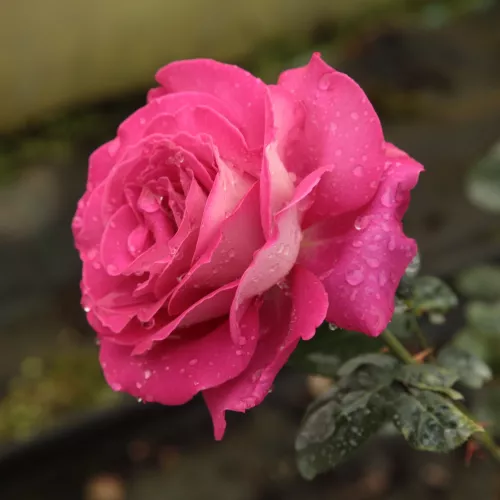
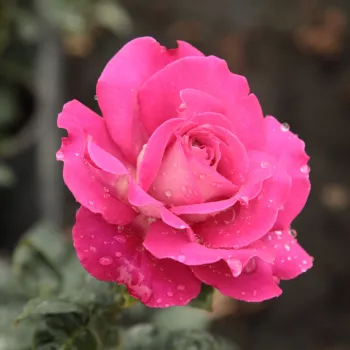
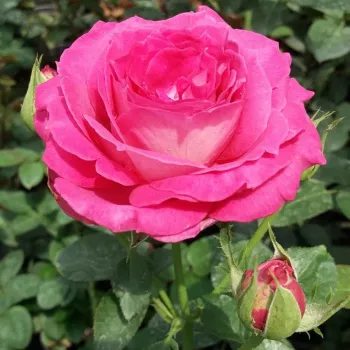
BARONNE E. DE ROTHSCHILD – pink hybrid tea rose – Meilland
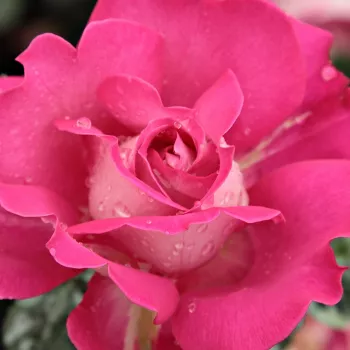
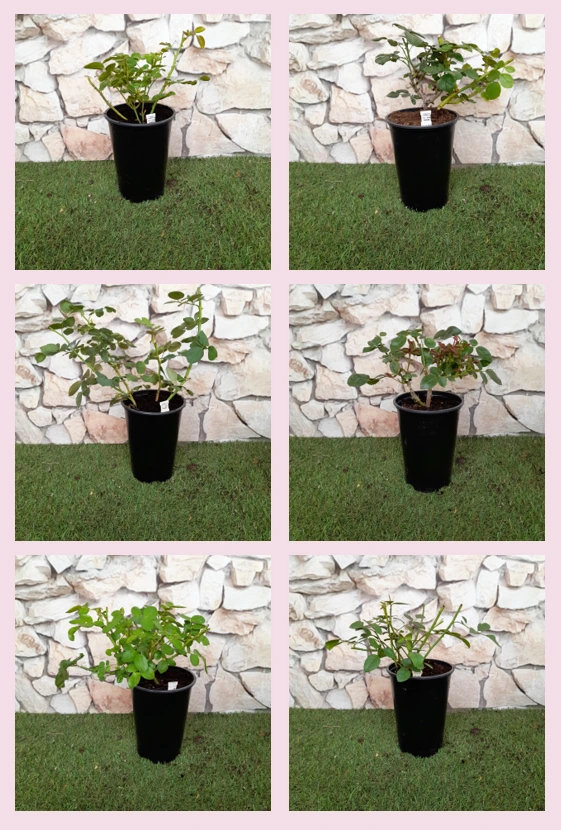
Bring a touch of Riviera glamour to a blustery Cornish or Devon veranda with BARONNE E. DE ROTHSCHILD, a classic hybrid tea that thrives where breezes are brisk and soils need reliable drainage. Large, exhibition-quality blooms unfold in a refined goblet shape, their deep pink centres set off by cool, silvery undersides for a striking bicolour contrast that remains elegant even in strong summer light. The very strong damask fragrance drifts beautifully around seating areas, ideal for evening tea after a walk on the shingle. Grown on its own roots, it offers long-term regeneration and reliable structure, settling in steadily as roots establish in year one, bushy shoots build in year two, and full ornamental value appears by year three in your coastal family garden.
Usage options
| Target area | Reasoning |
|---|
| Coastal veranda container (40–60 litres) |
Ideal for a sheltered seaside veranda where you want a single statement rose in a generous 40–60 litre container; upright growth and dense foliage keep it stable in coastal breezes while bicolour blooms give a chic “girly” focal point for relaxed tea drinkers and beginners. |
| Small front garden feature by the path |
Planted as a specimen near the front gate or path, its goblet-shaped flowers and rich scent create a welcoming, romantic accent without demanding complex maintenance, suiting those who like impact from just one or two carefully chosen plants and busy owners. |
| Cutting bed for home-arranged bouquets |
This exhibition hybrid tea produces XL, long-stemmed blooms that hold form and colour in the vase, so a short row in a sunny bed will supply elegant, perfumed stems for the house through the season, appealing to home florists and creative gardeners. |
| Sunny mixed border in a family garden |
With steady remontant flowering and moderate maintenance needs, it fits neatly into mixed borders alongside sea kale, Festuca and lavender, providing repeat flushes of colour that weave through summer for family spaces shared by children, pets and hobbyists. |
| Sheltered coastal seating nook |
Positioned near a bench or bistro set, the very strong damask fragrance and the interplay of magenta-pink and silver petals make everyday moments feel special, particularly after beach walks where you welcome a beautiful, low-fuss backdrop for relaxing visitors. |
| Linear planting as a short, decorative screen |
Planted 50–55 cm apart, the upright, uniform bushes knit into a low visual screen that softens boundaries and helps break sea winds while their dramatic flowers remain the focus, suiting discreet garden divisions preferred by coastal-style homeowners. |
| Roses on heavy clay with improved drainage |
In many UK gardens with heavier clay, it performs well where planting holes are opened up with grit and compost to improve water movement and anchoring in blustery conditions, making it a realistic choice for practical but style-conscious gardeners. |
| Premium specimen for long-term planting plans |
The own-root form supports a long lifespan and stable regrowth after pruning or weather damage, so once established it becomes a reliable “old friend” in the garden, aligning with thoughtful planners and long-term investors. |
Styling ideas
- Coastal-Chic Pot – Plant one rose in a pale ceramic 50-litre tub with blue Festuca and a top-dressing of shingle for a beach-house feel – ideal for veranda owners who want effortless seaside elegance.
- Pink Promenade – Line a short path with evenly spaced plants and underplant with low sea thrift to echo rosy tones – for families who like a gently formal but friendly front approach.
- Tea-Terrace Focus – Place a single specimen beside a bistro set, with lavender and sea kale nearby to echo scent and texture – suits those who linger outdoors over afternoon tea or reading.
- Cutting Corner – Dedicate a sunny border section to three bushes backed by evergreen cherry laurel for foliage contrast – perfect for home florists wanting regular, luxurious stems.
- Wind-Kissed Border – Combine with silver grasses and white obedient plant in a mixed border that moves with the breeze – designed for coastal-style enthusiasts seeking movement and romance.
Technical cultivar profile
| Characteristic | Data |
|---|
| Name and registration |
Hybrid tea rose, registered as MEIgriso, marketed as BARONNE E. DE ROTHSCHILD / Baronne E. de Rothschild; ARS exhibition name Baronne Edmond de Rothschild, premium silver quality grade. |
| Origin and breeding |
Bred by Marie-Louise Paolino Meilland, Meilland International, France; parentage (Baccará × Crimson King) × Peace; bred and registered 1968, introduced 1969, classic European show hybrid tea. |
| Awards and recognition |
Highly decorated: Rome Gold Medal 1968; Le Roeulx Gold Medal and Fragrance Cup 1968; Lyon Gold Medal 1968; Geneva and Courtrai Silver Medals; other European park and show distinctions. |
| Growth and structural characteristics |
Upright hybrid tea with dense, glossy dark bronze-green foliage; moderately thorny stems; height about 95–125 cm, spread 70–90 cm; moderate self-cleaning so spent blooms usually need deadheading. |
| Flower morphology |
Large XL blooms, double-flowered with 26–39 petals, high-centred cup to goblet form; usually borne in small clusters; strong remontant habit with particularly abundant second flush in suitable sun. |
| Colour data and phenology |
Deep pink to crimson inner petals, silvery-white undersides; ARS code RB, RHS 155D outer, 60A inner; colour fades gently to pink, silvery tones intensify; best definition in cooler conditions with good light. |
| Fragrance and aroma |
Very strong, garden-filling scent with classic damask character; ideal for seating areas and cutting; fragrance holds well in most weather, especially on still evenings, enhancing coastal and urban gardens. |
| Hip characteristics |
Hip set is usually minimal due to regular deadheading of double blooms; if allowed, forms small spherical red hips about 8–12 mm in diameter, with modest ornamental value in late season. |
| Resistance and winter hardiness |
Hardy to about -21 to -18 °C (RHS H7, USDA 6b, Swedish Zone 3); moderate overall disease resistance, generally resistant to powdery mildew and black spot, moderate against rust; appreciates regular watering in hot spells. |
| Horticultural recommendations |
Best in full sun with improved drainage, especially on heavier clay; spacing 50–55 cm for hedging, 90 cm as specimen; maintenance medium, with deadheading and occasional plant protection for peak performance. |
BARONNE E. DE ROTHSCHILD rewards you with glamorous, fragrant bicolour blooms on a long-lived own-root plant that settles in for years of reliable coastal or urban garden pleasure, a discerning choice if you enjoy beauty without complexity.