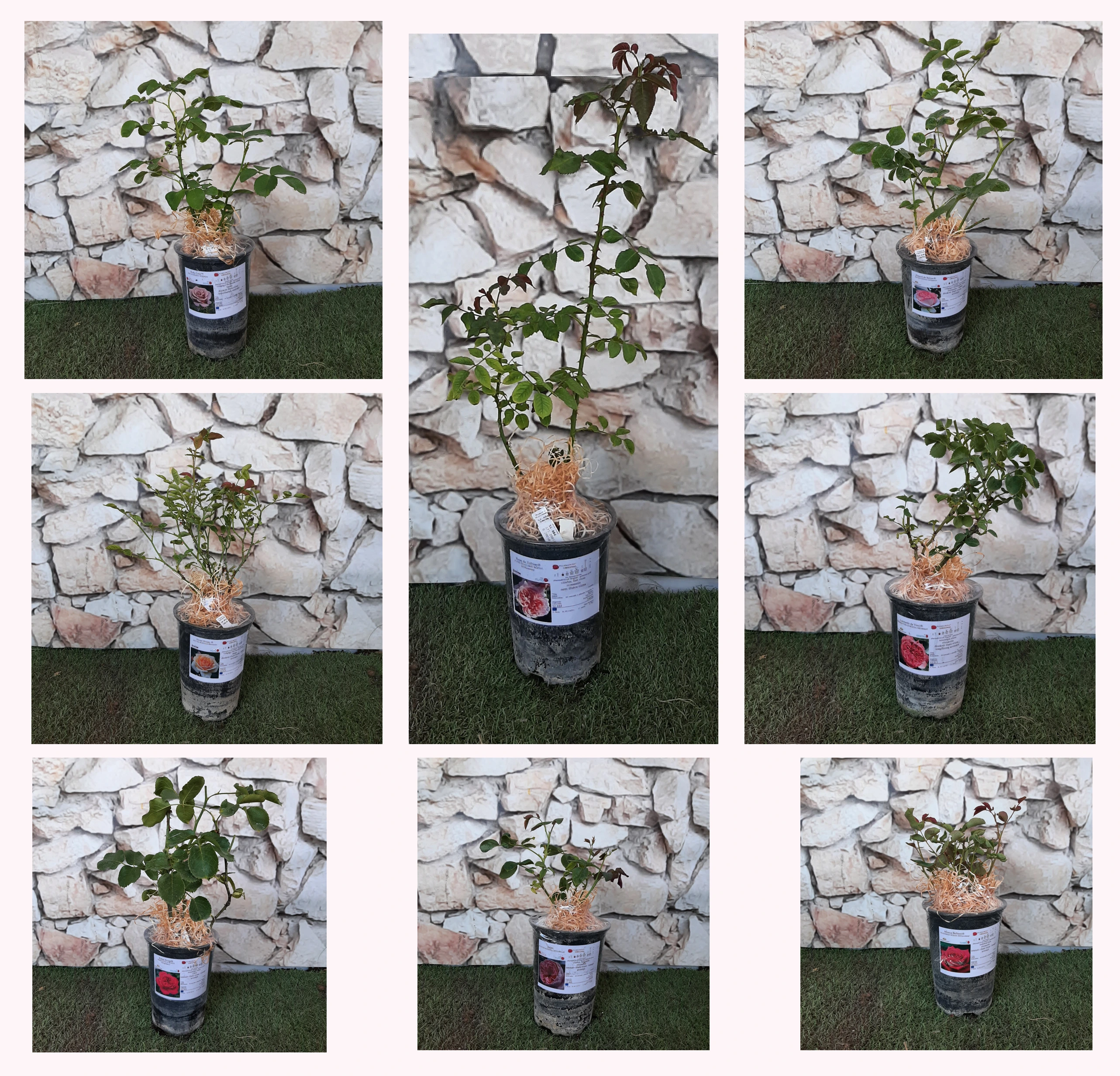
BAY™ – pink dwarf mini rose – Cottage® Collection
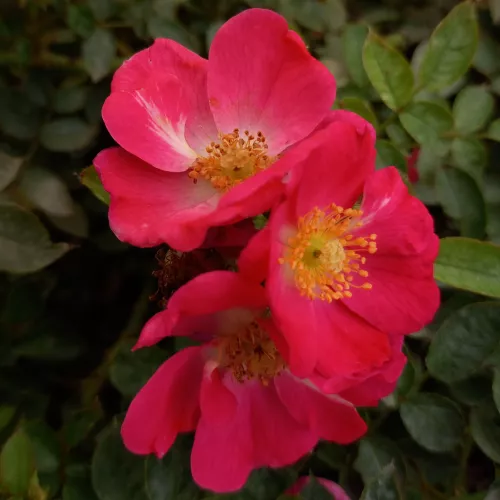
Nestle BAY™ into a sunny coastal corner and it will quickly become a resilient, low‑maintenance highlight that thrives where other plants hesitate in blustery, salt‑touched air and reliably shrugs off strong seaside winds and driving rain. Its compact, spreading habit makes it perfect for shingle beds, narrow borders and veranda containers, where clusters of rich pink, single blooms shimmer above glossy foliage from early summer well into autumn, offering vivid colour without fussy pruning or complex care. As an own‑root rose it quietly builds a long‑lived framework, ready to bounce back from weather damage and hard trimming, giving you steady ornamental value with minimal intervention: first roots establishing in the cool soil, then shoots filling out in year two, and by year three a settled structure of dense foliage, continuous flowering and reliable colour becomes part of your everyday view, whether you are sipping tea after beach walks or simply enjoying a calm, sheltered veranda.
Usage options
| Target area | Reasoning |
|---|
| Small coastal front garden bed |
BAY™ stays low and compact, so it will not overwhelm a small Cornish or Devon front garden, yet delivers generous waves of bright pink blooms that cope well with brisk sea breezes and exposed conditions, ideal for time‑pressed coastal homeowners and beginners. |
| Large container (veranda or balcony) |
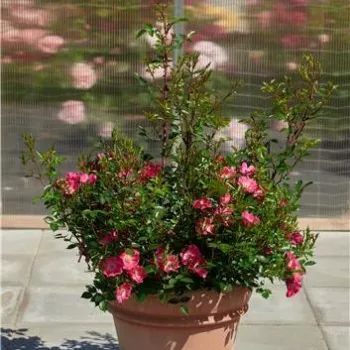
Its dwarf size and spreading habit are well suited to a 40–50 litre container on a veranda or balcony, where deep soil volume helps moisture balance and anchoring, while the own‑root system supports long life and easy recovery, reassuring for space‑conscious urban gardeners. |
| Low edging along paths or drives |
Planted in a narrow strip, BAY™ forms a neat, flowering edge without constant clipping; dense foliage and repeat clusters of vivid pink flowers give structure and colour right by your route to the door, convenient for busy family‑home owners. |
| Groundcover in shingle or gravel |
The spreading, compact habit allows it to knit through shingle or gravel for a seaside feel, with clusters of resilient blooms and mid‑green foliage softening hard surfacing, a practical choice for low‑care coastal‑style layouts. |
| Pollinator‑friendly family area |
Single, open flowers provide accessible pollen through much of the season, encouraging bees into child‑friendly areas without towering growth or thorns at face level, making it a considerate option for wildlife‑minded family gardens. |
| Urban front or courtyard planting |
BAY™ tolerates heat radiating from paving and walls, holds its pink colour well in sun, and resists common rose diseases, giving a smart, floriferous presence in tight urban plots with little day‑to‑day intervention for busy city residents. |
| Mixed cottage‑coastal border |
Its bright, unwavering pink works beautifully with silvery grasses, sea kale or lavender, forming a low layer of colour that weaves through the planting and stays tidy, attractive to cottage‑garden lovers seeking relaxed seaside character. |
| Low maintenance mass planting |
At recommended spacing BAY™ quickly knits into a continuous carpet of foliage and bloom, using its disease resistance and sturdy habit to create a long‑lived, cohesive feature that withstands coastal rain and wind exposure, well suited to low‑input communal spaces. |
Styling ideas
- Shell‑pink ribbon – Line a shingle path with BAY™ as a low, bright edging, underplanting with Festuca for movement – ideal for homeowners evoking a relaxed Cornish beach walk.
- Veranda trio – Plant three BAY™ in one 50 litre tub with trailing sea thrift to create a wind‑tolerant pink dome – perfect for compact coastal verandas and balconies.
- Harbour cottage mix – Combine BAY™ with sea kale and lavender in a narrow border for layered texture and long flowering – suited to cottage‑style enthusiasts by the sea.
- Pollinator pocket – Tuck BAY™ near a seating area with campanulas to draw bees to its open blooms – appealing to families wanting gentle wildlife interest.
- Urban shoreline – Use BAY™ in gravel with chunky driftwood or boulders for a modern coastal feel – excellent for busy urban gardeners seeking structure with little upkeep.
Technical cultivar profile
| Characteristic | Data |
|---|
| Name and registration |
Bay™ Cottage® (Registered as POUlcot003), Patio / Compact Floribunda dwarf mini rose, ARS exhibition name ‘Bay’, exhibition category shrub rose within the Cottage seaside‑themed collection. |
| Origin and breeding |
Bred by Mogens Nyegaard Olesen, Poulsen Roser A/S, Denmark, from ‘Bassino’ × unknown seedling; bred 1995, registered and introduced 2004, first distributed by Poulsen Roser A/S. |
| Awards and recognition |
Bronze Medal, Baden‑Baden International Rose Competition 2005; RNRS Trial Garden Certificate 2005; 2nd Prize, Paris‑Bagatelle New Roses Competition 2007; recognised in ARTS trials for disease and pest resistance. |
| Growth and structural characteristics |
Compact, spreading shrub 45–55 cm high and 35–45 cm wide, with dense, mid‑green, glossy foliage and moderate prickles; forms a stable, low mound suitable for edging, bedding and groundcover plantings. |
| Flower morphology |
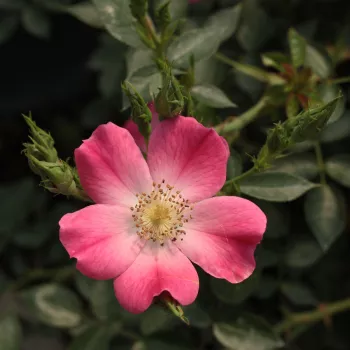
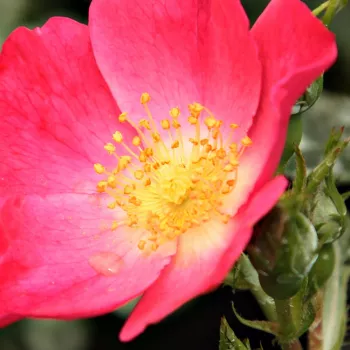
Single, flat, cluster‑flowered blooms with 5–12 petals, small size (approx. 1–3 cm), remontant with a generous second flush, providing frequent, informal flowering through the main season. |
| Colour data and phenology |
Rich, uniform deep pink with slight purplish hue; outer petals RHS 61C, inner 58B; colour lightens only slightly as blooms open, retaining vibrancy and purity without notable fading in normal garden conditions. |
| Fragrance and aroma |
No noticeable fragrance reported; ornamental and ecological value lie in the vivid, lasting colour and open, pollen‑rich flowers rather than scent, making it suited to visual and pollinator‑focused schemes. |
| Hip characteristics |
Produces small, spherical orange‑red hips about 5–7 mm across; modest in number yet with neat ornamental effect into autumn, especially visible against the compact, mid‑green foliage. |
| Resistance and winter hardiness |
Hardy to approximately −21 to −18 °C (RHS H7, Swedish zone 3, USDA 6b); noted resistance to powdery mildew, black spot and rust, with good heat tolerance when watered during extended drought. |
| Horticultural recommendations |
Best in full sun and well‑drained soil; space 25–45 cm depending on use; low maintenance once established, especially as an own‑root plant, with light pruning to maintain shape and flowering density. |
BAY™ offers compact coastal colour, strong disease resistance and pollinator‑friendly flowers on a durable own‑root framework, making it a thoughtful, long‑term choice for small gardens and verandas you may wish to consider.