BELVEDERE – pink historic sempervirens rose – Jacques
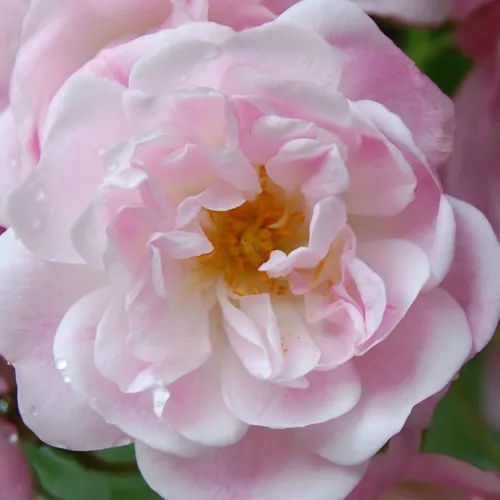
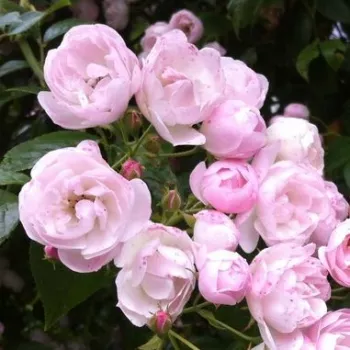
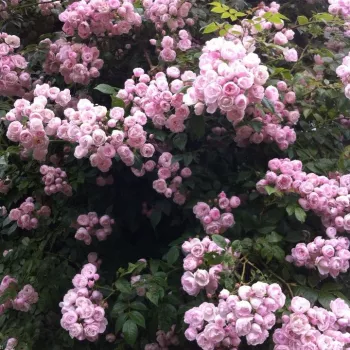
Bring a sense of coastal freedom to your garden with BELVEDERE, a graceful historic rambler that drapes walls, pergolas and old fences in clouds of pastel-pink bloom. Once established, its vigorous, climbing habit shrugs off breezes and gives reliable cover, creating a sheltered nook where you can enjoy tea after a day collecting seashells. Medium maintenance needs mean there is little more to do than guide and tie in the long, supple shoots, ideal if you prefer easy-going structure over fussy pruning. As buds open, the deep carmine-red tones soften to a romantic blush and almost white, lending a timeless charm to small family plots and shingle-style coastal spaces. The moderately strong, musky fragrance carries on sunny, windy days, bringing a sense of refreshment while dense, glossy foliage offers dependable screening even when the plant is out of flower, giving you privacy and year-round presence. Grown on its own roots, BELVEDERE matures steadily into a long-lived, resilient anchor for your garden design, settling in gradually and rewarding a patient eye over the first three seasons as roots, then structure, then full ornamental value develop. For containers on verandas, choose a large 40–50 litre pot with good drainage to support its natural vigour and enjoy an airy, salty, sunny mood with minimal fuss.
Usage options
| Target area |
Reasoning |
| Coastal veranda windbreak |
Trained along a balustrade or pergola, BELVEDERE’s vigorous climbing habit and dense foliage form a soft green screen that filters salty breezes while remaining airy and light. The once-a-year, pastel-pink display gives a highlight fortnight without demanding complex pruning, ideal for those who simply tie in new growth a couple of times a season and then relax with the result, especially appealing to beginners. |
| Small family garden privacy wall |
Where space is tight but extra seclusion is wanted, this tall rambler can be fanned across a fence or wall to create a high, leafy curtain with relatively modest root spread at ground level. Medium maintenance needs translate into seasonal checks and light tying-in rather than constant clipping, so you gain a long-lived structural screen that also delivers a single, memorable flush of bloom, suiting time-poor homeowners. |
| Romantic pergola or archway |
Long, flexible canes make BELVEDERE particularly well suited to clothing arches and pergolas in a soft, cascading style. The once-flowering habit means you can look forward to one concentrated period of powder-pink blossom and fragrance that transforms the structure into a feature, then enjoy neat greenery for the rest of the year, a pattern that works beautifully for occasion-focused gardeners. |
| Historic or cottage-style corner |
The cultivar’s 19th-century French origin and traditional rambler character sit naturally in cottage and heritage-inspired schemes. Its pastel flowers, gentle fragrance and slightly informal growth quickly give a sense of age and permanence, particularly valued where you want a newly planted plot to feel settled and rooted in place, resonating with romantics. |
| Shingle or gravel coastal planting |
In a free-draining, stony strip behind a low wall or fence, BELVEDERE can be used as a vertical accent that rises above sea kale, grasses and other drought-tolerant perennials. Once established, the strong frame and dense foliage cope well with exposed, breezy conditions while helping stabilise the layout, matching the needs of coastal-style gardeners. |
| Large container on sheltered veranda |
Planted into a 40–50 litre container with robust support, this own-root rambler gradually builds a permanent woody framework that can be refreshed from the base if canes are ever damaged. You gain the reassurance of long-term continuity in a pot, with the main tasks being occasional feeding, watering and tying-in, an attractive proposition for busy balcony-owners. |
| Long-term structural climber |
Because BELVEDERE is supplied on its own roots, new shoots can arise from below ground if older stems are pruned out or lost, giving a regenerative, stable presence on walls and pergolas. Over years this results in a durable, self-renewing structure that supports consistent foliage cover and ornamental value, particularly appreciated by forward-planning gardeners. |
| Multi-year family garden investment |
Planted once in suitable soil with sensible drainage, BELVEDERE repays patient establishment with decades of service, anchoring the overall design as other plants come and go. Its performance suits British family gardens that experience a mix of rain, wind and occasional salt-laden breezes along with generally cool winters, reassuring for long-term-minded owners. |
Styling ideas
- Cornish veranda retreat – Train BELVEDERE along a simple timber pergola over a deck with a large 50 litre pot at each post, underplanting with sea kale and Festuca for a relaxed coastal feel – ideal for veranda-loving families.
- Romantic shingle walk – Let canes spill over a boundary fence beside a gravel path, mixing in foxgloves and airy grasses to echo soft seaside breezes – perfect for cottage-style enthusiasts.
- Historic garden gateway – Arch BELVEDERE above a gate, pairing with lavender and low box or thrift at the base to frame an entrance with pastel bloom and gentle scent – suited to lovers of period character.
- Privacy courtyard wall – Fan the rambler across a courtyard wall, combining it with Phormium ‘Tom Thumb’ and potted herbs for evergreen texture and summer screening – appealing to busy urban homeowners.
- Family tea corner – Use BELVEDERE to enclose a small seating nook, with a simple timber trellis and pale paving, so its once-a-year pink cascade marks early summer gatherings – designed for relaxed family gardeners.
Technical cultivar profile
| Parameter |
Data |
| Name and registration |
Belvedere is a historical Hybrid Sempervirens rambler from the Heritage rose collection, traded as BELVEDERE – pink historic sempervirens rose – Jacques, unregistered but recognised under its established name. |
| Origin and breeding |
Raised in France in 1829 by Henri Antoine A. Jacques at the Château de Neuilly garden, from Rosa sempervirens crossed with an unknown parent, and introduced to wider commerce by Jacques and later distributors. |
| Awards and recognition |
Holder of the RHS Award of Garden Merit, indicating reliable garden performance, overall ornamental value and reasonable health under typical UK conditions, making it a trusted choice for long-term planting. |
| Growth and structural characteristics |
A vigorous climbing rambler, typically 600–850 cm high with 350–550 cm spread, bearing dense, glossy dark green foliage on slightly thorny stems that are flexible enough for training on walls, arches and pergolas. |
| Flower morphology |
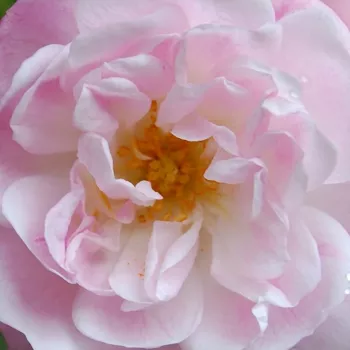
Medium-sized, double, cup-shaped flowers with 26–39 petals are produced in clusters during a single main flowering period, creating an abundant yet time-limited display suited to seasonal highlight planting. |
| Colour data and phenology |
Buds open from deep carmine-red to powder-pink, then to almost white with a faint pink veil; ARS code PB, RHS 65C outer and 62C inner, with colour that gently fades in sun during its once-per-season flush. |
| Fragrance and aroma |
The blooms carry a moderately strong, slightly sweet, musky scent that is noticeable in still or lightly breezy weather and contributes to the romantic, traditional atmosphere associated with old rambling roses. |
| Hip characteristics |
Occasionally forms small ellipsoidal hips, around 8–12 mm in diameter, coloured orange-red, adding a discreet autumn accent though not produced in heavy quantities every year. |
| Resistance and winter hardiness |
Hardy to approximately −26 to −23 °C (RHS H7, Swedish Zone 4, USDA 5b), with medium resistance to black spot, powdery mildew and rust, benefitting from basic preventive care in damp or enclosed sites. |
| Horticultural recommendations |
Best with strong support and ample space, at 405–630 cm between plants depending on use; suit moist but well-drained soil, with occasional pest and disease checks forming the core of its medium maintenance regime. |
BELVEDERE offers vigorous vertical cover, a memorable once-a-year pastel-pink and musky-scented display, and the reassurance of own-root regeneration, making it a considered choice for those planning a lasting garden framework.