BLACK FOREST ROSE® – red bedding floribunda rose - Kordes
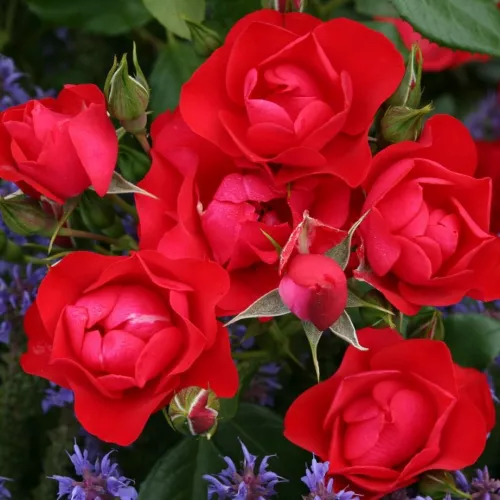
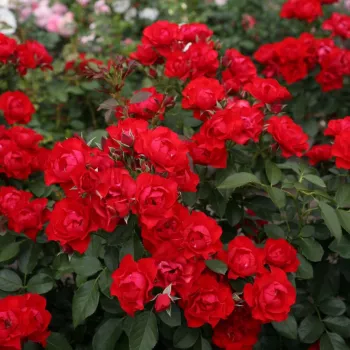
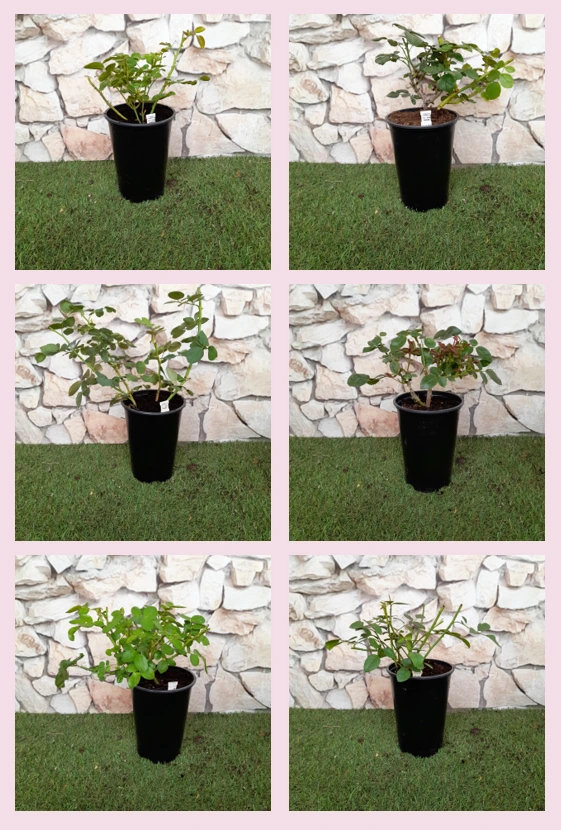
Black Forest Rose® brings the mood of a breezy Cornish afternoon to compact family plots, offering coastal charm and reliable colour with very little fuss. Its bushy, upright habit and dense, glossy foliage make a neat, low hedge or edging that anchors beds even when Atlantic squalls roll in, with wind and rain shrugged off by a strong root system and firm structure for dependable stability in exposed gardens. Clusters of semi-double, bright red blooms appear repeatedly from early summer well into autumn, each self-cleaning for an effortlessly tidy display. Container-friendly and happy in a large 40–50 litre pot on a sheltered veranda, it is ideal where space is tight yet you still want months of flower cover. As an own-root rose it settles in steadily, building longevity and recovery potential over the years, so your planting feels like a lasting investment. Think of its development as a quiet progression: first it concentrates on roots, then more confident shoots, and by the third season you enjoy full ornamental impact. Bright yet not brash, it partners beautifully with silvery or blue grasses for relaxed seaside borders.
Usage options
| Target area | Reasoning |
|---|
| Coastal family front garden bed |
Low, bushy plants with firm structure cope well with brisk onshore breezes, keeping their shape and flower clusters where other shrubs can look battered, which suits time-poor coastal homeowners and beginners. |
| Small townhouse border with limited depth |
The compact 65–95 cm height and 55–85 cm spread give a generous amount of flower and foliage without overwhelming a narrow border, ideal for adding vivid structure along a path for busy urban gardeners. |
| Informal flowering hedge by a veranda |
Planted 50–60 cm apart, the upright habit and dense foliage knit into a low, semi-formal hedge that screens seating areas while still letting you enjoy the view, perfect for relaxed family households. |
| Large containers on a sheltered coastal veranda |
In a 40–50 litre container with good drainage, its steady growth and own-root resilience give a long-lived feature plant; with occasional feeding and watering it rewards balcony and veranda-focused owners. |
| Low-maintenance family flowerbed |
Good self-cleaning means most spent blooms drop cleanly, reducing deadheading and keeping beds tidy through the school holidays, a practical benefit for parents who prefer relaxed, low-effort summer gardening. |
| Pollinator-friendly corner in a decorative bed |
Semi-double, cup-shaped clusters expose stamens, offering accessible pollen for bees and other visitors, letting you add wildlife value without sacrificing formal bedding impact, suiting environmentally-aware gardeners. |
| Season-long colour anchor in mixed planting |
Repeat flowering with a plentiful second flush ensures a steady red accent from early summer into autumn, anchoring compositions while perennials come and go, appreciated by those wanting reliable visual continuity. |
| Resilient planting in windy, rain-prone spots |
The sturdy frame, dense foliage and proven garden performance make it reassuring where blustery weather and heavy showers are common along the coast, providing a stable backbone for exposed-site planting and newcomers. |
Styling ideas
- Shingle-Romantic – Tuck Black Forest Rose® into coastal-style shingle beds with sea kale and Festuca for scarlet dots above pebbles – ideal for seaside-inspired homeowners wanting colour without fussy upkeep.
- Veranda-Hedge – Line 40–50 litre tubs along a south-facing railing to form a low flowering screen, pairing with dwarf grasses – for balcony and veranda users seeking privacy and long-season structure.
- Ruby-Ribbon – Create a bold edging strip beside a front path, alternating roses with creeping thyme to soften the line – suited to families wanting a smart look with minimal clipping and deadheading.
- Playful-Pollinator – Interplant with dwarf asters and airy perennials so clusters of red blooms sit amongst nectar-rich flowers – good for nature-focused gardeners who still favour a clean, organised layout.
- Season-Anchor – Use groups of three as repeating red accents through mixed borders, surrounding them with blue and silver foliage to emphasise the long flowering season – perfect for design-conscious but busy owners.
Technical cultivar profile
| Parameter | Data |
|---|
| Name and registration |
Black Forest Rose® (KORschwill), floribunda bed rose from the RigoRosen® collection; ARS exhibition name Black Forest Rose; registered floribunda / bush rose for garden and display use. |
| Origin and breeding |
Bred by Tim-Hermann Kordes at W. Kordes’ Söhne, from unnamed seedling parents; introduced and registered in 2010 by W. Kordes’ Söhne in Germany for robust landscape and garden planting. |
| Awards and recognition |
Holds ADR 2010 (Germany) plus major trial awards: 1st prize Baden bei Wien 2010, Kortrijk/Courtrai Gold Medals 2011 and 2012, RNRS Trial Ground Certificate 2011, and recognition at La Tacita. |
| Growth and structural characteristics |
Bushy, upright plant to around 65–95 cm high and 55–85 cm wide, with dense, glossy dark green foliage and moderate prickles; good self-cleaning habit keeps the compact framework visually neat. |
| Flower morphology |
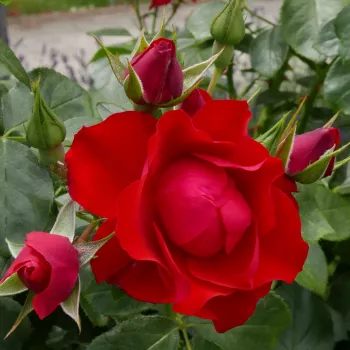
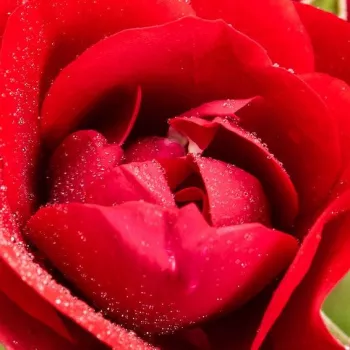
Semi-double, cup-shaped clusters with around 13–25 petals, medium flower size on floribunda trusses; remontant with generous repeat, including a notably plentiful second flush after main early-summer flowering. |
| Colour data and phenology |
Bright, saturated medium red (ARS MR, RHS 46A–46B) from bud to fall; colour retention is excellent, with only a subtle deepening towards maroon as blooms age, and little fading even in strong sunshine. |
| Fragrance and aroma |
No noticeable fragrance is recorded; appeal lies in vivid colour, floribunda-style clusters and long-season flowering rather than scent, making it suitable where visual effect and ease outweigh perfumed display. |
| Hip characteristics |
Occasional small spherical orange-red hips, around 6–10 mm diameter, may appear late season; quantities remain low because most spent blooms fall cleanly, so hips rarely dominate the plant’s appearance. |
| Resistance and winter hardiness |
Hardy to about -26 to -23 °C (RHS H7, USDA 5b, Swedish Zone 4); good heat tolerance, coping with short dry spells if watered in drought; resistant to black spot and rust, moderate against powdery mildew. |
| Horticultural recommendations |
Best in full sun with well-drained soil; space 50–60 cm for hedging and massing or 100 cm as a specimen, 2.8–3.2 plants/m²; suits flowerbeds, edging, parks and urban spaces with medium maintenance needs. |
Black Forest Rose® offers compact structure, long-season red clusters and self-cleaning ease in a durable own-root form that rewards patient gardeners seeking a reliable coastal-style feature, so it is well worth a thoughtful place in your plans.