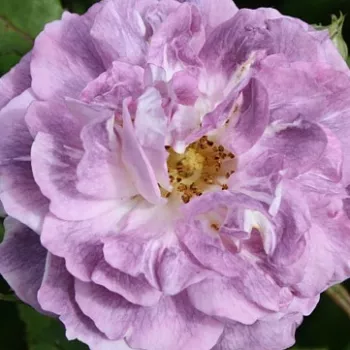
BLUE TANGO – mauve-lilac bedding floribunda rose – Schade
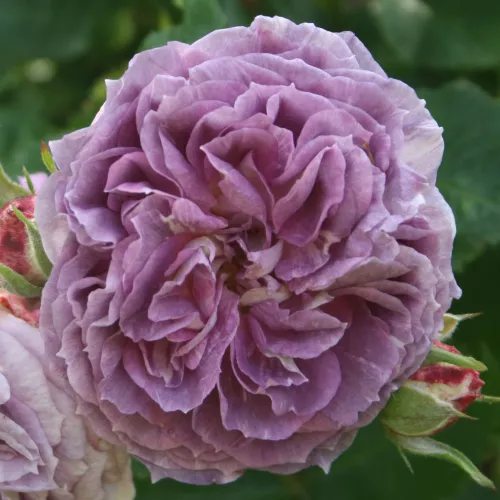
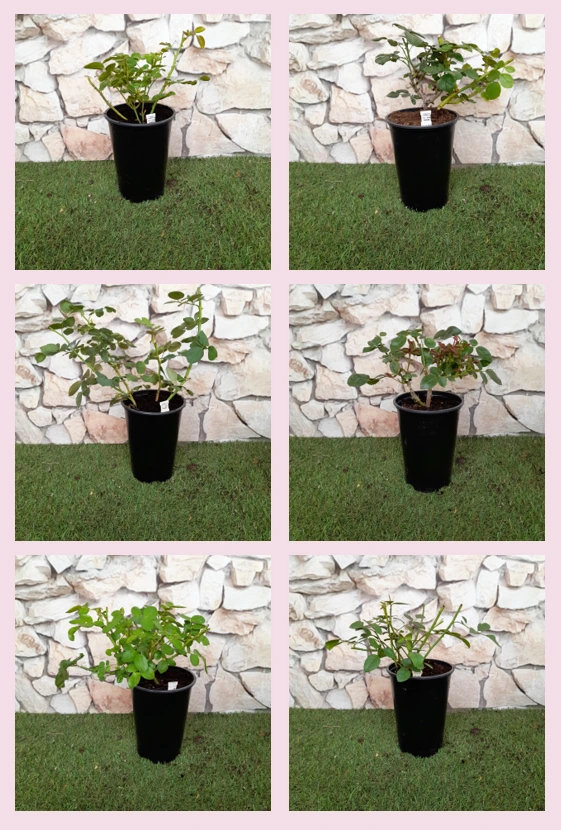
Imagine settling with afternoon tea behind a living coastal windbreak, the air carrying a salty tang and the strong, citrus‑damask fragrance of BLUE TANGO. This tall, upright floribunda builds dense mid‑green foliage that filters breezes and frames its cool mauve‑lilac, cup‑shaped clusters perfectly, ideal for a “girly” veranda or shingle garden after collecting seashells. Bred for resistance to common rose diseases and good heat tolerance, it offers low‑fuss reliability even where winds and rain meet light salt spray along exposed UK coasts. As an own‑root plant, it establishes gradually but securely – roots first, then stronger top growth, then by the third season full ornamental impact with abundant, very double blooms. Give it a well‑drained spot, perhaps in a generous 40–50 litre container, and enjoy its soothing, colour‑steady presence from early summer well into autumn.
Usage options
| Target area | Reasoning |
|---|
| Coastal veranda in Cornwall or Devon |
The tall, upright habit and dense canopy create a gentle living screen that softens sea breezes while the strong citrus‑damask scent feels refreshing after a walk on the beach, providing relaxed privacy for coastal-style lovers. |
| Small front garden hedge |
Planted at about 55 cm centres, BLUE TANGO forms a flowering hedge with mid‑green, slightly glossy leaves that looks tidy for most of the year and needs only light pruning, suiting busy urban garden owners. |
| Feature rose in a 40–50 litre container |
Its height and repeat‑flowering mauve‑lilac clusters give instant vertical interest on patios; in a large pot it anchors well, and own‑root growth supports a long life with minimal repotting for hobby gardeners. |
| Mixed border with grasses and perennials |
The cool lilac tones combine elegantly with Calamagrostis and Phlox, while remontant flowering keeps colour running through the border for months with only basic deadheading needed by beginners. |
| Family back garden wind-filter strip |
Planted in a loose row at 65 cm spacing, its dense foliage and substantial height help slow stronger gusts and frame play areas, offering a softer alternative to fencing for family garden owners. |
| Low‑maintenance rose bed on heavier soil |
Good heat and drought tolerance, coupled with robust disease resistance, allow reliable performance where summers swing between showers and dry spells, provided drainage is improved on heavier clays for practical homeowners. |
| Part‑shaded side return or narrow bed |
This variety colours particularly well in partial shade, where its soft mauve‑lilac deepens rather than washes out, so narrower, less sunny side areas still gain a refined focal point for space-conscious gardeners. |
| Long‑term specimen in a park-style setting |
As an own‑root shrub it can regenerate from the base if cut back, supporting a long lifespan and stable shape, which lets you plan a simple, durable layout with limited renewal work as needed for long-term planners. |
Styling ideas
- Shingle Chic – Plant in a loose trio among pale gravel with sea kale and blue Festuca to echo a soft shoreline palette – ideal for coastal-style lovers seeking a relaxed, breezy look.
- Veranda Screen – Line a balcony or deck with 40–50 litre tubs, underplanting with trailing thyme to mask the rims and enjoy scented privacy – perfect for beginners wanting easy structure.
- Lilac Ribbon – Create a single curving hedge by a front path, interspersed with lavender for extra fragrance and year-round form – suited to busy urban garden owners.
- Pastel Picnic – Combine with blush roses and white Phlox in a mixed border, backed by feather reed grass for movement and a romantic tea-time setting – appealing to family garden owners.
- Evening Terrace – Use as a tall focal rose in a container near seating, with cool-toned pots and silvery foliage plants to highlight the mauve blooms at dusk – designed for hobby gardeners who entertain outdoors.
Technical cultivar profile
| Property | Data |
|---|
| Name and registration |
Floribunda bed rose marketed as BLUE TANGO, a mauve-lilac bedding rose from the Bedding rose collection; American Rose Society exhibition name also recorded as Blue Tango. |
| Origin and breeding |
Bred by Karin Schade in Germany from ‘Blue For You’ × unknown parent; introduced in 2011, with breeder and some registration details not fully documented in public sources. |
| Growth and structural characteristics |
Tall shrub 150–210 cm high and 75–105 cm wide, upright in habit with dense, mid-green, slightly glossy foliage and moderate prickles, forming a substantial, vertical-flowering presence in beds and borders. |
| Flower morphology |
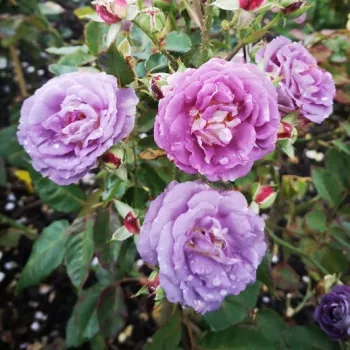
Medium-sized, cup-shaped clusters of very double blooms with over 40 petals; floribunda-type trusses give abundant coverage, and the variety repeats strongly, with a notably generous second flush. |
| Colour data and phenology |
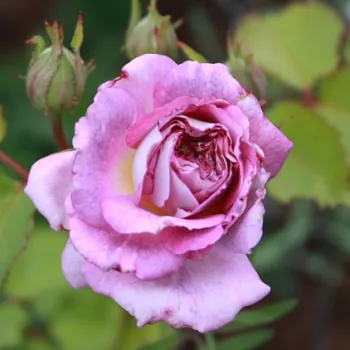
Soft, cool mauve-lilac blooms with a silvery veil; colour is paler in early summer and deepens in autumn, holding well without scorching and showing darker veining and subtle beige-lilac edging as flowers mature. |
| Fragrance and aroma |
Strong, distinctive fragrance blending fresh citrus notes with classic damask rose; scent is evident even in breezier or semi-shaded positions, adding sensory impact around seating and pathways. |
| Hip characteristics |
Forms small, spherical red hips about 5–8 mm in diameter; production is moderate and mainly ornamental, offering subtle seasonal interest without significantly reducing repeat flowering. |
| Resistance and winter hardiness |
Rated H7, hardy to approximately −23 to −21 °C and USDA zone 6a; shows good tolerance to heat and moderate drought, with documented resistance to powdery mildew, black spot and rust in typical garden conditions. |
| Horticultural recommendations |
Suited to borders, hedging, park planting and specimen use at 55–100 cm spacing; prefers well-drained soil, copes with partial shade, and benefits from routine deadheading and basic annual pruning. |
BLUE TANGO offers tall, fragrant mauve-lilac clusters, reliable disease resistance and long-lived, regenerative own-root growth, making it a quietly confident choice for relaxed coastal-style gardens you plan to enjoy for years.