BLUSH NOISETTE – pink historic noisette rose - Noisette
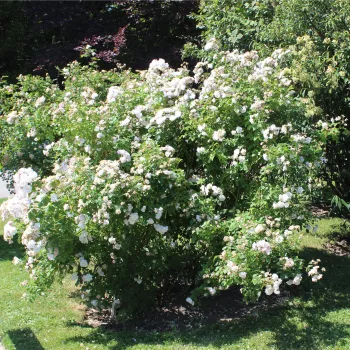
Imagine settling on your veranda after a breezy walk on the shore, the air carrying a honeyed fragrance from clusters of porcelain blooms that cope gracefully with salt-laden gusts and shifting coastal weather. BLUSH NOISETTE forms a lightly thorned, upright screen that is gentle to handle, ideal where children and pets explore around you. Its repeat-flowering clusters keep colour in smaller spaces from early summer well into autumn, while its own-root longevity means the plant thickens steadily below ground in year one, pushes stronger shoots in year two and reveals its full, romantic character by year three.
Usage options
| Target area |
Reasoning |
| Coastal veranda windbreak |
Trained against a balustrade or light screen, its upright habit and dense, mid‑green foliage create a soft, breathing barrier that tempers brisk seaside breezes and shrugs off blustery, salt-tinged conditions, bringing comfort for coastal veranda owners and beginners. |
| Small shingle or gravel garden |
BLUSH NOISETTE dislikes waterlogging more than wind, so a free‑draining shingle bed suits it well; own‑root planting in such a spot ensures the plant can regenerate after any winter knockback, reassuring hobby-gardeners. |
| Compact pergola or arch |
Its moderate height and flexible stems lend themselves to light training over a small pergola or arch, where repeatedly flowering clusters create a romantic tunnel of scent without needing the heavy pruning demanded by larger climbers, ideal for homeowners. |
| Against a sunny house wall |
Planted 45–60 cm from a south or west-facing wall, this variety forms a vertical veil of bloom; the wall’s warmth supports its good heat tolerance while own-root resilience underpins a long life with only occasional tidy-ups, suiting busy families. |
| Large container on sheltered terrace |
In a 40–50 litre container with drainage, its upright, sparsely thorned growth is easy to guide around a veranda post; regular watering is simple for those short on time, and repeat flowering rewards every effort, encouraging time-poor urbanites. |
| Mixed border with coastal-style perennials |
Threaded among sea kale, Festuca and low lavender, its pale clusters sit lightly above grasses and foliage, giving a softly feminine counterpoint while the historic character adds depth and continuity for coastal-style garden lovers. |
| Partially shaded sitting area |
Where walls or fences cast light shade for part of the day, this rose still flowers reliably; the strong, muscatel scent gathers pleasantly in enclosed corners, making a restful retreat for tea and conversation for relaxed gardeners. |
| Long-term feature in family garden |
The own-root habit supports a long lifespan, gradually thickening the framework over several seasons so the plant becomes a stable, gently screening presence that bounces back well after pruning, giving confidence to cautious beginners. |
Styling ideas
- Seaside-Veranda Screen – Plant in a line along a balcony rail, weaving stems through a simple wire to form a scented, wind-softening curtain – perfect for coastal flat-dwellers and balcony owners.
- Shingle-Romantic – Set among shingle with sea kale, Festuca and pale verbena so the airy clusters look like sea foam over pebbles – ideal for lovers of understated, seaside-inspired romance.
- Cottage-Against-Wall – Train loosely around windows on a sunny wall, underplanting with daylilies for a long, layered display – suited to family homes seeking classic charm with modest upkeep.
- Pergola-Tea-Arbour – Let stems climb a compact pergola beside a seating nook where its scent gathers on still evenings – for those who want a fragrant escape without complex rose training.
- Container-Corner – Grow one plant in a 50 litre pot with trailing thyme at the base to soften the rim and highlight its gentle prickliness – appealing to busy terrace gardeners with limited space.
Technical cultivar profile
| Parameter |
Data |
| Name and registration |
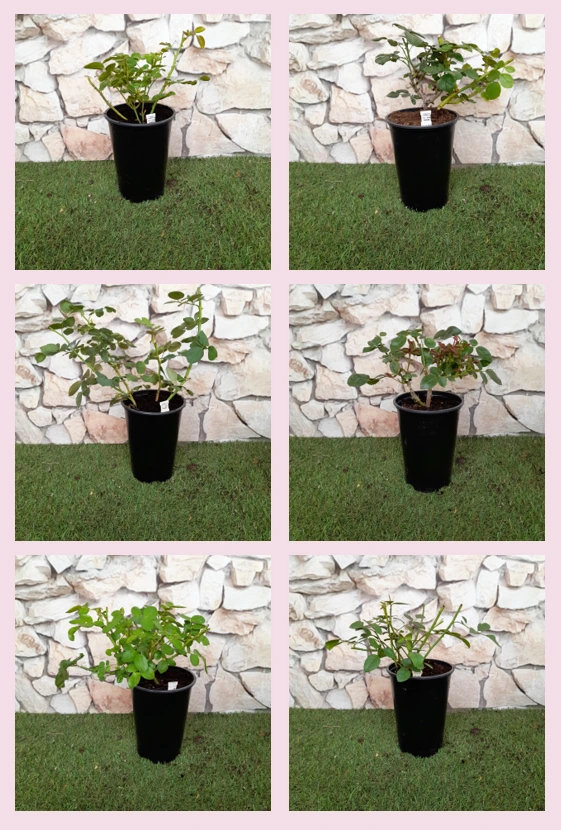
BLUSH NOISETTE is a historic Noisette rose, marketed as a shrub or small climber; it is sold here as a verified own-root plant under the vivianaROSE ORIGINAL 2-litre range. |
| Origin and breeding |
Bred in the United States around 1814 by Philippe Noisette from ‘Champneys’ Pink Cluster’ and an unknown seedling; introduced in France between 1814 and 1817 and widely grown since 1817. |
| Growth and structural characteristics |
Forms an upright, freely branching shrub or climber 150–220 cm tall and 120–190 cm wide, with dense, mid‑green, slightly glossy foliage and relatively few thorns, suitable for training or free-standing use. |
| Flower morphology |
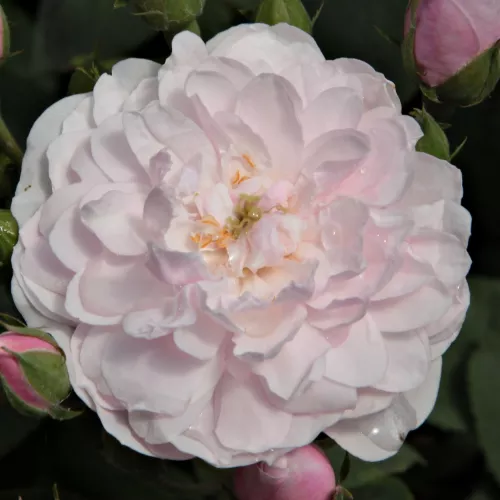
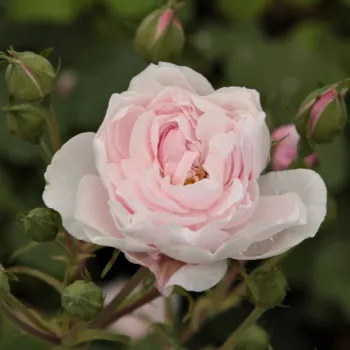
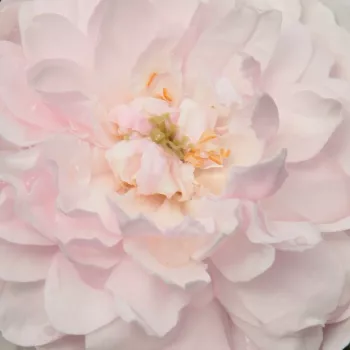
Bears many small, double, rosette-form flowers in abundant clusters; each bloom is 0.5–1.5 inches across with 26–39 petals and a good capacity to repeat, especially in warmer, settled summers. |
| Colour data and phenology |
Flowers open a soft, powdery light pink (RHS 65C–65D) with creamy hints, then fade markedly toward near-white with only a delicate blush; clusters open in flushes from early summer into autumn. |
| Fragrance and aroma |
Possesses a strong, long-lasting scent with honeyed, muscatel notes; fragrance is noticeable in still air and can perfume nearby seating areas or paths, particularly when blooms are massed on a support. |
| Hip characteristics |
Occasionally forms small, spherical hips 6–9 mm in diameter, coloured orange-red; hips are usually scattered rather than plentiful and are primarily of incidental ornamental interest. |
| Resistance and winter hardiness |
Hardy to approximately −21 to −18 °C (RHS H7, USDA 6b) with moderate resistance to black spot, mildew and rust; appreciates watering in prolonged drought and dislikes poorly drained, waterlogged soils. |
| Horticultural recommendations |
Plant in fertile, well-drained soil with at least half-day sun; allow space for height and spread, feed annually, water during extended dry spells and train or lightly prune to maintain the desired outline. |
BLUSH NOISETTE offers repeat-flowering clusters, a strong muscatel fragrance and long-term stability from its own-root form, making it a thoughtful choice for coastal-style gardens and relaxed veranda planting.