BOBBIE JAMES – white climbing rambler rose - Thomas
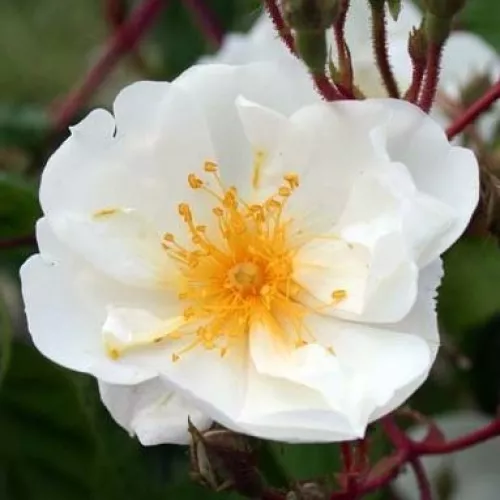
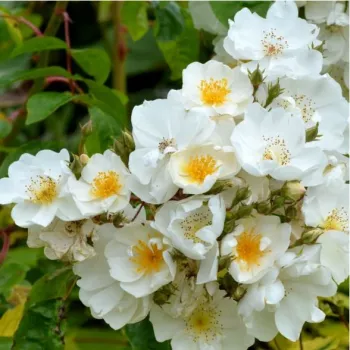
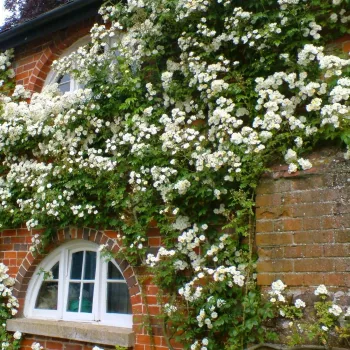
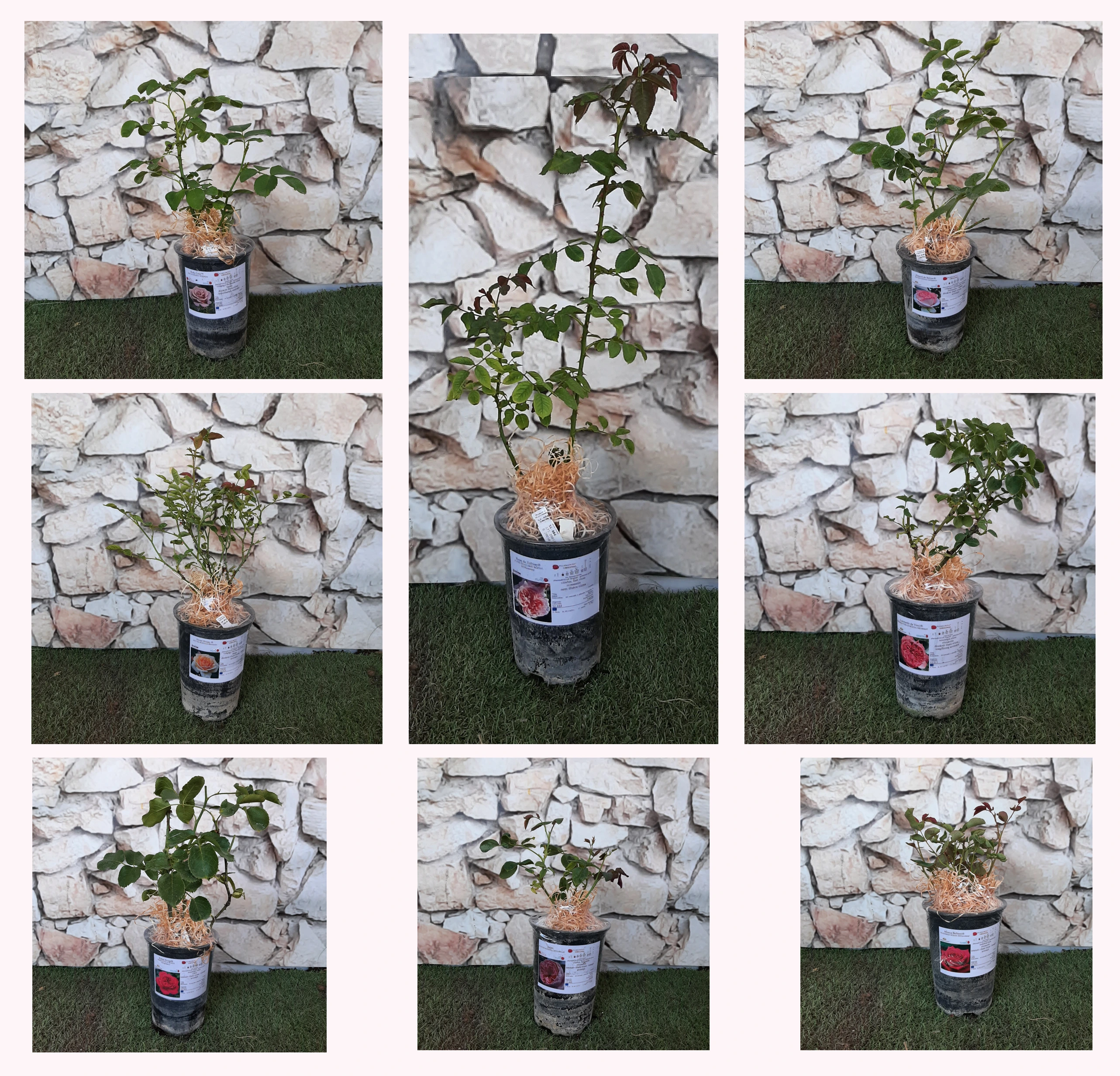
Let the vigorous Bobbie James rambler bring a sense of coastal freedom to your family garden, clothing fences, arches or wind-buffeted verandas in cascades of small, pure white flowers that hardly fade and release a strong, sweet, muscatel fragrance. This classic, RHS‑recognised climber quickly creates natural privacy and shelter, helping your space feel calmer even on exposed days with blustery rain and salt‑laden air sweeping in from the sea. Its glossy mid‑green foliage and masses of self‑cleaning blooms keep the overall look neat with modest maintenance, while bright orange‑red autumn hips extend the display well beyond summer. Supplied in an own‑root pharmaROSA® ORIGINAL 2‑litre pot, it settles in reliably and offers a long‑lived, regenerating structure that builds from roots in the first year, stronger shoots in the second, and full ornamental impact by the third, giving you enduring garden character.
Usage options
| Target area | Reasoning |
|---|
| Coastal veranda windbreak |
Use this tall rambler to clothe the windward side of a veranda or balcony rail, where its dense, glossy foliage and arching canes create a living screen that softens salt-laden gusts and makes outdoor seating more comfortable for relaxed coastal-style garden owners. |
| Pergola or arch focal point |
Trained over a pergola or arch, its rapid growth and once-a-year flush of scented white blooms form a dramatic summer tunnel that feels like a seaside escape, ideal for those who want maximum impact from a single, long-lived climber. |
| Family garden boundary fence |
Along a back-garden fence it delivers height, privacy and a cloud of pure white flowers without needing intricate pruning, suiting time-poor householders who want a reliable, easy-care screen in an average-sized family plot. |
| Training into a mature tree |
Allowed to scramble through a sturdy existing tree, it creates a romantic “flowering tree” effect high above the garden, with minimal ground-level fuss, appealing to imaginative gardeners who like naturalistic, low-intervention planting. |
| Small-space feature in large container |
Planted in a 40–60 litre container with a strong obelisk or trellis, it offers vertical drama and fragrance on patios where ground space is scarce, suiting balcony and courtyard owners seeking a big presence in a compact footprint. |
| Partial-shade side passage |
Its tolerance of partial shade allows planting in side passages or between houses, where many roses struggle, providing flowers, foliage and hips in awkward, overlooked corners for practical-minded homeowners. |
| Wildlife-friendly cottage corner |
The semi-double flowers offer moderate pollinator appeal, then abundant autumn hips provide colour and seasonal interest, fitting gardeners who want a softer, wildlife-influenced look without moving away from classical rose charm. |
| Exposed, rain-swept coastal plot |
On breezy sites it anchors into the soil and rides out wet, gusty spells once established, making it a reassuring choice for those gardening near the sea who need a robust, long-term climber. |
Styling ideas
- Seaside-veranda screen – Grow in a deep trough with a sturdy trellis, underplant with blue Festuca-like grasses for a shingle feel – for coastal balcony owners wanting shelter and romance.
- Cottage-pergola walk – Cover a wooden pergola, then weave in lavender and daylilies for colour at ground level – for families dreaming of a scented summer walkway.
- Romantic-tree veil – Let it scramble into an old apple or hawthorn, adding yarrow and bearded iris at the base – for gardeners who love relaxed, storybook planting.
- Compact-corner column – Use a 50-litre pot with an obelisk in a tight corner, pairing with low herbs to keep access clear – for small-garden owners needing vertical interest.
- White-and-green calm – Train along a boundary and edge the base with simple green groundcovers for a restrained palette – for busy homeowners favouring a tidy, low-input look.
Technical cultivar profile
| Parameter | Data |
|---|
| Name and registration |
Bobbie James is a large-flowered rambler from the Climbing rose collection, marketed as a white climbing rambler rose; ARS exhibition name Bobbie James, authenticity verified for premium garden use. |
| Origin and breeding |
Bred by Graham Stuart Thomas at Sunningdale Nursery, Windlesham, United Kingdom, introduced and registered in 1961, with parentage unknown but rooted in Hybrid Multiflora and Wichurana rambler breeding. |
| Awards and recognition |
Holds the Royal Horticultural Society Award of Garden Merit (1993), recognising dependable performance, ornamental value and garden-worthiness under typical UK conditions when grown with appropriate support. |
| Growth and structural characteristics |
Very vigorous climbing habit, reaching 6–9 m high with a 2,4–3,8 m spread, densely thorned canes and moderately dense, glossy mid-green foliage, best grown with strong supports such as pergolas, fences or mature trees. |
| Flower morphology |
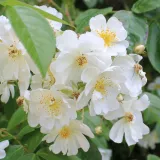
Semi-double, flat, small flowers (about 0,5–1,5 inches), carried in large clusters; 13–25 petals, non-remontant with a single abundant main flush each season, most spent blooms dropping cleanly on their own. |
| Colour data and phenology |
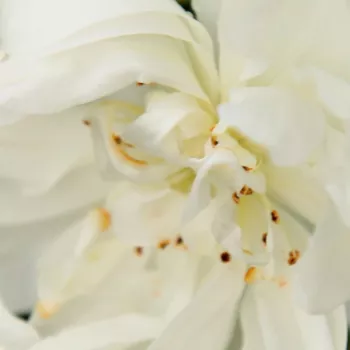
Flowers open creamy-white with buttery-yellow throat, then pure off-white with silky texture; edges may show pearl-grey tones, with excellent colour retention and a long-lasting display before petal fall in early to mid-summer. |
| Fragrance and aroma |
Strong, clearly perceptible sweet, muscatel fragrance that carries well in still air, providing classic rose scent around seating areas or paths during the main flowering flush, especially effective on warm, humid summer days. |
| Hip characteristics |
After flowering it sets numerous small, egg-shaped hips, 6–10 mm in diameter, orange-red by autumn, extending the ornamental season and adding seasonal interest for wildlife-friendly and informal planting schemes. |
| Resistance and winter hardiness |
Rated to about −26 to −23 °C (RHS H7, USDA 5b), with medium resistance to powdery mildew, black spot and rust; once established, copes well with summer heat and short dry spells when soil preparation and watering are adequate. |
| Horticultural recommendations |
Suited to pergolas, fences, tree training or solitary specimens at 2,3–3,6 m spacing; prefers well-drained but moisture-retentive soil, good ventilation, and benefits from formative training and periodic thinning of old canes. |
BOBBIE JAMES offers vigorous height, summer fragrance and long-season hips in an own-root form that matures steadily into a durable garden structure, making it a thoughtful choice for those planning a lasting family garden.