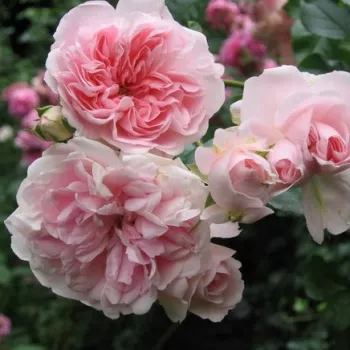
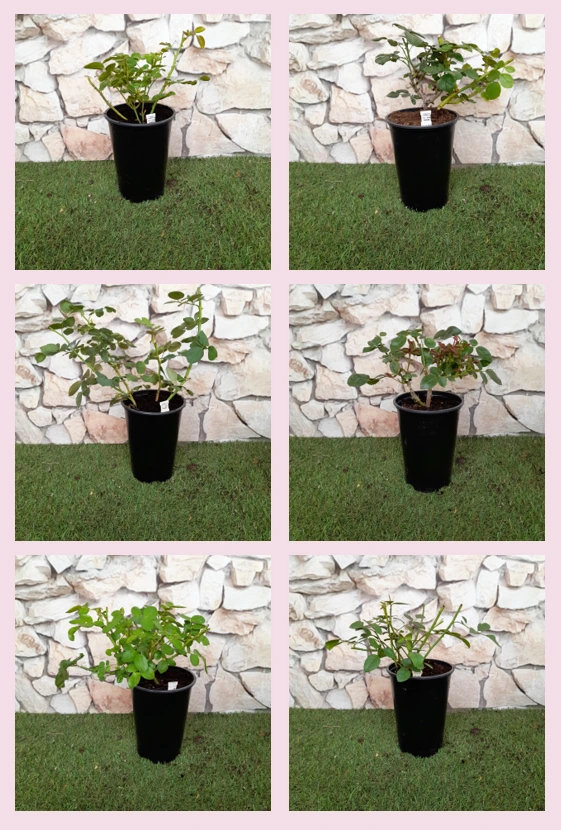
BOSSA NOVA – medium-pink bedding floribunda rose - Olesen & Olesen
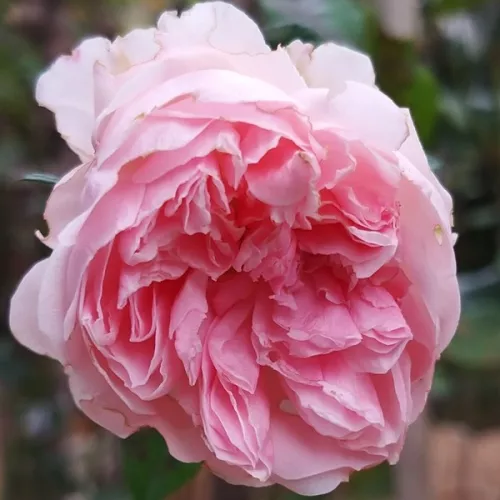
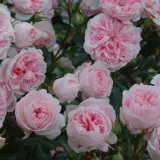
In a shingle-front garden where sea air brushes the walls and a mug of tea warms your hands, BOSSA NOVA settles in as a quietly reliable presence: low, bushy and spreading, it knits together beds and containers into a soft, medium-pink cushion of bloom. Its floribunda clusters repeat through the season, giving colour even when weekends are your only gardening time, while the own-root form supports a long-lived, steady display that forgives missed pruning. Plant it where you can enjoy shelter from coastal breezes while it naturally helps anchor soil and manage moisture on exposed sites. Compact suits family plots and small courtyards, and its groundcover habit drapes neatly around paths or seating. In larger planters of at least 40–50 litres it forms a low hedge of flowers along a veranda, coping well with partial shade beside walls and screens. Over time it builds a permanent framework of roots and shoots, giving you year‑on‑year stability with very little fuss as it matures from a young plant into full impact.
Usage options
| Target area | Reasoning |
|---|
| Coastal shingle or windswept front garden |
The wide, bushy habit creates a low wind-filtering mass that works well beside gravel, shingle and informal paths, giving movement without needing complex care – a calm choice for the busy beginner. |
| Low groundcover around seating or play areas |
Dense spreading growth and small rosette blooms knit together quickly, covering bare soil so you spend less time weeding around benches, swings or washing lines – ideal for the family gardener. |
| Containers on coastal verandas or balconies |
Performs well in large 40–50 litre pots, forming a tidy pink edge along railings or steps while coping with light exposure and limited watering – reassuring for the time-poor homeowner. |
| Mixed medium-pink bedding and edging schemes |
Floribunda clusters repeat through the season, giving a consistent ribbon of colour at the front of beds and borders with only occasional deadheading – well suited to the low-maintenance enthusiast. |
| Partially shaded corners and side passages |
Tolerates partial shade, so it will still flower reliably beside house walls, sheds or boundary fences where sun comes and goes – useful for the small-garden owner. |
| Slightly exposed, rain- and wind-prone plots |
The sturdy framework and spreading roots help the plant sit firmly in the ground, useful where gusts and heavy showers are frequent near the coast, quietly supporting the garden for the practical planner. |
| Informal front-garden displays for long-term structure |
Own-root growth builds up steadily, giving a durable shrub that can regenerate from the base and remain ornamental for many years with simple pruning – attractive for the long-view gardener. |
| Gentle slopes and slightly uneven ground |
The broad, ground-hugging habit helps soften banks and level changes, while its root system improves anchoring and water movement through the soil – a reassuring option for the cautious improver. |
Styling ideas
- Coastal-Cosy Border – weave BOSSA NOVA through sea kale and blue Festuca to create a low, wind-filtering band of pink and silver beside shingle paths – perfect for relaxed coastal-style beginners.
- Veranda-Ribbon – line a sunny veranda with 40–50 litre tubs of BOSSA NOVA, underplanting with trailing thyme to soften the edges – ideal for busy homeowners wanting easy summer structure.
- Pastel-Groundcover Drift – mass-plant BOSSA NOVA on a gentle slope, interspersed with low lavender for a pastel patchwork that suppresses weeds – good for family gardens needing simple coverage.
- Front-Door Welcome – flank the entrance path with BOSSA NOVA as a low, repeating edging, pairing with compact Euonymus for year-round green and pink – suited to neat, low-fuss front gardens.
- Shaded-Side Retreat – brighten a part-shaded side passage by grouping BOSSA NOVA with Calamintha and pale gravel for a soft, scented walkway – appealing to those making the most of limited light.
Technical cultivar profile
| Parameter | Data |
|---|
| Name and registration |
Floribunda rose, registered as POUloma, marketed as BOSSA NOVA Floribunda POULSEN; floribunda bedding rose suitable for exhibition use and general garden planting in family spaces. |
| Origin and breeding |
Bred in Denmark in 1983 by L. Pernille and Mogens Nyegaard Olesen for Poulsen Roser A/S; registered 1998 and introduced after 1998, from an unknown seedling crossed with ‘The Fairy’. |
| Growth and structural characteristics |
Bushy, widely spreading shrub reaching about 75–105 cm in height and 120–180 cm spread, with dense, slightly glossy green foliage and moderate prickles, forming broad groundcover mounds. |
| Flower morphology |
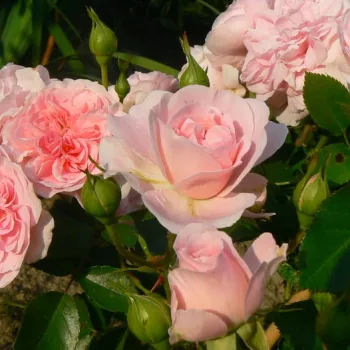
Small, very double rosette blooms with over 40 petals, borne in clusters; remontant with plentiful repeat flushes after the main flowering, and a moderate tendency to self-clean spent blooms. |
| Colour data and phenology |
Uniform mid-pink flowers (ARS MP, RHS 62C–62D); buds deeper pink, opening to pure mid-pink then fading to pastel and almost pale pink towards petal centres as each bloom ages on the plant. |
| Fragrance and aroma |
Fragrance is very faint and barely perceptible, making it suitable for those who prefer visual impact over scent or need low-fragrance planting near seating, doors or windows in smaller gardens. |
| Hip characteristics |
Moderately formed hips, around 10–16 mm in diameter, developing after flowering where spent blooms are not removed, adding discreet seasonal interest without dominating the plant’s display. |
| Resistance and winter hardiness |
Hardy to approximately −26 to −23 °C (RHS H7, roughly USDA 5b, Swedish Zone 4); medium resistance to black spot, mildew and rust, needing standard preventive care in damp or high-pressure years. |
| Horticultural recommendations |
Best in well-drained soil with regular feeding and watering; spacing 90–165 cm depending on use, with 0.9–1.0 plants/m² for drifts; suitable for beds, edging, containers, slopes and urban green spaces. |
BOSSA NOVA offers broad, low groundcover, season-long floribunda colour and dependable own-root longevity, making it a thoughtful choice for relaxed coastal-style gardens and low-effort family borders.