BOTZARIS – cream-white historic Damask rose - Robert
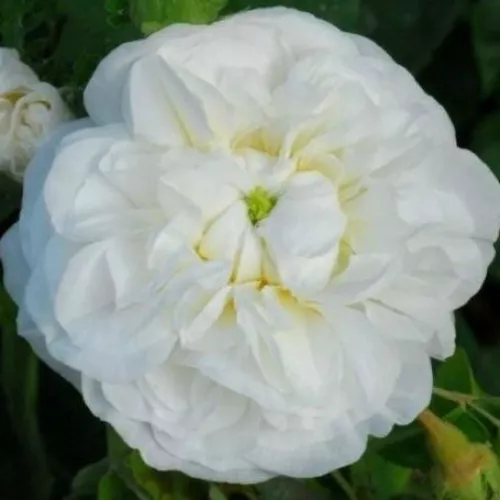
Bring a sense of sunlit coastal heritage to your garden with BOTZARIS, a cream-white Damask shrub rose that suits relaxed family plots and breezy verandas. Its once-a-year early summer flush is an unforgettable wave of blossoms, filling the air with a rich Damask fragrance that lingers on warm evenings. Bushy yet controlled, it stays within a manageable size for smaller gardens, ideal as a light windbreak near shingle and gravel, where good drainage helps roots settle securely against blustery weather. Medium maintenance means you simply shape, deadhead and water in dry spells, while the own-root form supports long-term longevity, steady regrowth after pruning and reliable structure as it matures. In a 40–50 litre or larger container on a sheltered veranda, BOTZARIS gradually builds from quiet first-year roots to stronger second-year shoots and full third-year impact.
Usage options
| Target area | Reasoning |
|---|
| Small coastal front garden feature |
The manageable bushy habit and historical character make BOTZARIS a natural focal point near a front door or low fence, adding refined charm without dominating the space; best suited to those seeking gentle structure and romance, especially beginners. |
| Seasonal “moment” by a seating area |
Its single, spectacular early summer flush creates a brief but memorable highlight beside a bench or bistro set, ideal if you enjoy one concentrated period of beauty rather than constant upkeep, appealing to time-poor homeowners. |
| Sheltered coastal veranda in a large container |
Planted in a 40–50 litre or larger pot, BOTZARIS anchors a veranda with cream-white flowers and fragrance, while its controlled spread suits narrow spaces; perfect for those wanting easy elegance in pots, including busy urbanites. |
| Light windbreak near shingle or gravel |
The slightly spreading, thorny structure provides a gentle visual screen that pairs well with shingle and gravel, in conditions where well-drained ground keeps it stable in breezy, damp weather; ideal for coastal-style gardeners. |
| Low-maintenance heritage flower bed |
Medium care demands mean routine watering in dry spells, some deadheading and occasional plant protection, yet the rose largely keeps its form and appeal, suiting those who prefer classic looks without complex pruning, notably casual enthusiasts. |
| Long-lived specimen in a family lawn |
As an own-root, historic shrub, BOTZARIS forms a durable framework that responds well to pruning and can recover from occasional damage, rewarding patient planting with many years of character, attracting long-term-minded owners. |
| Partially shaded side border |
Tolerance of partial shade allows planting on cooler, less sunny boundaries where many other roses falter, giving refined flowers and scent in corners that usually remain plain, appreciated by resourceful space-limited gardeners. |
| Traditional cutting corner for scented stems |
The medium-sized, very double rosette blooms supply richly perfumed stems for informal indoor arrangements during their main flush, allowing you to enjoy a historic fragrance indoors as well as outside, perfect for aroma-loving collectors. |
Styling ideas
- Veranda Calm – Grow BOTZARIS in a 50 litre clay pot with blue Festuca and a low grey-leaved herb to echo shingle tones – ideal for coastal-style veranda owners.
- Heritage Hedge – Plant a loose, low hedge at 90 cm spacing along a front boundary, underplanted with Calamintha for soft movement – for lovers of traditional cottage charm.
- Tea Corner – Position a single BOTZARIS beside a bistro set on gravel, framed with sea kale and lavender for a salty, sunny tea spot – appealing to relaxed weekend gardeners.
- White Bed – Combine BOTZARIS with white perennials and New Zealand flax ‘Tom Thumb’ for height contrast and year-round foliage – suited to design-conscious small-garden owners.
- Shaded Elegance – Use BOTZARIS in a part-shaded side border with airy calamints to lighten a narrow path and add fragrance – perfect for pragmatic, low-maintenance planners.
Technical cultivar profile
| Attribute | Data |
|---|
| Name and registration |
Historic Damask shrub rose from the Heritage rose collection, marketed as BOTZARIS – cream-white historic Damask rose - Robert; unregistered cultivar traditionally exhibited under the name Botzaris. |
| Origin and breeding |
Bred by François André Robert in Angers, France and introduced in 1856; Damask–Hybrid Gallica background with unknown parentage, representing classic nineteenth-century French shrub rose breeding. |
| Growth and structural characteristics |
Bushy, slightly spreading shrub reaching about 105–155 cm tall and 75–125 cm wide, with moderately dense, dark green, slightly glossy foliage and a densely thorned framework that gives a firm, structural presence. |
| Flower morphology |
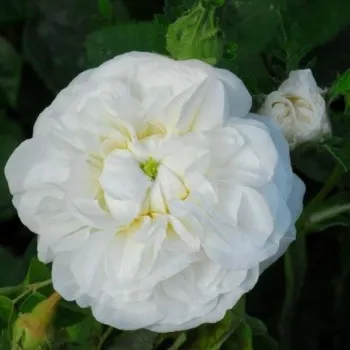
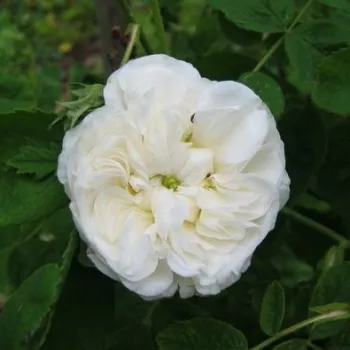
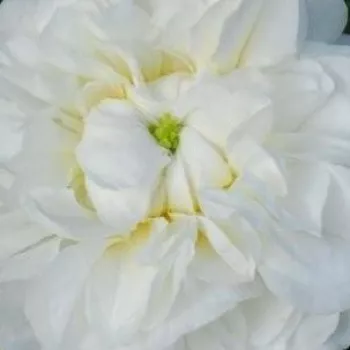
Medium-sized, very double rosette blooms with more than 40 petals, borne mainly solitary on stems; once-flowering rather than remontant, giving a concentrated early summer display that benefits from deadheading of spent blooms. |
| Colour data and phenology |
Cream-white flowers with a buttery yellow centre when opening, coded RHS 155D outer and 11D inner; colour holds well, maturing to snow white, though petals may scorch slightly in intense sun, giving a soft antique effect. |
| Fragrance and aroma |
Strong, long-lasting Damask perfume with a classic old-rose character, valued for its intensity around seating areas; primarily ornamental because the very double flower form encloses the stamens and offers limited pollen access. |
| Hip characteristics |
Forms hips only sparsely; occasional bottle-shaped fruits around 14–22 mm across, orange-red (RHS 40A), adding a discreet seasonal accent rather than a dominant autumn feature in the overall garden composition. |
| Resistance and winter hardiness |
Hardy to approximately −32 to −29 °C (RHS H7, USDA 4b, Swedish Zone 5); medium resistance to black spot, mildew and rust, with protection advised in high-pressure seasons and watering needed during prolonged heat or drought. |
| Horticultural recommendations |
Best used in beds, specimen plantings, informal hedges or parks; allow 100–150 cm spacing, plant in well-drained soil, prune lightly after flowering, and consider own-root longevity when planning long-term garden structure. |
BOTZARIS offers a once-a-year shower of scented cream-white flowers on a long-lived, own-root shrub that matures into a reliable structural feature; consider it if you favour enduring character over constant attention.