BUDAI LINA EMLÉKE – pale pink groundcover rose - Győry
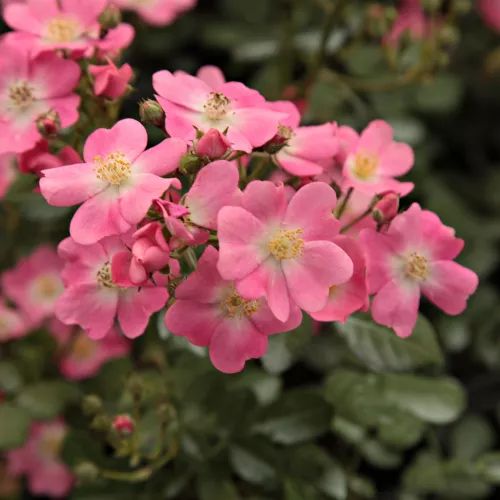
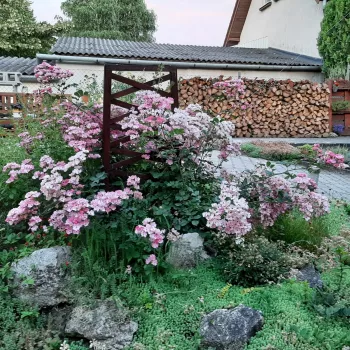
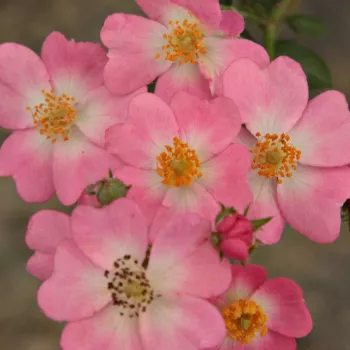
Sea-breeze calm, shingle underfoot and a cup of tea: BUDAI LINA EMLÉKE brings that refreshed, wind-combed feeling into a small family garden or coastal veranda. Its low, arching habit quickly forms a soft, groundcover cushion of mid-green foliage sprinkled with pastel blooms, ideal where space is tight and you want long, easy colour. Single, pale pink flowers appear in generous clusters, then return reliably in a strong second flush, keeping the border lively through the season with very little input. Bred as a tough shrub, it roots deeply and anchors well even where soil structure is poor, helping it cope with breezy, rain-lashed weather and difficult drainage near the coast. Disease resistance is high, so routine spraying is unnecessary, and the own-root form means the plant can regenerate if cut back hard, giving a long, stable life in your beds and containers. Year 1 concentrates on roots, Year 2 on shaping shoots, and by Year 3 you enjoy its full ornamental effect with minimal upkeep. Its open flowers are particularly welcoming to bees, supporting wildlife-friendly planting without sacrificing neatness. Use it to soften the edge of shingle paths, spill from low walls, or fill big tubs of at least 40–50 litres on a veranda, pairing beautifully with silvery foliage and grasses for a relaxed, coastal look that still feels ordered, practical and quietly romantic.
Usage options
| Target area |
Reasoning |
| Low-maintenance coastal groundcover |
This compact shrub spreads into a dense, arching mat that suppresses weeds and needs only light annual trimming. Its resilient growth habit copes well with breezy, wet weather and challenging drainage often found in coastal gardens, supporting those who prefer straightforward planting for beginners. |
| Family front garden beds |
The modest height keeps sight-lines open by drives and paths, while the soft pastel pink flowers provide gentle colour without visual clutter. Its robust disease resistance reduces routine chores, ideal for busy households wanting reliable structure and bloom for homeowners. |
| Large containers on a veranda |
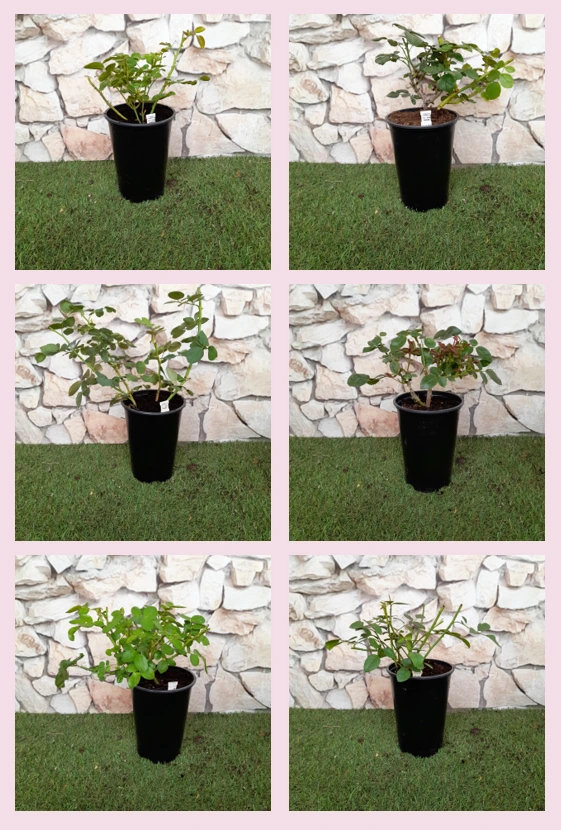
Planted in a 40–50 litre pot, this rose forms a tidy, cascading mound that frames seating areas without dominating them. The sturdy own-root system adapts well to container life and recovers if pruned hard, suiting compact outdoor spaces for urban-gardeners. |
| Pollinator-friendly family spaces |
The simple, open flowers offer easy access to pollen, attracting bees and other beneficial insects throughout its repeat-flowering season. This makes it a gentle way to introduce wildlife interest into decorative beds for nature-lovers. |
| Informal coastal-style borders |
The soft, fading pink tones blend naturally with sea kale, Festuca and lavender, evoking a relaxed shingle or dune edge. Its bushy, arching habit links hard landscaping with looser planting, perfect for those seeking an easy-going seaside mood for coastal-enthusiasts. |
| Long-term, low-intervention planting schemes |
As an own-root rose, it does not depend on a graft, so it can regenerate from its base after hard pruning or weather damage, maintaining ornamental value over many years with modest care. This makes it a sound choice for long-term-planners. |
| Urban green strips and parking edges |
The dense foliage and moderate prickliness discourage trampling, while the compact size fits narrow strips along paths and parking bays. Its strong disease resistance lessens the need for chemical treatments, convenient for shared spaces managed by communities. |
| Rain-exposed family patios |
Where patios and paths are exposed to frequent wind and rain, this rose’s bushy, well-rooting habit helps anchor planting and cope with wetter, heavier soils, reducing gaps and failures in small borders and tubs for time-poor-gardeners. |
Styling ideas
- Shingle-softener – Plant in loose drifts through coastal-style gravel with sea kale and blue Festuca to blur hard edges – ideal for relaxed, seaside-inspired family gardens.
- Veranda-cascade – Use a single plant in a 50-litre tub with trailing thyme at the rim to create a low waterfall of pink over seating areas – perfect for compact patios and balconies.
- Bee-ribbon – Line a front path with repeating clumps, interplanted with Nepeta and low lavender, to form a pollinator-friendly ribbon of colour – suited to wildlife-aware households.
- Playzone-border – Frame lawns or play spaces with wide, low bands that keep views open yet define boundaries, mixing with dwarf pines for structure – good for busy family gardens.
- Clay-tamer – Combine with ornamental grasses and tough perennials in improved but heavy soil to knit together banks or awkward corners – practical for problem spots near drives and fences.
Technical cultivar profile
| Property |
Data |
| Name and registration |
BUDAI LINA EMLÉKE – pale pink groundcover rose, shrub-type ground cover rose from the Ground cover collection; commemorative name honouring Budai Lina, verified for authenticity by PharmaRosa. |
| Origin and breeding |
Bred by Győry Szilveszter around 2000; parentage and breeding institution not recorded. Initially distributed by PharmaRosa Ltd. (Hungary); introduced to UK gardens via own-root container production. |
| Growth and structural characteristics |
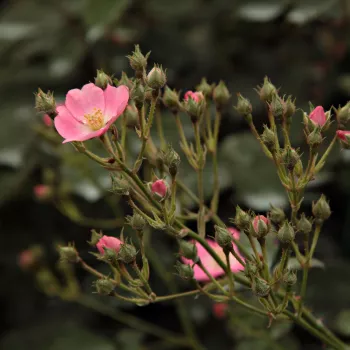
Low, bushy, arching growth to about 30–60 cm high, spreading 60–120 cm wide. Dense, glossy mid-green foliage and moderate thorns create a compact, covering shrub suitable for edging and mass planting. |
| Flower morphology |
Single, flat flowers with 5–12 petals, borne in clustered, large-headed sprays on short stems. Small blooms, approximately 0.5–1.5 inches across, provide a fine-textured yet abundant floral display. |
| Colour data and phenology |
Soft pastel pale pink with whitish opalescent margins; deeper pink veins in full bloom. Flowers fade progressively to near-white, giving gentle tonal variation. Remontant with a reliable second flowering flush. |
| Fragrance and aroma |
No noticeable scent; selected primarily for visual effect and robustness. Particularly useful where perfume is not essential but long-season colour and uncomplicated garden performance are priorities. |
| Hip characteristics |
Produces moderately developed, spherical red hips around 5–10 mm in diameter; ornamental interest is modest but may offer a small additional seasonal accent in late summer to autumn. |
| Resistance and winter hardiness |
Rated RHS H7, broadly equivalent to USDA zone 6b and Swedish zone 3. Demonstrates strong resistance to powdery mildew, black spot and rust, reducing the need for plant protection treatments. |
| Horticultural recommendations |
Best in full sun with well-prepared soil; suits groundcover, beds, parks and urban plantings. Allow 75–150 cm spacing depending on use; low maintenance with light pruning and minimal ongoing intervention. |
BUDAI LINA EMLÉKE offers compact groundcover, repeat soft pink flowering and strong disease resistance in a long-lived own-root form; consider it if you want effortless structure and colour in a modest space.