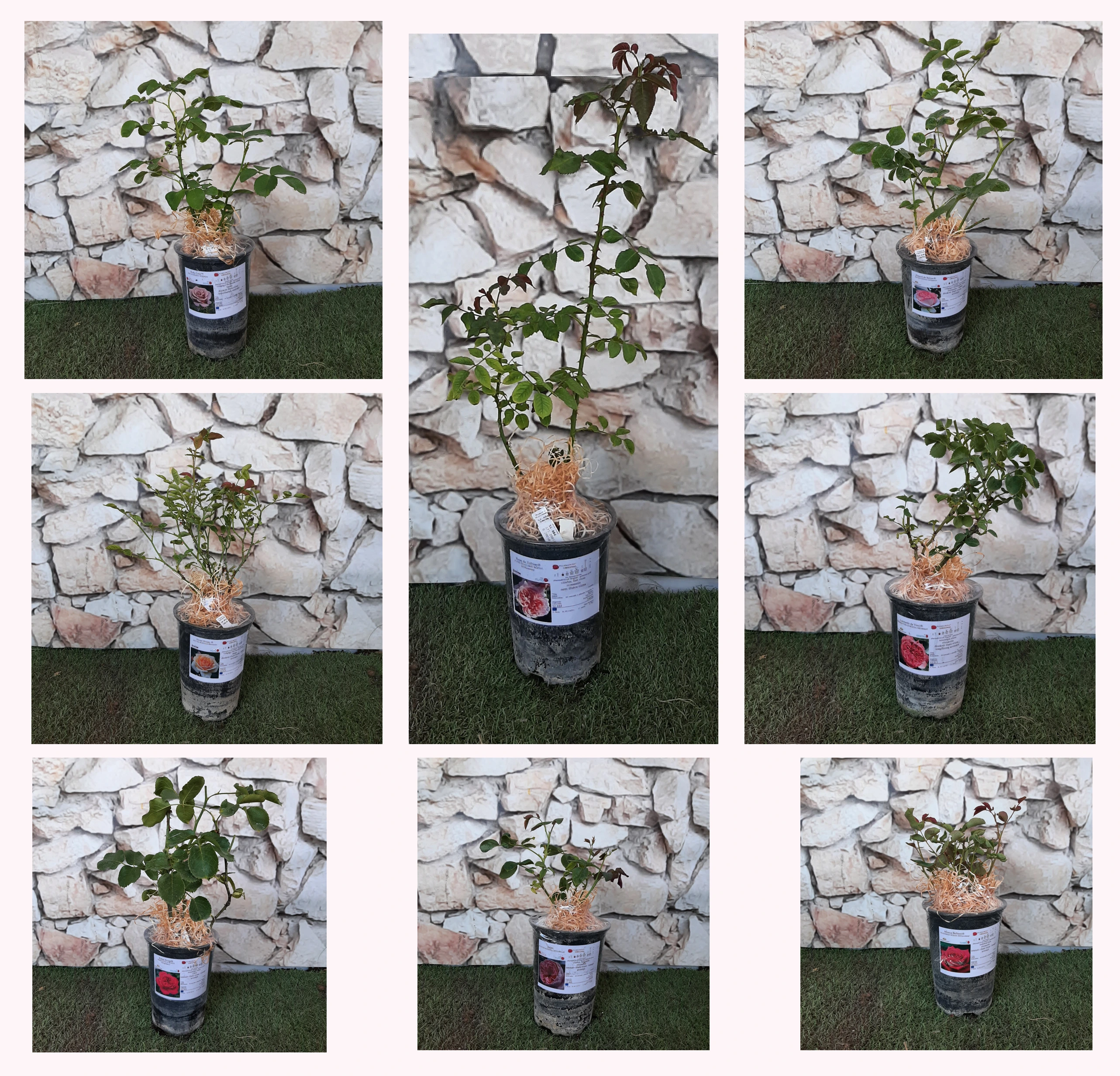
CAPRICIA™ – deep red nostalgia rose – Olesen
CAPRICIA™ brings a mood of breezy coastal refreshment to compact family gardens, pairing classically romantic form with practical ease for busy households. This bushy, upright shrub holds its own when planted in exposed beds, giving reassuring structure and colour even where Atlantic gusts and showers roll through, naturally helping with wind-battered, salt-touched coastal conditions. Very double, velvety blooms appear in generous flushes, offering a luxuriously fragrant backdrop for evening tea on the veranda and reliable stems for indoor vases. Its glossy foliage and premium breeding support a long garden lifespan, while the own-root form helps the plant regenerate well after harsh winters or pruning. In a 40–50 litre or larger container it stays pleasingly compact yet substantial, anchoring shingle or paved spaces with deep colour and nostalgic charm. As roots establish in year one, shoots strengthen in year two, and by year three CAPRICIA™ settles into enduring ornamental stability with minimal extra maintenance.
Usage options
| Target area | Reasoning |
|---|
| Small coastal front garden bed |
The bushy, upright habit and dense, glossy foliage give strong garden structure in a modest footprint, ideal for narrow Cornish or Devon front gardens that still need visual shelter and a defined, compact planting line for busy urban garden owners. |
| Feature rose in a shingle “girly” border |
The deep, velvety red blooms create a romantic focal point against pale gravel or shingle, softening hard coastal detailing while staying compact enough to pair with sea kale and low grasses, suiting style-conscious coastal veranda lovers and beginners. |
| Large container on a veranda or balcony |
In a 40–50 litre or larger pot, the root system has room to anchor and support repeat flowering without complicated care, giving long-term colour on verandas where digging is limited, matching the needs of practical, space-aware homeowners. |
| Long-season family seating area |
Its strongly remontant nature provides repeated flushes of bloom, keeping a seating area colourful from early summer onwards with little more than occasional deadheading, ideal for relaxed outdoor living for time-poor hobby gardeners. |
| Cutting corner for indoor vases |
Capricia’s very double, XL-sized flowers on good stems suit cutting for the house while leaving enough buds on the shrub for garden display, giving fragrant, nostalgic arrangements without needing a dedicated cutting garden for fragrance-loving beginners. |
| Low-input family border backbone |
The own-root form, steady growth and moderate disease resistance create a resilient shrub that bounces back from pruning and rough weather, supporting long-term structure with moderate, manageable care for long-view, value-focused homeowners. |
| Semi-sheltered coastal nook with wind exposure |
Planted with good drainage, its bushy frame and sturdy stems cope well in semi-sheltered coastal nooks, offering reliable flowering even where breezes and salt-laced showers regularly sweep through, which is reassuring for exposed-site coastal gardeners. |
| Developing new family garden over 3 years |
The plant builds steadily: roots in the first year, stronger shoots and more flowers in the second, then full ornamental presence by the third, giving a clear, low-effort development arc that suits patient but busy new-plot homeowners. |
Styling ideas
- Velvet Veranda – Place Capricia in a 50 litre container with sea kale and blue Festuca for a coastal, wind-brushed look – ideal for seaside veranda owners seeking low-fuss romance.
- Shingle Jewel – Anchor a pale shingle strip with Capricia and dwarf Lavandula for colour contrast and perfume – perfect for small front gardens needing compact impact.
- Tea-Corner Rose – Flank a seating nook with two Capricia shrubs as fragrant bookends – suited to families wanting long-season bloom near everyday outdoor life.
- Romantic Ribbon – Use a loose row of Capricia along a path with sea kale and Parthenocissus on a wall behind – for coastal-style lovers who enjoy nostalgic flower forms.
- Cut-and-Enjoy Nook – Combine Capricia with soft grasses in a sunny corner, keeping stems accessible for cutting – good for beginners wanting easy vases from the garden.
Technical cultivar profile
| Parameter | Data |
|---|
| Name and registration |
Shrub rose, nostalgia type; registered as POUlren024 and marketed as Capricia™ Renaissance® POUlren024, a romantic deep-red cultivar aligned with the Renaissance® collection. |
| Origin and breeding |
Bred by Mogens Nyegaard Olesen (Poulsen Roser A/S, Denmark) from unnamed seedlings; bred in 2006 and introduced commercially after 2013 in European and US markets. |
| Awards and recognition |
Holder of the Tollcross Fragrance Prize at the Glasgow International Rose Trials in 2016, recognising its notable, long-lasting scent performance in formal trial conditions. |
| Growth and structural characteristics |
Bushy, upright shrub reaching about 110–160 cm in height and 70–110 cm spread, with dense, glossy green foliage and moderate prickliness; forms a solid, ornamental garden presence. |
| Flower morphology |
Very double, rosette-shaped, XL blooms with over 40 petals, usually borne in clusters; strongly remontant, giving a generous second flowering and good potential for cutting use. |
| Colour data and phenology |
Deep, velvety crimson-red with burgundy tones; buds open dark and continue to deepen to blackish-red, retaining intensity without notable fading and finishing in a near-blackened shade. |
| Fragrance and aroma |
Very strong, long-lasting fragrance typical of romantic shrub roses; detailed scent profile not recorded, but trial awards confirm a powerful, persistent perfume outdoors and in vases. |
| Hip characteristics |
Hip set is minimal due to very double flowers; where present, hips are tiny, generally 0–3 mm in diameter and of no particular ornamental or wildlife significance in most gardens. |
| Resistance and winter hardiness |
Rated to around −21 to −18 °C (RHS H7, USDA 6b, Swedish zone 3) with moderate resistance to black spot, powdery mildew and rust; benefits from normal, preventative care in damp seasons. |
| Horticultural recommendations |
Best in sunny positions with well-drained soil; plant 55–100 cm apart depending on use, and allow space or a 40–50 litre container so the own-root shrub can mature steadily over time. |
CAPRICIA™ offers strongly remontant, velvety deep-red blooms on a long-lived, own-root shrub that regenerates reliably, making it a thoughtful choice if you wish to build lasting romance into a compact family garden.