KANEGEM – orange-red Hybrid Tea rose - Sierplantenteelt
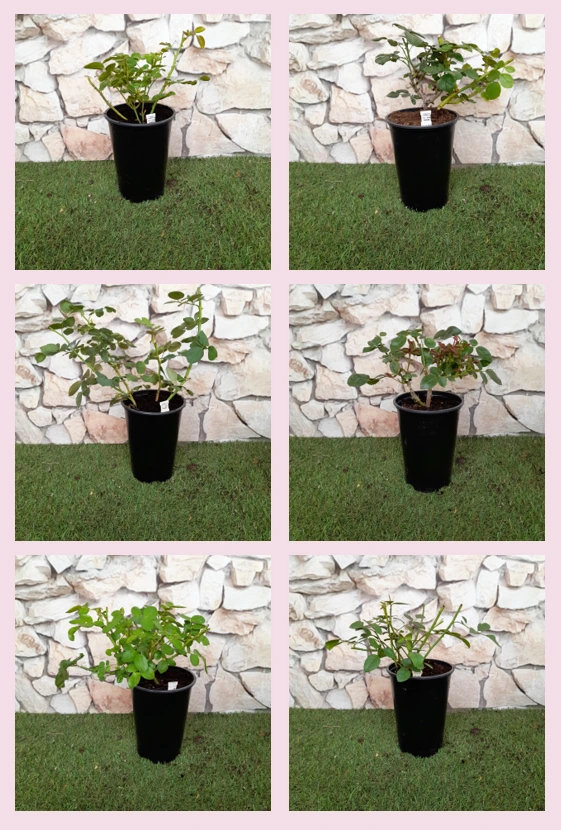
On a sunny coastal afternoon, KANEGEM brings a sense of refreshment to compact family gardens and verandas, its warm orange-red blooms echoing shingle and sunset tones while coping well with breezy, exposed conditions and carefully managed drainage. Clustered, high-centred flowers appear repeatedly from early summer, keeping colour in smaller spaces without demanding complex pruning – ideal when you prefer relaxation over maintenance. As an own-root plant, it establishes steadily, capable of regenerating after tougher seasons for a reassuringly long ornamental lifespan. In a large 40–50 litre container or a snug bed near a sheltered seating area, its glossy foliage and tidy, bushy structure anchor coastal-style plantings alongside sea kale, Festuca and lavender. Over time, you can expect a natural progression: stronger roots in year one, more generous shoots and flowering in year two, and a full, glowing garden presence by year three, all with reliable repeat flowering and durable colour that stands up to British summer weather. Though its fragrance is discreet, KANEGEM rewards you with visual impact and a calm, easy-going routine that suits busy, design-conscious gardeners.
Usage options
| Target area | Reasoning |
|---|
| Coastal veranda container (40–50 litres) |
A single KANEGEM in a generous 40–50 litre pot gives a structured focal point with tidy height and spread, its bushy growth and dense, glossy foliage helping to anchor breezy, exposed corners near the house. This suits coastal-style beginners |
| Small mixed bed by a seating area |
Repeat flowering and medium-sized, very double blooms provide a steady show beside a favourite chair, without overpowering the space; occasional deadheading keeps it neat, but complex seasonal routines are unnecessary. Ideal for busy veranda owners |
| Warm, well-drained coastal border |
Heat tolerance and good colour retention let it hold its orange-red glow through bright spells, provided the soil drains well, supporting gardens that face salt-laden winds and heavy rain over the year. Best for Cornwall–Devon homeowners |
| Long-term feature in a family garden |
As an own-root shrub, KANEGEM builds a durable framework that can reshoot from the base after harder winters or pruning, giving a longer working life and more stable appearance than many grafted roses. Reassuring for long-term planners |
| Edging a path or narrow border |
Its compact, bushy structure and 70–100 cm height form a defined line without overwhelming nearby plants, useful where you want order along a path but still need room for perennials such as Festuca or sea kale. Ideal for tidy garden lovers |
| Cutting patch for informal bouquets |
High-centred, hybrid tea blooms on bushy plants lend themselves to cutting for the table, with clusters supplying several stems at once, so even a small planting can provide vases across the season. Perfect for home flower arrangers |
| Compact rose bed in a front garden |
Reliable repeat flowering and modest overall size make it easy to keep an attractive front plot without frequent reshaping; the simple regime of feeding, watering and light pruning suits those new to rose care. Good for first-time gardeners |
| Colour accent among cool-toned companions |
The strong but stable orange-red colour partners well with silvers, blues and soft greens, and because it fades only slightly, the planting keeps its planned palette instead of washing out in mid-season. Designed for colour-conscious owners |
Styling ideas
- Veranda Vignette – place KANEGEM in a 50-litre pot with silvered Festuca and a low sea kale for a coastal tea-corner feel – ideal for compact veranda users
- Sunset Border – combine its orange-red blooms with blue globe thistle and lavender for a warm–cool contrast – suited to colour-loving hobby gardeners
- Shingle Strip – line a narrow bed by a gravel path with KANEGEM and evergreen candytuft to echo a pebbled shore – attractive to small family-garden owners
- Front-Garden Welcome – plant as a pair flanking a doorway, underplanted with low Euonymus for year-round structure – perfect for neat, low-fuss homeowners
- Cutting Corner – group three plants at 60 cm spacing to form a mini cutting patch that still looks smart in situ – appealing to home bouquet enthusiasts
Technical cultivar profile
| Attribute | Data |
|---|
| Name and registration |
Hybrid tea rose, exhibition floribunda type; current trade name KANEGEM Hybrid tea rose Sierplantenteelt; ARS exhibition name Kanegem; part of the Hybrid tea rose commercial group. |
| Origin and breeding |
Bred in Belgium in 1977 by RVS (Rijksstation voor Sierplantenteelt), from Ludwigshafen am Rhein × Satchmo; introduced by Lens Roses in 1984 for ornamental and cutting uses. |
| Growth and structural characteristics |
Bushy shrub reaching about 70–100 cm tall and 50–75 cm across, with dense, glossy dark green foliage; moderately thorny shoots produce multiple flowering stems suited to beds and medium containers. |
| Flower morphology |
Large, very double, 40+ petalled flowers with high-centred, pointed buds in clustered inflorescences; repeat flowering habit with a plentiful second flush following the main early-summer display. |
| Colour data and phenology |
Orange-red blooms: outer petals RHS 34B, inner 32A; colour opens vivid, then unifies to fire-orange, later softening to muted red-orange with coral edges, generally retaining tone without strong fading. |
| Fragrance and aroma |
Fragrance is very weak and barely perceptible; the variety is grown primarily for its saturated colour, flower form and garden structure rather than scent or aromatic uses in soaps and cosmetics. |
| Hip characteristics |
Hip set is usually sparse due to very double flowers; where formed, hips are small, spherical, 8–12 mm across, with a red tone around RHS 46A, offering limited ornamental or wildlife interest. |
| Resistance and winter hardiness |
Hardy to about −21 to −18 °C (RHS H7, roughly USDA 6b); tolerates summer heat but needs watering in prolonged drought; moderately susceptible to powdery mildew and black spot, and very susceptible to rust. |
| Horticultural recommendations |
Best in sunny, well-drained soil with attentive monitoring for fungal disease; plant 50–100 cm apart depending on use, at 2.8–3.2 plants/m², and deadhead spent blooms to encourage tidy structure and repeat flower. |
KANEGEM offers compact structure, repeat flowering and durable colour in an own-root form that matures steadily into a long-lived, low-fuss feature, making it a thoughtful choice for relaxed coastal-style gardens.