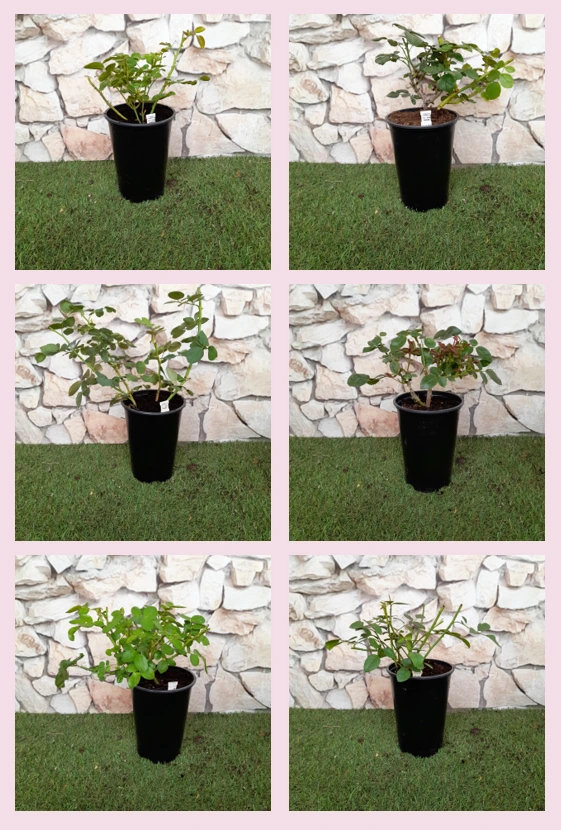
CARMINIA – purple-pink bedding floribunda rose
Imagine stepping onto your coastal veranda after a blustery walk, the air still tinged with salt and the garden held together by a quietly reliable rose that copes confidently with strong winds and heavy, rain‑soaked soils; CARMINIA offers precisely this kind of easy coastal refreshment. Its compact, bushy habit and dense, slightly glossy foliage create a neat, anchoring presence in smaller beds or large containers, while the lilac‑pink, silvery‑sheened blooms bring a distinctly modern elegance to shingle and gravel plantings. Clusters of fully double, medium‑sized flowers appear in generous flushes from early summer onwards, with a strong citrus‑floral fragrance that carries on breezy days and pairs beautifully with sea air and freshly brewed tea. Bred for contemporary gardens, it tolerates heat and moderate drought, and, as an own‑root plant, it builds a resilient framework that regrows reliably after pruning or harsh winters. Given reasonable drainage and occasional care, it settles in steadily – roots establishing in the first year, shoots filling out in the second, and by the third season delivering its full ornamental impact with long‑lasting colour and form. Whether you favour relaxed seaside beds or a sheltered balcony retreat, CARMINIA fits effortlessly into everyday family life without demanding expert attention.
Usage options
| Target area | Reasoning |
|---|
| Coastal, wind‑exposed flower bed |
The bushy, compact structure creates a low, steady framework that stands up well to blustery sites and typical coastal conditions, helping the planting feel anchored rather than blown apart for busy coastal homeowners. |
| Small front garden bed in town or suburb |
Its modest 80–105 cm height and 30–50 cm spread allow generous flowering in narrow borders without overwhelming paths, providing neat structure and colour in everyday family spaces for time‑pressed householders. |
| Large container on veranda or balcony (40–50 L+) |
Thriving in a substantial pot with good drainage, CARMINIA provides season‑long colour and scent close to seating areas, ideal where ground space is limited but a calm, floral focus is desired for compact outdoor living areas. |
| Remontant, long‑season colour strip beside seating |
Reliable repeat flowering with a strong second flush means the border stays lively through the main garden season, reducing the need for constant replanting while keeping the space inviting for casual gardeners. |
| Fragrant “tea corner” near a sheltered bench |
The strong, far‑scented citrus‑floral perfume creates a distinct sensory zone that wafts on the breeze, turning a simple bench or bistro set into an atmospheric retreat for fragrance‑loving beginners. |
| Heat‑exposed, free‑draining shingle or gravel strip |
Good tolerance of heat and moderate drought lets CARMINIA cope with south‑facing, stony soils where watering may be irregular, supporting relaxed, low‑input plantings for coastal‑style enthusiasts. |
| Low, informal flowering hedge or edging |
Planted at the recommended closer spacing, its compact, branching habit forms a softly defined line that visually holds beds together without heavy clipping demands for informal family‑garden owners. |
| Long‑term feature in a mixed perennial scheme |
As an own‑root shrub it matures steadily into a durable, recoverable framework that integrates with perennials over many seasons, giving dependable structure and colour for gardeners seeking lasting value. |
Styling ideas
- Coastal Calm – Combine CARMINIA with sea kale and blue fescues in a gravel bed, letting its compact habit anchor the scene – ideal for relaxed seaside veranda gardeners.
- Fragrant Nook – Plant near a bistro set with lavender and thyme so the strong citrus‑floral scent drifts around seating – perfect for fragrance‑focused tea drinkers.
- Urban Edge – Use as a low edging in small front gardens, paired with neat grasses and slate mulch, to deliver tidy structure with minimal fuss – suited to busy city homeowners.
- Container Focus – In a 50 L terracotta pot, underplant with trailing herbs for a long‑season, compact focal point by the door – for balcony and veranda users with limited space.
- Perennial Weave – Thread CARMINIA through clumps of daylilies and dwarf honeysuckle to provide repeating lilac‑pink clusters amid changing perennials – attractive to hobby gardeners.
Technical cultivar profile
| Parameter | Data |
|---|
| Name and registration |
Floribunda bed rose registered as Carminia, marketed as CARMINIA – purple-pink bedding floribunda rose; shrub‑type bedding rose for garden and container use. |
| Origin and breeding |
Bred by Martin Vissers in Belgium (2008), from Sweet Blondie × Outta The Blue; introduced 2020 by Jan Spek Rozen BV, for modern bedding and landscape plantings. |
| Growth and structural characteristics |
Bushy, compact shrub 80–105 cm tall and 30–50 cm wide, moderately thorny, with dense, slightly glossy, medium green foliage providing good visual cover at low height. |
| Flower morphology |
Fully double, cup‑shaped, medium flowers in clusters, with 26–39 petals; remontant, producing abundant first and strong second flush, suited to repeated ornamental display. |
| Colour data and phenology |
Delicate lilac‑pink with silvery sheen; buds deep lavender, ageing to pale silvery lilac, moderately fading yet retaining an attractive soft tonality through the bloom’s life. |
| Fragrance and aroma |
Strong, far‑scented fragrance with fresh citrus‑floral character; primarily ornamental, with densely doubled blooms that are less accessible to pollinators in typical garden settings. |
| Hip characteristics |
Sparse hips, occasionally produced; small spherical fruits 5–8 mm across, orange‑red (RHS 40A), of minor ornamental interest and not a significant feature of the planting. |
| Resistance and winter hardiness |
Hardy to around −21 to −18 °C (RHS H6, USDA 6b), suitable for much of the UK; moderate resistance to black spot, mildew and rust, with some plant protection occasionally needed. |
| Horticultural recommendations |
For beds, edging, containers (40–50 L+), parks and cutting; plant 25–45 cm apart depending on effect, in well‑drained soil with regular watering in dry spells and light formative pruning. |
CARMINIA combines compact form, repeat lilac‑pink flowering and strong fragrance in an own‑root rose that builds long‑term reliability, making it a thoughtful choice for understated, enduring coastal‑style gardens.