CAROLA HIT® – pink dwarf-mini-rose - Olesen & Olesen
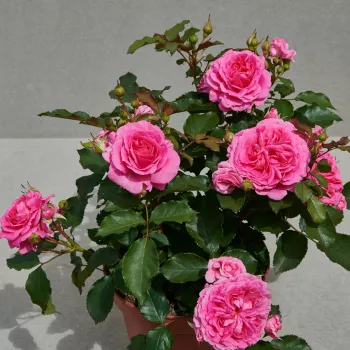
CAROLA HIT® wraps your coastal veranda or small family garden in pink freshness: compact, neat and easy-going, it thrives where other roses might sulk, even in breezy Cornish or Devon conditions with careful attention to good drainage and water management helping roots stay healthy and well anchored. Its naturally dwarf habit and dense foliage keep maintenance low, while very double blooms appear in waves from early summer well into autumn. In the first year it quietly builds roots, the second brings stronger shoots, and by the third season it settles into full ornamental rhythm, rewarding you with long-lived, own-root stability and a consistently tidy, salt-tolerant patio display that suits busy gardeners and holiday-home owners alike.
Usage options
| Target area |
Reasoning |
| Coastal veranda container (40–50 litre minimum) |
The compact, upright habit and dense foliage suit a generous 40–50 litre pot that will not topple in coastal winds, while own-root vigour helps the plant recover if salt spray or weather stress causes minor dieback for beginners. |
| Small family patio or roof terrace |
Its miniature size and neat, self-cleaning blooms keep hard surfaces tidy, offering colour without constant deadheading, ideal where children play and space is limited but a long, low-maintenance flowering season is still desired for busy-owners. |
| Front-garden edging along paths or drives |
The dwarf structure forms a low, formal edging that will not outgrow a narrow strip, with repeat flowering providing reliable colour and clear definition for paths, drives and parking areas in typical suburban plots for homeowners. |
| Shingle or gravel planting near the sea |
Good performance in windy, exposed positions combines with manageable water needs when planted in free-draining shingle beds, offering a structured, low rose accent that copes with breezy salt-tinged air in British seaside gardens for coastal-lovers. |
| Mixed container with grasses and lavender |
The mid-pink, cup-shaped clusters contrast beautifully with cool-toned Festuca and compact Lavandula in a large shared container, while its moderate, upright growth prevents overcrowding and keeps compositions balanced over time for style-conscious. |
| Low feature plant in a children’s corner |
The very double, medium-sized blooms and modest thorns make it a characterful yet manageable rose for lower beds where children explore, with own-root resilience giving a margin of safety if stems are occasionally knocked or snapped for families. |
| Seasonal accent near entrances or seating |
Reliable remontant flowering and tidy foliage create a welcoming focal point by doors or seating areas, with mild fragrance and ever-changing pink tones offering quiet interest from summer to autumn without demanding complex pruning for new-gardeners. |
| Low-maintenance mini rose collection bed |
The PatioHit® breeding background and moderate disease resistance support a compact, long-lived planting when spaced correctly, with own-root plants maintaining shape and flowering even as they mature, reducing the need for frequent replacements for collectors. |
Styling ideas
- Coastal-Nook – Plant CAROLA HIT® in a 50 litre clay pot on a sheltered balcony corner with pale shingle mulch and a small piece of driftwood – ideal for coastal-style lovers seeking a soft pink accent.
- Pink-Path – Line a short front path with evenly spaced plants, underplanting with low Festuca for texture – suits homeowners wanting crisp structure without tall hedging.
- Tea-Terrace – Combine one rose with compact Lavandula and sea kale in a generous trough beside a bistro set – perfect for veranda users who enjoy an easy, fragrant tea spot.
- Playful-Patio – Place a single container near a children’s seating area, with smooth pebbles topping the compost for safety and neatness – good for families favouring gentle, low roses.
- Mini-Bed – Group three plants in a small square bed edged with Euonymus fortunei ‘Minimus’ for evergreen structure – for hobby gardeners building a simple, long-lived mini rose display.
Technical cultivar profile
| Property |
Data |
| Name and registration |
Miniature dwarf rose from the PatioHit® collection; registered as POUlpah116 and marketed as Carola Hit® PatioHit® POUlpah116 for potted, patio and bedding use. |
| Origin and breeding |
Bred in Denmark in 2021 by L. Pernille and Mogens Nyegaard Olesen, from unnamed seedlings; introduced by Poulsen Roser A/S in 2024 and registered in 2022. |
| Growth and structural characteristics |
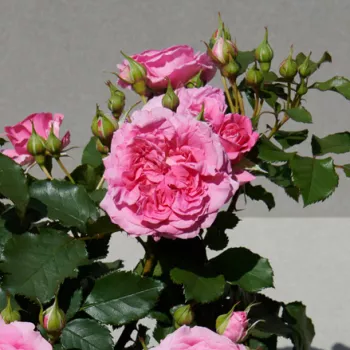
Compact, upright dwarf habit, typically 40–50 cm high and 35–45 cm wide; moderately thorny, with dense, slightly glossy dark yellow-green foliage providing a full, well-covered framework. |
| Flower morphology |
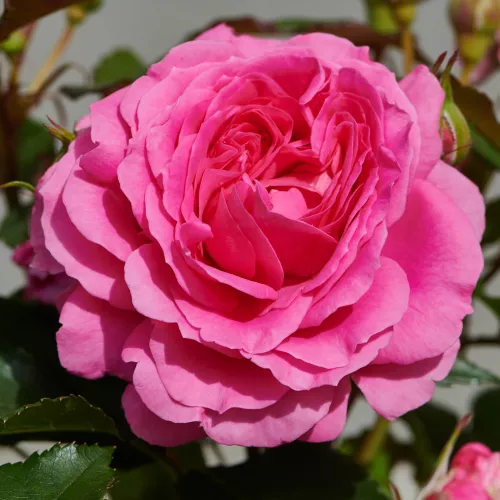
Very double, cup-shaped flowers with over 40 petals, medium-sized at 1.5–2.75 inches, produced in clustered inflorescences; remontant, with the second flush also rich and well distributed. |
| Colour data and phenology |
Uniform mid-pink with slight purplish tint; buds deep vivid pink, opening to medium-dark outer and warmer inner petals, then lightening to pale pink with a soft lavender cast before petal drop. |
| Fragrance and aroma |
Mild, perceptible rose scent, primarily ornamental; very double flowers largely enclose stamens, so fragrance is gentle and pollinator value is limited compared with simpler flower forms. |
| Hip characteristics |
Hip formation is rare; if produced, hips are very small, typically 0–4 mm in diameter and visually insignificant, so the plant is grown for flowers and structure rather than autumn fruit display. |
| Resistance and winter hardiness |
Hardy to approximately −23 to −21 °C (RHS H7, USDA 6a, Swedish zone 3); disease resistance is moderate to mildew, black spot and rust, with reasonable heat tolerance but limited drought data. |
| Horticultural recommendations |
Best in containers, terraces, flower beds and edging; plant 25–45 cm apart depending on use, around 6–7 plants per m², with medium maintenance and occasional pest control as needed. |
CAROLA HIT® offers compact size, repeat pink flowering and own-root longevity in an easy-care form that settles well into coastal and urban gardens, making it a thoughtful choice if you would like reliable colour with modest effort.