CHARLOTTE – yellow English rose - Austin
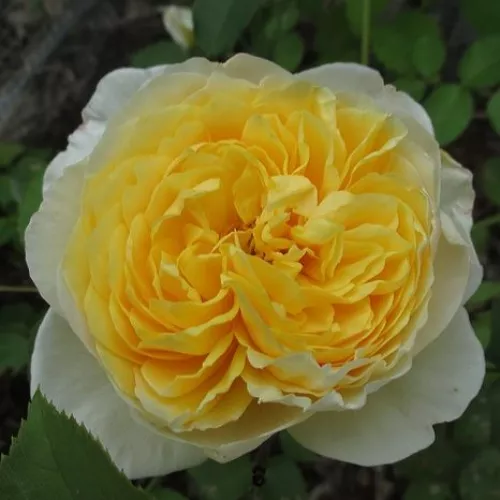
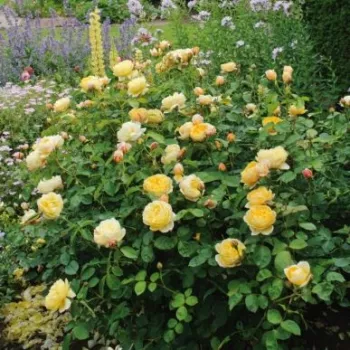
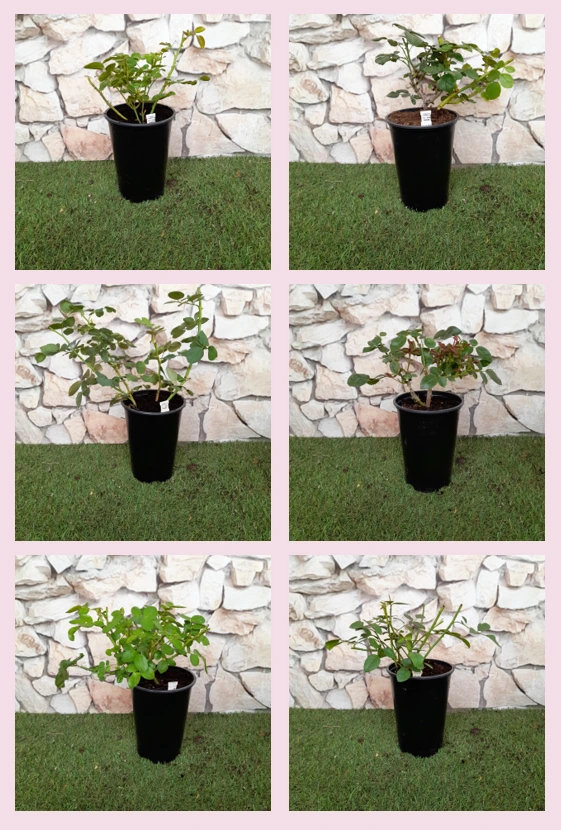
Evoking lazy coastal afternoons, ‘Charlotte’ settles comfortably into smaller family gardens where you can enjoy gentle colour and fragrance with minimal effort. Its softly cupped lemon-yellow blooms bring an air of seaside romance, while the compact, bushy habit is ideal for beds, mixed borders or a sheltered veranda. As an own-root shrub, it develops a quietly reliable framework, supporting long-term longevity and steady regrowth after harsh weather. In blustery, showery spells it remains reassuringly anchored, even in lighter coastal soils where good drainage matters as much as firm planting. Over time, roots establish first, then top growth strengthens, and by the third season the shrub reaches its full ornamental presence. You can simply enjoy the repeat-flowering display, trimming lightly and removing the odd spent bloom for a consistently tidy, softly glowing focal point. Its medium height suits front or middle positions, bringing an easy-care accent of yellow to companion plantings with sea-hued foliage and silvery grasses. Lightly tea-scented blooms invite relaxed evenings outdoors, transforming an everyday sitting-out area into a quietly uplifting retreat that still feels completely practical for modern life.
Usage options
| Target area |
Reasoning |
| Small coastal front garden bed |
Compact, bushy growth and moderate height make this rose an excellent anchor for a front bed that faces wind and rain but still needs a refined feature; once established it stays steady in poor weather with decent drainage underneath, suiting beginners. |
| Veranda container (40–60 litre) |
In a large, well-drained pot, its upright, rounded habit and repeat-flowering nature give months of colour without fussy pruning; own-root structure supports long-term performance in containers when watered and fed regularly, ideal for a relaxed urbanite. |
| Mixed border with grasses and sea-themed perennials |
The soft lemon rosettes sit beautifully among blue fescues, lavender and sea kale, offering a romantic focal point without dominating the planting; the medium size works well in the middle of the border for those who enjoy gentle, coordinated schemes as casual stylists. |
| Family seating corner or “tea spot” |
Its medium-strong, tea-like fragrance and repeated flushes create an inviting backdrop to a seating area, providing a quiet sense of enclosure and continuity for everyday use, suiting anyone who wants an easy, fragrant companion as a relaxed garden host. |
| Solitary specimen in a lawn or gravel pocket |
Planted alone with enough space around it, the rounded shrub form and fully double flowers read as a classic English focal point; own-root vigour supports gradual thickening and stability over many seasons, pleasing the patient garden collector. |
| Part-shaded side passage or narrow bed |
Tolerance of partial shade allows this rose to flower in places that only receive a few hours of sun, such as along a side path; the dense foliage and upright growth give structure where space is narrow, helping practically minded homeowners. |
| Informal flowering hedge in a family garden |
At the recommended closer spacing, its bushy habit knits into a low, flowered line that gently partitions play space from planting; regular light trimming and deadheading help manage disease and keep it presentable for safety-conscious garden families. |
| Traditional rose bed with disease-management routine |
Best in a cared-for rose bed where regular spraying and hygiene are already part of the routine, counterbalancing its susceptibility to powdery mildew; in return it offers repeat blooms, strong cold hardiness and a trusted heritage for committed rose enthusiasts. |
Styling ideas
- Coastal-Nook – Combine ‘Charlotte’ in a 50–60 litre pot with blue Festuca and sea kale on a sheltered veranda, creating a soft wind-filter and long-season interest – ideal for balcony and terrace dwellers.
- Romantic-Border – Plant in a mixed bed with lavender, Geranium macrorrhizum and silvery foliage perennials for layered texture and scent – appealing to cottage-garden admirers.
- Golden-Hedge – Use closer spacing along a path to form a low, fragrant line that gently separates lawn from beds while staying family-friendly – suited to households wanting subtle structure.
- Tea-Corner – Position one or two shrubs near a bench, pairing with honeysuckle on a light trellis to envelop a seating area in soft colour and perfume – perfect for evening relaxers.
- Classic-Lawn – Set a solitary plant in a small gravel or lawn circle, underplanted with low catmint for an easy, traditional focal point – attractive to first-time rose owners.
Technical cultivar profile
| Property |
Data |
| Name and registration |
Charlotte – English Rose Collection shrub, Romantic rose group; registered as AUSpoly and exhibited as ‘Charlotte’ in shrub and ornamental park categories for garden use. |
| Origin and breeding |
Bred by David C. H. Austin in the United Kingdom from an unknown seedling crossed with ‘Graham Thomas’; introduced and distributed by David Austin Roses Ltd. in 1994. |
| Awards and recognition |
Holds the Royal Horticultural Society Award of Garden Merit (2002), confirming dependable ornamental performance and value in typical UK garden conditions when given appropriate care. |
| Growth and structural characteristics |
Bushy, upright shrub reaching about 90–130 cm in height and 80–120 cm spread, with dense, medium-green, slightly glossy foliage and moderate prickliness, forming a rounded, versatile garden presence. |
| Flower morphology |
Large, very full, rosette-shaped clusters with more than 40 petals; remontant with a generous second flush, some self-cleaning yet often benefits from manual removal of spent blooms to stay neat. |
| Colour data and phenology |
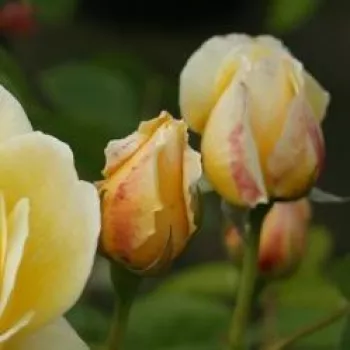
Creamy, soft lemon-yellow with warmer golden centres; buds bright yellow, ageing to pale cream-yellow; colour lightens in strong sun and intensifies in cooler weather, offering seasonal variation in tone. |
| Fragrance and aroma |
Medium-strength, clearly noticeable tea-scented fragrance of classic rose character; primarily an ornamental shrub, as the very double blooms largely conceal stamens and offer limited appeal to pollinating insects. |
| Hip characteristics |
Hip set is generally sparse due to very double blooms; occasional small ellipsoidal hips 7–12 mm across may form, colouring to orange-red tones and adding a modest late-season decorative accent. |
| Resistance and winter hardiness |
Extremely hardy to around −29 to −32 °C (RHS H7, USDA 4b), but with low disease resistance; notably prone to powdery mildew and needs regular, well-timed protection plus good air movement and hygiene. |
| Horticultural recommendations |
Suited to beds, parks, hedging or solitary planting at 55–100 cm spacing; prefers well-drained soil, irrigation in dry spells and consistent plant protection, particularly where spring frosts and mildew are common. |
Charlotte English Rose AUSpoly offers romantic yellow blooms, reliable cold hardiness and graceful structure on a durable own-root shrub; consider it if you are ready to pair classic beauty with simple attentive care.