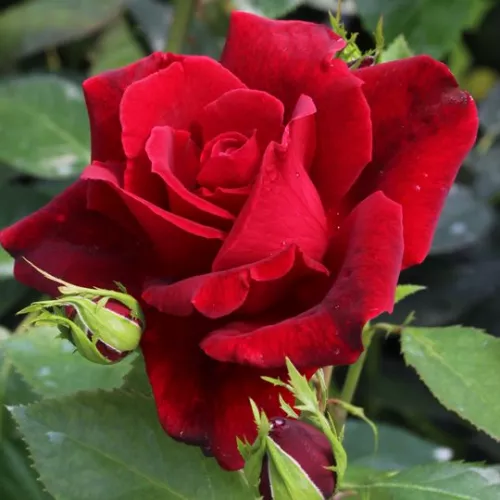
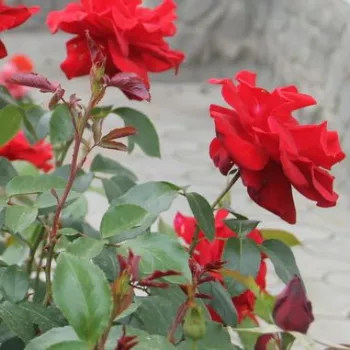
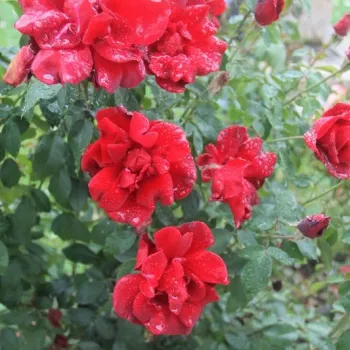
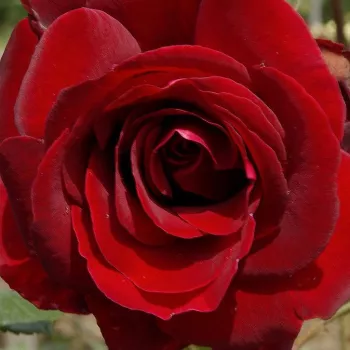
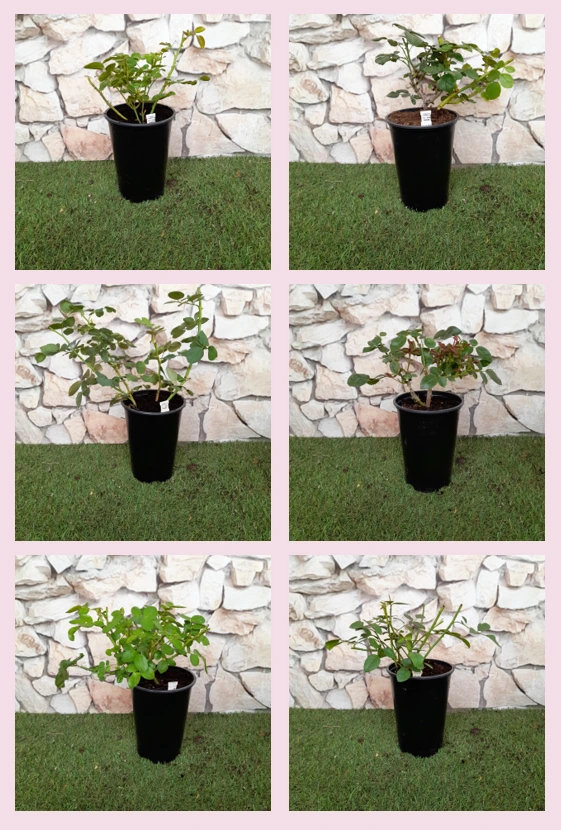
CHÂTEAU D´AMBOISE – dark red hybrid tea rose – Delbard-Chabert
Imagine returning from the shore, kettle on, breeze softening, and this refined dark-red hybrid tea rose catching the low sun beside your veranda. CHÂTEAU D´AMBOISE offers generous, repeat flowering on a compact, upright plant that fits comfortably into typical family gardens and smaller coastal plots. Its own-root vigour supports a long, dependable life, quietly rebuilding itself after harsh winters or strong winds. Planted with decent drainage, it copes well where weather brings blustery rain and salt-tinged air along exposed boundaries. Classic, medium-sized blooms on long stems are ideal for cutting and tea-on-the-terrace moments, while the dense, glossy foliage gives structure even between flushes. Over the first three years, roots establish, shoots strengthen and then full impact develops, so you can enjoy steadily increasing display with modest maintenance in everyday, low-fuss gardens.
Usage options
| Target area | Reasoning |
|---|
| Coastal veranda containers |
Suited to large 40–50 litre tubs where its compact, erect habit stays manageable on breezy Cornish or Devon balconies, adding reliable dark-red colour after a day on the beach for relaxed beginners |
| Small family front garden |
Fits neatly by a path or gate without overwhelming driveways, giving repeat hybrid tea blooms that look smart from the pavement while dense foliage keeps the plant visually solid through the year for busy homeowners |
| Cutting and vase use |
Solitary, well-formed flowers on sturdy stems make it a straightforward choice for home-cut bouquets, so you can enjoy rich, velvety reds indoors with minimal fuss for enthusiastic hobbyists |
| Mixed border feature |
Works well as a focal clump among sea kale, Festuca and dwarf lavender, its dark blooms contrasting with silvers and blues while the bushy form anchors lighter planting schemes for coastal-style-loving gardeners |
| Wind-filtering low hedge |
Planted at 45–55 cm, it forms a low, flower-studded line that softens wind and offers privacy without feeling heavy, especially useful where frequent Atlantic gusts shape garden design for exposed-plot owners |
| Clay soil renovation strip |
Performs reliably in improved heavy clay when drainage is corrected, rewarding basic preparation with stable growth and season-long colour rather than constant intervention for time-pressed families |
| Long-term structure planting |
Own-root plants age gracefully, reshooting well from the base if weather or pruning misjudgements occur, so the rose can stay in place for many seasons for forward-planning planners |
| Easy-care rose starter spot |
Once planted in sun with decent moisture, it needs only occasional deadheading and moderate pest checks, returning with repeat flushes that reward simple routines for cautious beginners |
Styling ideas
- Seaside-terrace trio – Combine a single plant in a 50 litre pot with dwarf lavender and a blue Festuca grass for a breezy, low-maintenance coastal look – ideal for balcony-focused owners
- Ruby-path accent – Position three along a front path with pale gravel mulch so the dark flowers glow at dusk – suited to neat, design-conscious households
- Shell-garden corner – Tuck one among sea kale and low Heuchera around a seating nook, echoing shell colours with foliage contrast – perfect for coastal-style enthusiasts
- Cutting-row strip – Plant a short row at 55 cm spacing beside a vegetable or cutting patch to supply reliable stems without occupying much space – great for practical gardeners
- Evening-tea focus – Use a single specimen near a favourite chair on the veranda, underplanted with dwarf thyme, to frame sunset tea rituals – appealing to relaxation-seeking couples
Technical cultivar profile
| Parameter | Data |
|---|
| Name and registration |
Hybrid tea rose, DELrouvel; trade name CHÂTEAU D´AMBOISE. ARS exhibition name Château d’Amboise. Part of the Hybrid tea rose commercial group for garden and cutting use. |
| Origin and breeding |
Bred by André Delbard-Chabert, France, 1988. Parentage from Tropicana and complex red hybrid teas, introduced by Delbard Roses International the same year for ornamental and exhibition culture. |
| Awards and recognition |
Entered as a competitor at the Monza Rose Competition in 1988, reflecting its suitability for show-quality blooms and structured hybrid tea form in European trial conditions. |
| Growth and structural characteristics |
Compact, bushy and erect growth, about 80–105 cm tall and 45–65 cm wide. Moderately thorny stems with dense, dark green, glossy foliage that offers good visual cover and supports formal planting. |
| Flower morphology |
Medium-sized, double, cup-shaped blooms, usually borne singly on stems. Around 26–39 petals, repeating strongly with abundant second flush, suitable for cutting and classic hybrid tea displays. |
| Colour data and phenology |
Dark red throughout, ruby to dusky burgundy tones, deepening to maroon, sometimes brownish-red at petal edges. Colour holds excellently, lightening slightly in strong sun yet remaining rich and even. |
| Fragrance and aroma |
Fragrance is mild with a restrained fruity character, adding subtle scent without overwhelming nearby seating areas, making it suitable for verandas and small patios where overly strong perfume is unwelcome. |
| Hip characteristics |
Occasionally sets small, egg-shaped orange-red hips around 10–14 mm in diameter, adding discreet autumn interest but generally not a dominant ornamental feature compared with the flowers. |
| Resistance and winter hardiness |
Hardy to about −21 to −18 °C, RHS H7 and Swedish Zone 3, USDA 6b. Moderate overall disease resistance, with good black spot resistance and moderate susceptibility to powdery mildew and rust. |
| Horticultural recommendations |
Best in sunny spots with improved drainage, especially on heavier clay. Needs medium maintenance: regular watering in drought, some pest monitoring and deadheading of spent blooms to sustain repeat flowering. |
CHÂTEAU D´AMBOISE offers compact, repeat flowering, long-lived own-root performance and reliable structure in everyday gardens; consider it if you value steady colour, durability and low-fuss care in a refined dark-red rose.