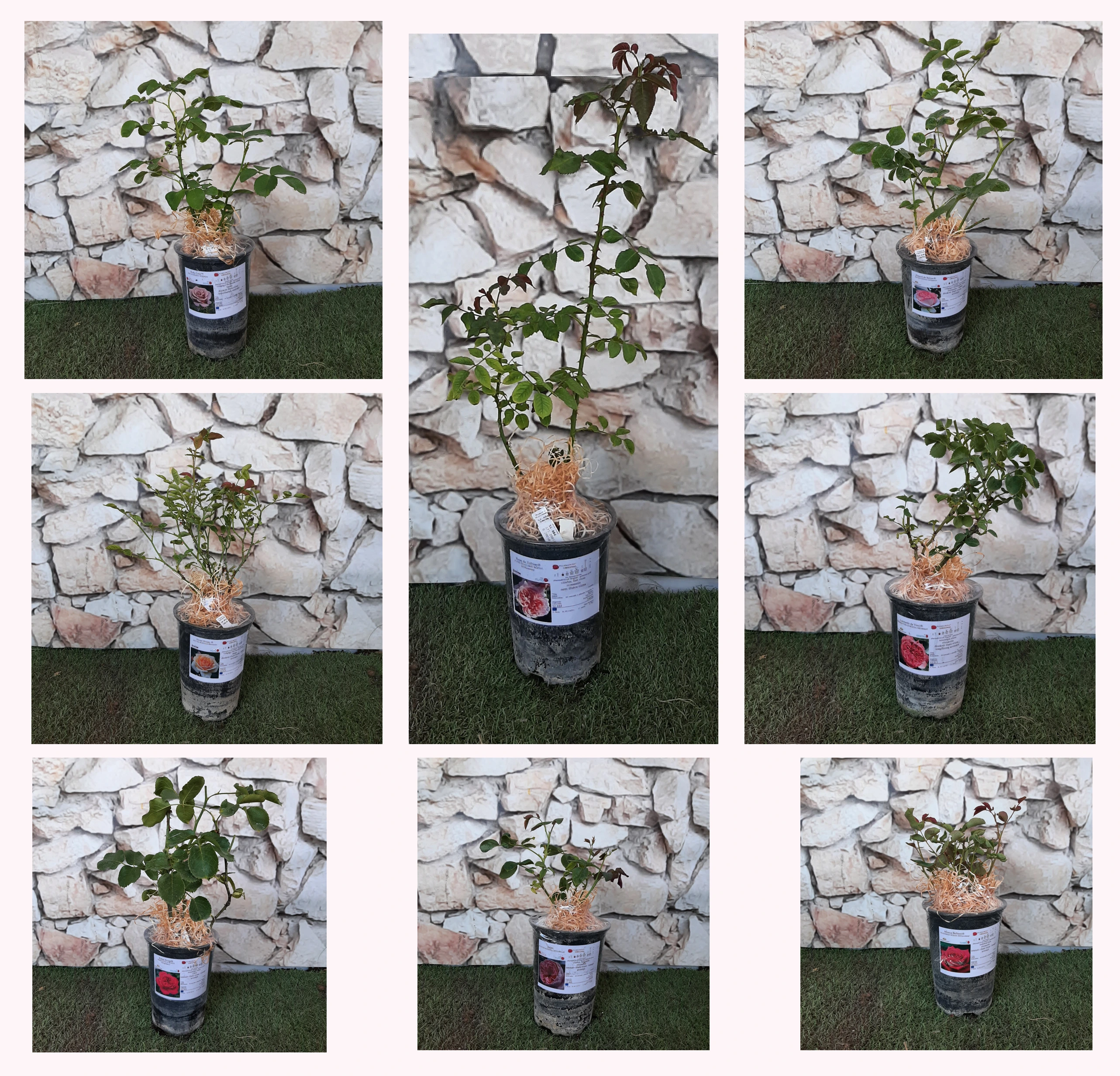
CHICAGO PEACE – pink-yellow hybrid tea rose - Johnston
Stroll back from a breezy beach and settle behind a living rose windbreak, where the large blooms of ‘Chicago Peace’ bring a sense of soft coastal sunshine to patios and family borders. This hybrid tea’s XL, exhibition-style flowers glow in tones of salmon-pink and yellow, ideal beside shingle, gravel or pale decking for an effortlessly elegant seaside look. Bred from the world-famous ‘Peace’ rose, it offers reliable flowering on an upright, well-foliaged framework that copes steadily with exposed, breezy gardens when given good drainage and regular watering. In a 40–50 litre container it anchors a veranda or small terrace with long-season colour, while its medium, fruity fragrance drifts around outdoor seating at tea time. As an own-root plant, it builds strength year by year – roots first, then top growth, then full display – giving you a long-lived, stable, easily managed feature that shrugs off most common rose diseases for genuinely low-effort enjoyment in everyday family gardens and coastal-style verandas.
Usage options
| Target area | Reasoning |
|---|
| Small coastal veranda in large containers |
Suited to 40–50 litre pots where its upright habit and dense foliage form a vertical accent without sprawling, ideal for a compact seating corner that still feels lush for beginners. |
| Feature rose beside shingle or gravel seating |
The XL, high-centred blooms read beautifully against pale stone, giving a refined, almost exhibition look while needing only basic deadheading and watering for hobby-gardeners. |
| Low-maintenance family flower bed |
Good disease resistance and moderate heat tolerance mean less spraying and fuss, provided you give decent drainage and watering during longer dry spells for busy-owners. |
| Cut-flower corner near the back door |
Long, upright stems and large, pointed buds are excellent for vases, so a single bush can supply regular, classic hybrid tea blooms for indoor arrangements for home-entertainers. |
| Sunny, wind-sheltered coastal border |
Performs well in exposed gardens when sited away from the very harshest gusts, giving a colourful, gently fragrant backdrop along paths or terraces for coastal-lovers. |
| Specimen rose as a long-term focal point |
Own-root growth builds steadily into a durable shrub that can regenerate from the base if cut back, keeping its ornamental value for many years for long-term-planners. |
| Rose hedge or informal screen |
Planted at the recommended spacing, its dense mid-green foliage and repeat flowering create a soft visual barrier that marks boundaries without feeling heavy for family-gardeners. |
| Clay-improved, free-draining mixed border |
Thrives where heavier soil has been opened for drainage and organic matter, giving reliable flowering even in blustery regions with proper water management for new-owners. |
Styling ideas
- Seaside-Veranda Focus – Place one ‘Chicago Peace’ in a 50 litre pot with silvered decking furniture and pale cushions, evoking Cornish coastal calm – ideal for coastal-style lovers.
- Pastel-Cut-Flower Corner – Combine with Geranium pratense and Campanula persicifolia for a soft, pickable border near the back door – perfect for home entertainers who enjoy fresh arrangements.
- Family-Front-Border – Use as a single specimen by the path, underplanted with low Stachys byzantina to soften thorns while keeping care simple – suited to busy family gardeners.
- Elegant-Rose-Hedge – Plant in a loose line along a drive, spacing as recommended, to create a gently scented privacy veil that still feels light – good for suburban homeowners.
- Clay-Garden-Revival – In improved, free-draining clay, mix with ornamental grasses for movement and highlight the rose as the main colour anchor – helpful for new gardeners on heavier soils.
Technical cultivar profile
| Parameter | Data |
|---|
| Name and registration |
Hybrid tea rose ‘Chicago Peace’, registered as JOHnago; American Rose Society exhibition name ‘Chicago Peace’; commercial listing: Chicago Peace Hybrid tea rose JOHnago. |
| Origin and breeding |
Sport of ‘Peace’ (Mme A. Meilland, 1935), discovered by Stanley C. Johnston in the United States; bred around 1960, registered 1961 and introduced by Conard-Pyle in 1962. |
| Awards and recognition |
Holder of the Portland Gold Medal, awarded in 1962, confirming its value as an exhibition-quality hybrid tea rose with strong garden performance and show bench potential for enthusiasts. |
| Growth and structural characteristics |
Upright bush reaching about 110–150 cm in height, 75–105 cm in spread; dense mid-green, slightly glossy foliage; moderately thorny stems; weakly self-cleaning, so deadheading is beneficial. |
| Flower morphology |
Large XL, double blooms with around 26–39 petals; high-centred, pointed hybrid tea form, usually borne singly on stems; strongly remontant, delivering abundant repeat flowering through the season. |
| Colour data and phenology |
Vibrant salmon-pink petals with a yellow centre; newly opened buds show deep salmon-pink over sunshine yellow, softening to cream and pastel pink as blooms mature, with richer tones in cooler weather. |
| Fragrance and aroma |
Medium strength scent with a pleasant, fruity character layered over classic rose notes; primarily ornamental but offers enough perfume to notice around seating areas and in cut-flower arrangements. |
| Hip characteristics |
Produces moderate numbers of ovoid hips, approximately 12–18 mm across, ripening to a warm orange-red; hips add a discreet seasonal accent if some spent blooms are left uncut in late summer. |
| Resistance and winter hardiness |
Rated RHS H7 and USDA zone 6b, tolerating approximately –21 to –18 °C; resistant to powdery mildew, black spot and rust; copes with heat but appreciates additional watering in prolonged dry spells. |
| Horticultural recommendations |
Best in full sun with good drainage; plant 55–100 cm apart depending on use; suitable for beds, hedging or specimens and for cutting; low maintenance with routine feeding and deadheading. |
CHICAGO PEACE – pink-yellow hybrid tea rose - Johnston rewards you with XL, fragrant blooms, reliable repeat flowering and long-term own-root resilience; a thoughtful choice if you prefer beauty that quietly lasts and performs.