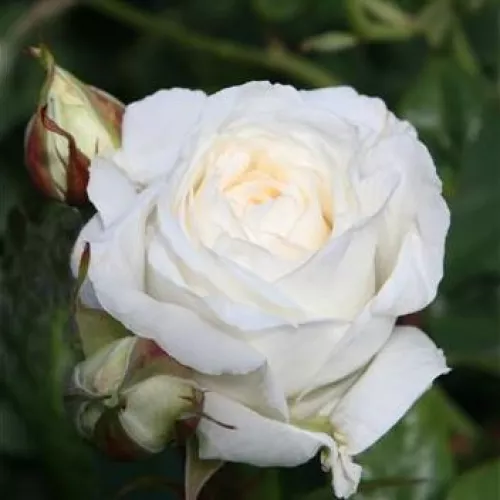
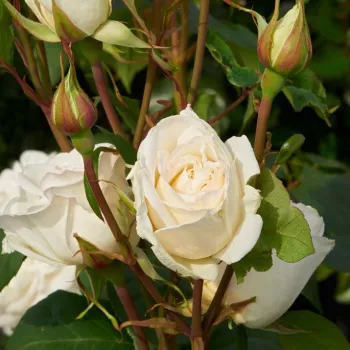
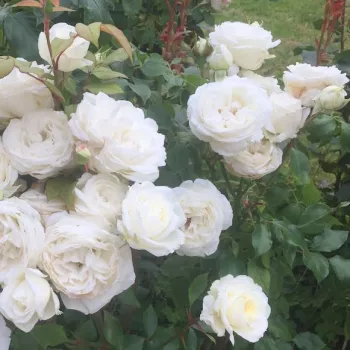
CLAUS DALBY™ – cream-white hybrid tea rose
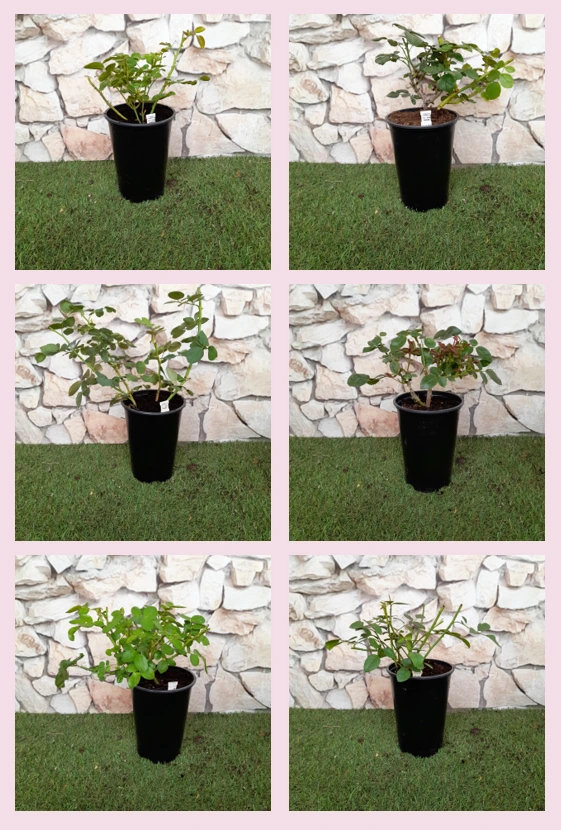
Created for sheltered coastal verandas and small family gardens, CLAUS DALBY™ brings a calm, creamy glow and a surprisingly strong honey-like scent with every flush. Its high-centred hybrid-tea blooms are ideal for relaxed home bouquets, while the compact, bushy habit fits neatly into borders or larger pots. Planted in a free-draining spot that copes well with persistent rain and brisk winds, it anchors steadily over time, giving you structure as well as flowers. As an own-root rose it offers reassuring longevity, quietly rebuilding from its base if stems are damaged and keeping its appearance stable for years. Flowering repeats generously through the season, so there is colour on your veranda from early summer well into autumn with only occasional dead-heading. In a 40–50 litre container or a sunny front-garden bed it is straightforward to look after, with moderate care needs, normal feeding, and light pruning. Over three seasons it settles in naturally – first focusing on roots, then stronger shoots, before showing its full ornamental potential in year three.
Usage options
| Target area | Reasoning |
|---|
| Coastal veranda containers (40–50 L) |
Well suited to life in a substantial pot, this compact, bushy hybrid tea stays tidy on a veranda while producing large, elegant blooms for cutting. A free-draining mix in a 40–50 litre container keeps roots stable and manageable for beginners. |
| Small front garden focal point |
The refined cream-white flowers and glossy dark foliage create an immediate sense of order beside a path or doorway, providing a calm, welcoming focus without overwhelming a modest space, ideal for busy homeowners. |
| Cut-flower bed near the house |
High-centred, long-stemmed blooms and strong, long-lasting fragrance make this rose perfect for a small cutting row, giving regular stems for the vase without needing specialist greenhouse conditions, appealing to casual flower-lovers. |
| Coastal-style mixed border |
The warm cream-white colour partners effortlessly with sea kale, Festuca and Lavandula, echoing shingle and surf while its bushy form holds its own in breezy conditions, reassuring for coastal-style garden enthusiasts. |
| Specimen rose in a family lawn border |
Planted as a single specimen with the recommended spacing, it develops into a rounded, dense bush that children and adults notice from the patio, providing long seasonal interest with just moderate pruning for time-pressed families. |
| Structured rose-and-grass combination |
The upright yet bushy framework contrasts attractively with fine grasses, giving lasting structure even between flowering flushes so borders do not look bare, a simple design trick welcomed by occasional gardeners. |
| Weather-resilient planting in exposed gardens |
With sturdy shoots and dense foliage, this variety copes well where rain and wind are frequent companions, holding its shape and bloom quality where more delicate roses sulk, which is reassuring for coastal homeowners. |
| Long-term own-root planting in clay-amended beds |
In improved clay with reliable drainage, the own-root system forms a durable base that regenerates reliably after pruning, building up over several seasons into a stable, long-lived plant appreciated by planning-ahead gardeners. |
Styling ideas
- Veranda calm – Place CLAUS DALBY™ in a 40–50 L pale ceramic pot with blue-grey Festuca for a shingle-beach feel – ideal for coastal veranda owners seeking a soft, feminine touch.
- Cream-and-lavender – Underplant with low Lavandula and silvery foliage to frame the warm cream-white blooms – for those who like classic cottage notes without heavy maintenance.
- Sea-kale drift – Combine with sea kale and rounded pebbles to echo a Cornish beach, the rose providing structure and scent – suited to design-conscious coastal-style enthusiasts.
- Cutting corner – Line two or three plants along a sunny fence to create a mini cutting bed of fragrant stems – perfect for hobby florists who enjoy arranging home-grown flowers.
- Family focus – Use as a single focal point in a small lawn border, edged with low grasses for movement – great for families wanting tidy, reliable impact with simple care.
Technical cultivar profile
| Parameter | Data |
|---|
| Name and registration |
Hybrid tea rose, registered as POUlht009, marketed as Claus Dalby™ Hybrid Tea POULSEN® POUlht009; ARS exhibition name Serenity; part of the Hybrid Tea POULSEN® collection. |
| Origin and breeding |
Bred by Mogens Nyegaard Olesen (Poulsen Roser A/S, Denmark) from unnamed seedlings; bred 2006, registered 2013 with EU PBR 2013/2166, introduced commercially after 2013. |
| Awards and recognition |
Highly decorated in 2015: Tokyo Gold medal for fragrance and Silver medal (Category I); Nantes audience award for fragrance; Baden‑Baden Silver medal; Paris certificate of merit. |
| Growth and structural characteristics |
Bushy hybrid tea shrub 85–115 cm high, 65–95 cm spread, dense, glossy dark green foliage, moderately thorny stems, generally upright growth with good garden presence in beds or containers. |
| Flower morphology |
Very full, high‑centred hybrid tea blooms with 40+ petals, large flower size on mostly solitary stems, classic pointed buds, remontant habit giving a plentiful second flowering in season. |
| Colour data and phenology |
Cream‑white blooms with warm ivory and pale vanilla tones; RHS 155C outer, 155D inner; opens soft cream, then lightens to near snow‑white while retaining a gentle, creamy warmth toward petal bases. |
| Fragrance and aroma |
Strong, long‑lasting honey‑like scent, appreciated at close quarters and recognised in fragrance competitions; primarily ornamental due to very double flowers concealing reproductive structures from pollinators. |
| Hip characteristics |
Hip set generally limited because of very double flowers, but when present forms small spherical orange‑red hips about 12–16 mm in diameter, adding modest late‑season decorative interest. |
| Resistance and winter hardiness |
Hardy to approximately −21 to −18 °C (RHS H7, USDA 6b, Swedish zone 3); moderate resistance to powdery mildew, black spot and rust, benefitting from standard preventive care in damp seasons. |
| Horticultural recommendations |
Prefers sunny sites with well‑drained soil; plant 55 cm apart in beds, 50 cm for hedging, 90 cm as specimens; maintenance moderate, including occasional plant protection and dead‑heading of spent blooms. |
CLAUS DALBY™ offers compact structure, refined cream-white blooms and award-winning fragrance in a durable own-root form that matures steadily over the years, making it a thoughtful choice for relaxed coastal and family gardens.