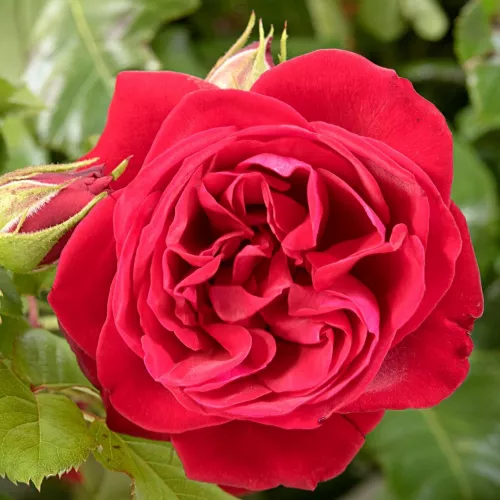
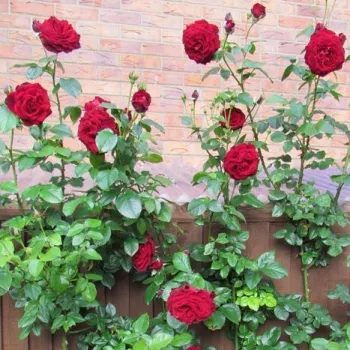
CUMBERLAND – deep red climbing rose – Harkness
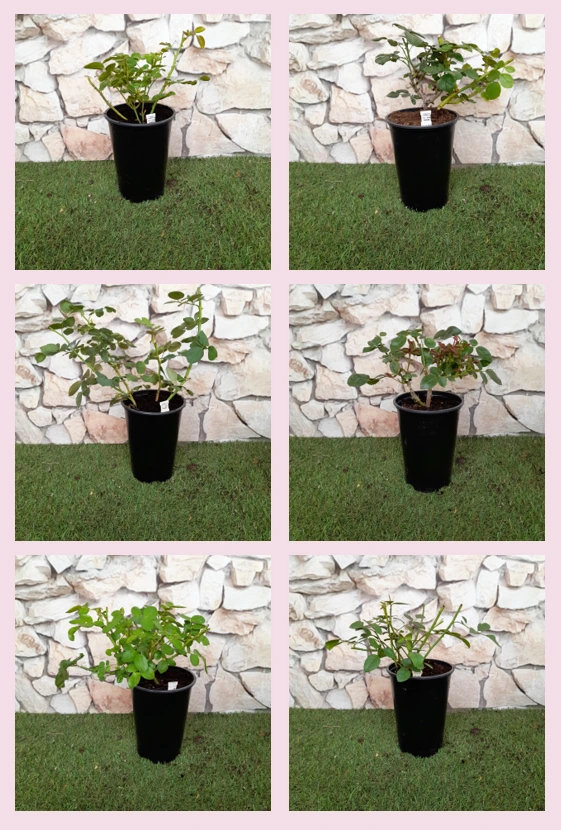
Let Cumberland bring a quietly glamorous, deep-red vertical accent to your coastal veranda or family garden, where its reliable flowering and modest care needs suit even time-pressed beginners. This own-root climber settles in steadily, building a long-lived framework that copes well with exposed, breezy sites and helps manage moisture on heavier soils by rooting deeply and anchoring securely against the wind – ideal when your garden faces the sea’s breeze and shifting weather. In a 40–50 litre container or at the foot of an arch, it flowers in generous clusters of rosette blooms from early summer onwards, the rich, velvety colour holding well before maturing to a quietly dignified mahogany-red. Its healthy, glossy foliage and dependable repeat-flowering habit mean deadheading and tying-in are the main tasks, leaving you free to enjoy a sheltered cup of tea after collecting seashells while this rose gradually moves from root-building to strong shoot growth and finally a full curtain of blooms in the third season, becoming a durable, easy-care garden feature.
Usage options
| Target area | Reasoning |
|---|
| Small coastal veranda in large containers |
In a 40–50 litre pot Cumberland forms a slim, upright climber that is easy to train up a trellis, giving height and romance without dominating a compact balcony or veranda, particularly suited to busy urban garden owners. |
| Family garden arch or pergola |
The moderate height and regular repeat-flowering create an inviting, flowered tunnel that feels lush yet manageable, ideal above a garden bench where you want seasonal colour without complex pruning, perfect for hobby gardeners. |
| Wind-exposed Cornish or Devon fence line |
Cumberland’s flexible climbing growth and strong root system help it cope with blustery, changeable coastal weather, offering a living screen that softens gusts and frames sea views for owners of coastal verandas. |
| Shingle or gravel planting near the house |
Trained on a wall or obelisk rising from shingle, its deep-red clusters contrast beautifully with pale gravel and sea-inspired planting, yet require only modest care, suiting coastal-style lovers. |
| Climbing rose for partial-shade walls |
This variety tolerates partial shade, still producing well-formed rosette blooms, so it suits east- or west-facing walls where full sun is limited, an attractive solution for homeowners. |
| Feature rose with long-term structure |
As an own-root climber it gradually builds a durable framework that recovers well if cut back, giving stable ornamental value over many years for those who want a beautiful, flowering rose without complicated gardening tasks. |
| Deep-red accent in mixed coastal planting |
The velvety, colour-fast blooms stand out against silver foliage and grasses, adding richness to cool-toned seaside schemes that also benefit from a rose capable of handling breezy, moisture-variable sites for salt-tolerant garden owners. |
| Low-intervention flowering screen for family spaces |
Good disease resistance and reliable remontant flowering mean little more than tying-in and occasional trimming, making a discreet, flowering backdrop that supports relaxed outdoor time for beginners. |
Styling ideas
- Veranda-Trellis Glow – Train Cumberland up a slim trellis in a 50 litre container, underplanted with sea kale and Festuca for a soft, beachy feel – ideal for busy urban garden owners wanting easy coastal character.
- Seaside Archway – Let its deep-red clusters drape over a simple metal arch, with Lavandula and low Nepeta beneath to echo the sea breeze – suited to hobby gardeners creating a welcoming garden entrance.
- Shingle Courtyard Screen – Plant against a sunny fence in shingle, weaving stems along wires and edging with Euonymus fortunei ‘Minimus’ – perfect for coastal-style lovers seeking low-fuss structure.
- Family Tea Corner – Use Cumberland on a pergola above a small seating area, paired with pots of sea kale and blue-grey grasses – appealing to homeowners who want a sheltered, gently colourful nook.
- Compact Coastal Column – Spiral stems around an obelisk in a large tub, letting the rose form a slim column of colour beside a doorway – a smart option for owners of coastal verandas with limited space.
Technical cultivar profile
| Parameter | Data |
|---|
| Name and registration |
Climbing rose from the English Legend collection; registered as HARnext and marketed as Cumberland English Legend HARnext, approved exhibition name Cumberland for show and cut-flower use. |
| Origin and breeding |
Bred by Harkness & Co. in the United Kingdom, breeding completed 2007, registered 2007, introduced 2011; supplied here as a premium own-root plant for reliable garden performance. |
| Growth and structural characteristics |
Large-flowered climber with 300–420 cm height and 180–260 cm spread, moderately thorny, with glossy mid-green foliage and a naturally elegant climbing habit suited to arches and walls. |
| Flower morphology |
Very full, rosette-shaped flowers with more than 40 petals, medium-sized cluster-flowered heads that remont well, giving an abundant second flush when lightly deadheaded through the season. |
| Colour data and phenology |
Deep, velvety red blooms (RHS 53A–53B) retain colour as they open, then darken slightly towards mahogany-red; a delicate silk sheen enhances their richness from bud through to full bloom. |
| Fragrance and aroma |
Mild, softly sweet fragrance that adds a gentle note without overwhelming nearby seating areas; primarily grown for visual impact rather than strong scent in family gardens and verandas. |
| Hip characteristics |
Produces decorative hips in moderate quantities, typically 9–14 mm in diameter, adding discreet seasonal interest if flowers are not all deadheaded late in the year. |
| Resistance and winter hardiness |
Shows good resistance to powdery mildew, black spot and rust; fully hardy to approximately −26 to −23 °C (RHS H7, USDA 5b, Swedish zone 4), suitable for most UK garden conditions. |
| Horticultural recommendations |
Best on walls, fences, arches, pergolas or in large tubs; plant around 185–300 cm apart, allow 0.3 plants/m² for massing, and support young shoots with ties while the framework develops. |
Cumberland English Legend HARnext offers velvety deep-red clusters, low-maintenance health and long-lived own-root structure for arches, fences or large containers; a thoughtful choice if you seek dependable colour with minimal fuss.