DAGMAR HASTRUP – pink wild rose - Hastrup
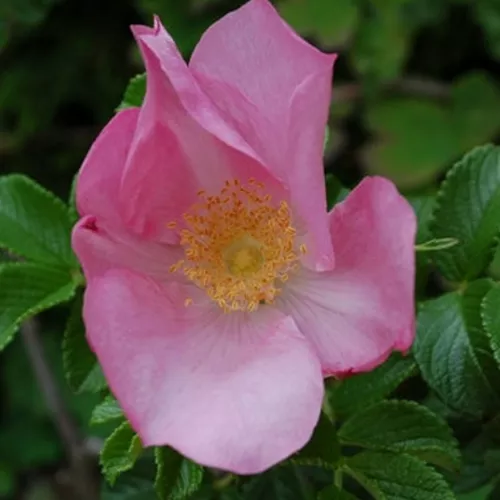
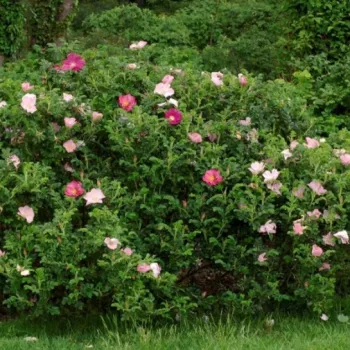
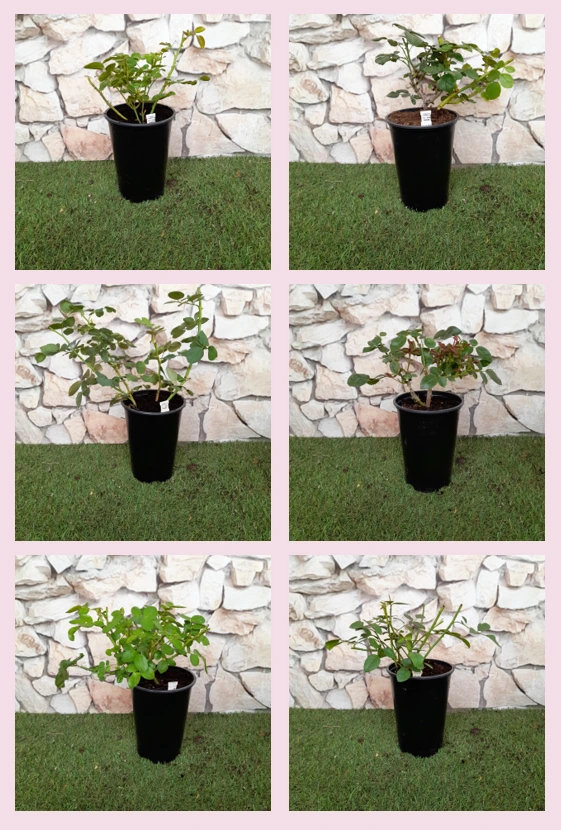
Salt-tolerant rugosa charm for breezy gardens: Dagmar Hastrup settles comfortably into shingle or heavy soil, gradually anchoring itself against coastal winds and weather. Its naturally spreading habit forms a low, protective hedge, softening boundaries and sheltering seating areas without demanding complex pruning. From a compact start in the 2-litre pot it steadily develops, the first year focusing on hidden roots, the second on sturdy shoots, and by the third offering full ornamental impact with clouds of pastel-pink, lightly cupped blooms. Strong, classic rugosa fragrance and reliable repeat flowering keep the plant engaging from early summer into autumn, while outstanding disease resistance and cold hardiness minimise routine care for busy gardeners.
Usage options
| Target area |
Reasoning |
| Coastal shingle border in a small family garden |
The hybrid rugosa parentage brings real resilience to salt spray and stiff breezes, making it a natural fit beside Cornish or Devon shingle paths and driveways while still flowering generously for relaxed, low-input coastal-style lovers. |
| Low, informal flowering hedge along a boundary |
The dense, thorny, groundcover habit knits into a broad, low hedge that is hard for pets to push through yet soft in appearance, with pastel pink blooms and hips adding seasonal interest for privacy-seeking family homeowners. |
| Wind-filtering backdrop for a sunny veranda |
The spreading shrub form and strong framework provide a living wind-filter, softening gusts around seating areas while allowing light through, ideal behind benches or outdoor dining spots for comfort-focused veranda users. |
| Low-maintenance groundcover on banks or difficult corners |
Once established, it covers the ground densely, shading out many weeds and needing little more than an occasional tidy, well suited to sloping edges, awkward corners and time-poor gardeners. |
| Mixed, naturalistic bed with sea kale and ornamental grasses |
Its relaxed, wild-rose appearance blends easily with sea kale, Festuca and similar textured companions, creating a soft, natural look that feels at home in breezy, seaside-inspired schemes for design-conscious coastal gardeners. |
| Urban front garden facing the street |
The combination of pollution tolerance, strong health and modest height makes it ideal for exposed frontages where space is tight but year-round structure and tidy flowering are welcome to busy urban homeowners. |
| Pollinator-friendly family play area edge |
The single, open flowers provide accessible pollen and nectar over a long season, drawing bees and other insects while staying low enough not to dominate, appreciated by wildlife-curious families. |
| Cold-exposed plots and clay-prone sites |
Exceptional winter hardiness and the ability to cope with heavier soils, provided basic drainage is ensured, support reliable performance where more delicate roses struggle, reassuring cautious beginner gardeners. |
Styling ideas
- Seaside-Veranda Ribbon – line a sunny veranda edge with a loose row of Dagmar Hastrup and pale gravel underfoot, adding sea kale clumps at intervals – ideal for coastal-style homeowners seeking a soft wind-filter.
- Pastel-Hedge Walk – create an informal boundary hedge, alternating this rose with low-growing yew for structure and pink summer colour – suited to families wanting privacy without heavy maintenance.
- Wild-Shingle Drift – plant in loose groups across a shingle bed with Festuca and driftwood accents – perfect for those dreaming of a naturalistic, low-care beach-garden feel.
- Urban-Front Frame – place one or three shrubs beneath a bay window with meadow sage in front – a practical answer for townhouses needing toughness, flowers and easy upkeep.
- Pollinator-Play Strip – run a low row beside a lawn, leaving space for play while flowers feed bees all summer – appealing to families wanting wildlife interest around children’s areas.
Technical cultivar profile
| Parameter |
Data |
| Name and registration |
Dagmar Hastrup is a classic hybrid rugosa shrub rose traded as a park and shrub rose type; unregistered as a formal cultivar but widely known and accepted in garden use. |
| Origin and breeding |
Raised by Knud Julianus Hastrup in Denmark around 1914, introduced commercially in 1934 via Poulsen Roser A/S, later distributed more widely by Wayside Gardens and other nurseries. |
| Awards and recognition |
Holds the Royal Horticultural Society Award of Garden Merit and American Rose Society Classic Shrub Rose awards from 1999 and 2000, reflecting long-standing reliability in gardens. |
| Growth and structural characteristics |
A low, spreading groundcover shrub reaching about 70–110 cm in height and 100–160 cm in width, with dense, slightly glossy dark green foliage and noticeably thorny, vigorous shoots. |
| Flower morphology |
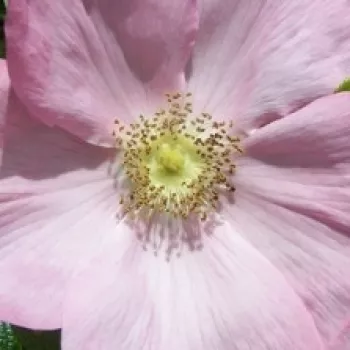
Produces medium-sized, cupped, single blooms with 5–12 petals in clustered inflorescences; remontant habit gives a main flush followed by generous repeat flowering in suitable conditions. |
| Colour data and phenology |
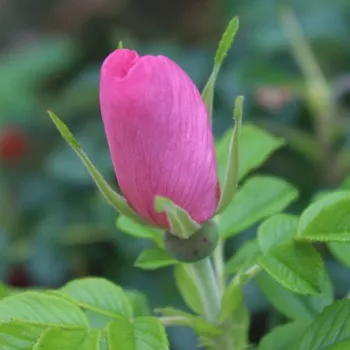
Mid-pink buds open to light pink flowers that gradually fade towards pastel and near-white, especially in strong sun; ARS code Lp, RHS 65C outer and 65D inner, with softer tones in full bloom. |
| Fragrance and aroma |
Strongly scented with the distinctive, fresh rugosa character, clearly noticeable in warm weather and contributing significantly to the sensory appeal of the shrub in mixed borders or near seating. |
| Hip characteristics |
Sets rounded red hips around 20–30 mm in diameter, globose and decorative in late season; overall hip quantity can vary but adds wildlife interest and soft colour as flowers finish. |
| Resistance and winter hardiness |
Very hardy down to about -37 °C (RHS H7, USDA 3b), with good tolerance of heat and moderate drought; resistant to powdery mildew and black spot, with moderate resistance to rust in most sites. |
| Horticultural recommendations |
Suited to hedges, groundcover, park and naturalistic plantings; tolerates partial shade and urban conditions, spaced about 110–200 cm apart or 0.7–0.8 plants/m²; thrives in 40–50 litre containers or larger. |
DAGMAR HASTRUP combines coastal resilience, low-maintenance flowering and long-lived own-root reliability, making it a thoughtful choice for relaxed gardeners considering a dependable shrub rose.