Dainty Bess – pink historic tea rose – Archer
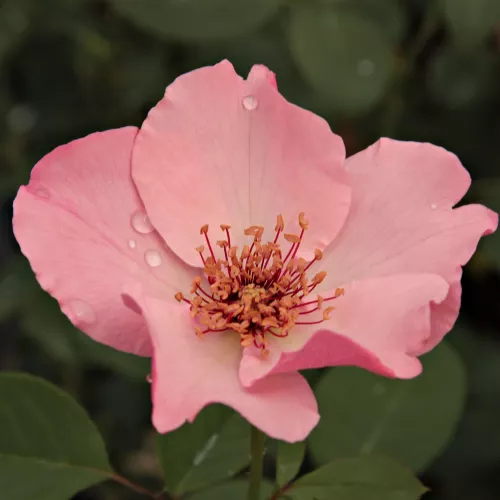
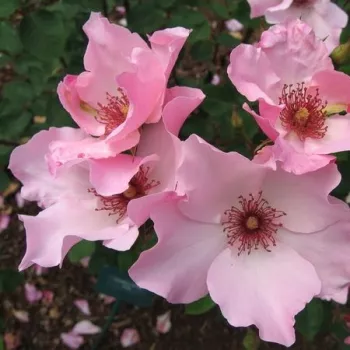
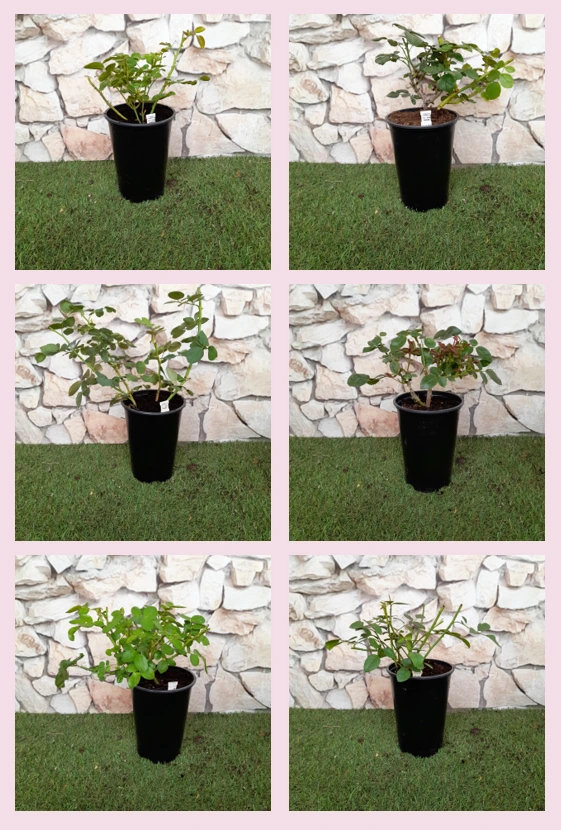
Bring a touch of coastal elegance to your family garden with Dainty Bess, a refined historic hybrid tea rose whose airy, single blooms and burgundy stamens look effortlessly at home above shingle, gravel and sea-washed pots. This own-root rose settles in steadily, offering a reassuringly durable framework that copes well with exposed UK weather and helps anchor planting where winds can be brisk and salty. Its long, repeat-flowering season provides colour and fragrance from early summer onwards, while the open, pollen-rich centres are a quiet haven for visiting pollinators. In a large 40–50 litre container or a sunny border, it matures at a manageable height, with dark foliage that sets off each delicate bloom, and over three seasons roots, shoots and finally full display gradually build into lasting character.
Usage options
| Target area |
Reasoning |
| Coastal veranda in large containers |
Ideal for Cornish and Devon verandas where space is limited yet you still want a graceful, traditional rose; it performs well in a substantial 40–50 litre pot that offers stability and good drainage on breezy, salt-kissed terraces – perfect for the busy veranda gardener. |
| Small family garden border |
Its upright, medium-height habit slots easily into typical UK back gardens, giving structure without overwhelming neighbouring plants; children and adults can enjoy the elegant single blooms at eye level through a long season – ideal for the family rose lover. |
| Low-maintenance feature by a seating area |
Reliable repeat flowering and moderate disease resistance mean fewer interventions, yet you still enjoy a steady show of pale pink flowers and scent beside a bench, patio set or garden chair – reassuring for the time-poor homeowner. |
| Cutting patch for home arrangements |
Bred as an exhibition hybrid tea, it offers long, straight stems and beautifully poised single blooms that look refined in slim vases, giving you home-grown cut flowers without needing a dedicated cutting garden – attractive to the home flower arranger. |
| Pollinator-friendly coastal planting |
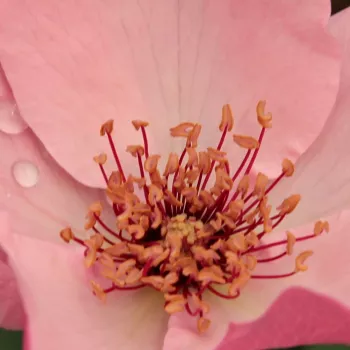
The open, single flowers with exposed burgundy stamens are easy for bees and other beneficial insects to visit, so your shingle or gravel bed gains both movement and wildlife interest alongside its soft pink colour – reassuring for the nature-conscious beginner. |
| Long-lived focal point in a mixed border |
As an own-root, historic hybrid tea it forms a stable framework that can regenerate from the base if cut back hard or after harsh winters, giving many seasons of ornamental value rather than a short-lived display – appealing to the long-term planner. |
| Wind-exposed but sheltered-by-structures spots |
Suited to UK gardens where fences, walls or verandas break the worst gusts, it copes well with breezy, damp conditions near the coast, provided its roots sit in well-drained soil that stays firm and anchored – ideal for the realistic coastal gardener. |
| Historic or romantic garden corners |
With its 1920s heritage, single silvery-pink petals and occasional orange-red hips, it fits beautifully into period-inspired schemes, cottage borders and “old Cornwall” corners, building charm year by year – perfect for the romantic traditionalist. |
Styling ideas
- Sea-breeze border – Combine Dainty Bess with blue Festuca and sea kale on free-draining soil to echo shingle beaches and soft coastal light – for coastal-style lovers.
- Teacup terrace – Plant one shrub in a 50 litre pot with trailing thyme around the rim to enjoy scented cut stems right by your outdoor table – for balcony and veranda owners.
- Romantic drift – Repeat three plants at 90 cm in a mixed border with Campanula glomerata for airy, long-season colour and an old-fashioned feel – for cottage-garden enthusiasts.
- Wildlife nook – Underplant with low lavender and leave some stems for hips so bees, hoverflies and birds all benefit from the same planting pocket – for nature-friendly gardeners.
- Calm front garden – Use a single specimen by the path with soft grasses and Artemisia for movement, fragrance and a gently formal welcome – for busy urban homeowners.
Technical cultivar profile
| Characteristic |
Data |
| Name and registration |
Hybrid tea rose ‘Dainty Bess’, historic exhibition and garden cultivar; registered and traded under the same name, also listed as a heritage rose in specialist collections. |
| Origin and breeding |
Bred in the United Kingdom by William Edward Basil Archer from ‘Ophelia’ × ‘Kitchener of Khartoum’; introduced in 1927 through Hazlewood Bros. Pty. Ltd. for international distribution. |
| Awards and recognition |
Recognised repeatedly by the Royal National Rose Society, receiving Show and Trials certificates across multiple decades from 1930 to 1953 for consistent garden and exhibition quality. |
| Growth and structural characteristics |
Medium-sized, upright shrub reaching about 100–140 cm tall and 80–110 cm wide, with dark green foliage of medium density and moderate prickliness, suitable for borders and specimen use. |
| Flower morphology |
Single to semi-single flat blooms, 5–12 petals, large-flowered on mainly solitary stems; remontant habit provides a main flush and a generous second flowering during the season. |
| Colour data and phenology |
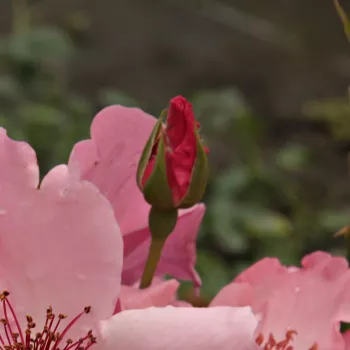
Soft, silky light pink with a delicate silvery tone; buds open pale silvery pink then fade to very pale, almost translucent pink with a fine silvery edge, contrasted by deep burgundy stamens. |
| Fragrance and aroma |
Clearly perceptible, medium-strength tea scent with a gentle spicy nuance, noticeable on still days and especially around seating areas, adding a refined historic character to nearby spaces. |
| Hip characteristics |
Produces moderate numbers of small, 10–14 mm ellipsoid hips, coloured orange-red; they can add discreet late-season ornamental interest and a wildlife food resource if spent blooms are left. |
| Resistance and winter hardiness |
Hardy to approximately −26 to −23 °C (USDA 5b, RHS H7); shows resistance to powdery mildew and black spot, with moderate susceptibility to rust, generally reliable under typical UK conditions. |
| Horticultural recommendations |
Best in sunny positions with well-drained soil; space 80–150 cm depending on use. Medium maintenance, occasional plant protection may be needed; suitable for borders, hedging and cut flowers. |
Dainty Bess offers long-season blooms, gentle fragrance and dependable garden structure in a durable own-root form that rewards patient gardeners with many years of relaxed coastal or family-garden enjoyment, making it a thoughtful choice to plant now.