DAUPHINE™ – pink bedding floribunda rose - Gaujard
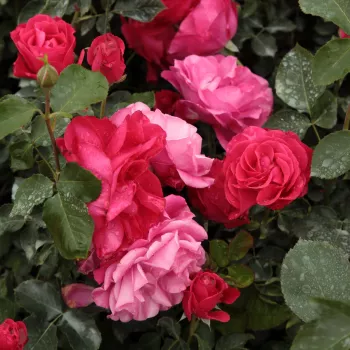
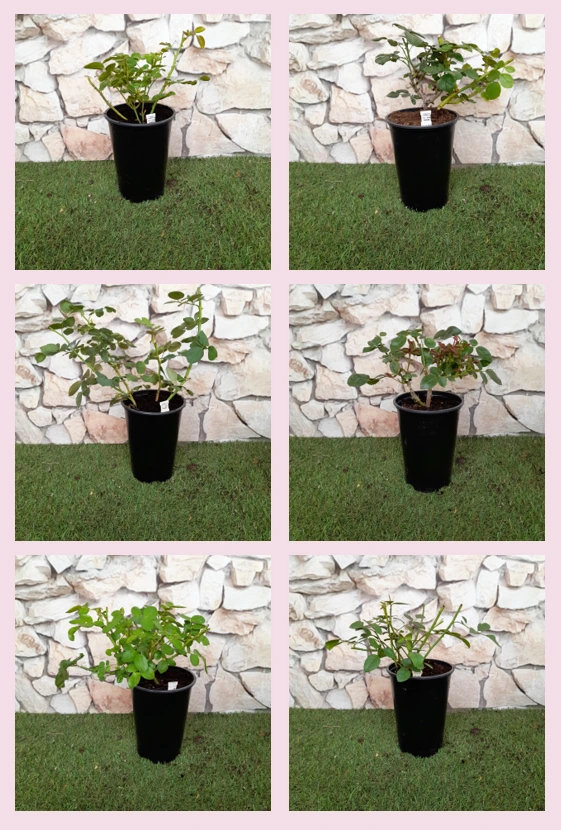
Imagine a sheltered coastal veranda where sea breezes meet glossy dark-green foliage, and clusters of vivid pink blooms glow against shingle and pale gravel. DAUPHINE™ is an easy-going floribunda bedding rose that slips neatly into family gardens, thriving even where winds roll in from the coast, with reliable structure that helps anchoring roots cope with exposed conditions. Its upright, compact habit keeps borders tidy, while the dense canopy of leaves enhances an elegant, well-kept look without demanding constant effort from you. As an own-root rose it offers reassuring longevity, quietly regenerating after pruning or harsh weather and maintaining steady ornamental value year after year. With medium maintenance needs, occasional deadheading and basic watering are usually enough for generous, repeat flowering from early summer well into autumn. Over time you see the plant settle in at a comfortable pace – in the first season focusing on building strong roots, in the second filling out with sturdier shoots, and by the third rewarding you with its full bedding character and abundant colour, creating a refreshing, seaside-inspired focal point you can enjoy with minimal fuss.
Usage options
| Target area | Reasoning |
|---|
| Front-of-border bedding strip in a family garden |
The upright yet compact habit and dense foliage make DAUPHINE™ ideal for neat front-of-border planting, giving a structured, elegant look without taking over the space. Regular repeat flowering keeps colour near paths and lawns where it is most appreciated by busy householders seeking reliable impact with modest care for beginners. |
| Coastal-style shingle or gravel bed |
This rose copes well in free-draining, coastal-inspired beds when planted into properly prepared soil pockets, combining vivid pink clusters with sea kale, Festuca and salt-tolerant perennials for a beach-garden feel. Its steady framework stands up to breezy sites, offering a stable focal point even where wind and rain are frequent along exposed UK coasts for coastal-veranda owners. |
| Medium to large patio container (40–50 litres+) |
In a generous container of at least 40–50 litres, the own-root form builds a durable, well-branched plant that can be kept near seating areas for close-up enjoyment. With adequate drainage and regular watering, it provides season-long flowers on a manageable footprint, well suited to smaller urban patios and balconies for busy gardeners. |
| Low flowering hedge along a path or drive |
Planted at 40 cm intervals, its upright structure and dense foliage knit together into a low hedge, adding formality and colour without requiring complex pruning skills. The moderate maintenance level suits those happy to deadhead a few times a season, in return for a refined pink border that frames entrances and family paths for homeowners. |
| Mixed shrub and perennial border |
Clustered, very double flowers bring strong blocks of pink that contrast beautifully with airy grasses and blue-flowering companions, while the dark-green, glossy leaves provide a calm backdrop. The plant’s steady, medium height allows underplanting without shading neighbours excessively, fitting naturally into layered, mixed borders for hobby gardeners. |
| Small specimen rose near a seating nook |
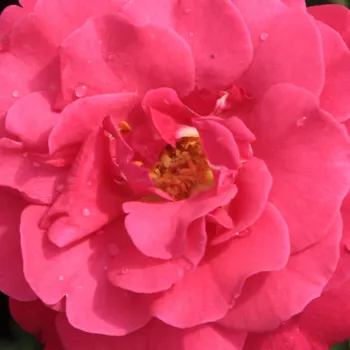
As a solitary plant at around 80 cm spacing, DAUPHINE™ offers a refined, almost “mini-shrub” presence, its cupped, very double blooms giving a classic look in a modest footprint. The delicate fragrance is subtle rather than overpowering, ideal where you sit close for tea or reading, especially for those who prefer gentle scents for sensitive noses. |
| Cutting patch for informal indoor arrangements |
The large, fully double flowers hold their shape well in the vase, and the long, upright stems are easy to cut and place in jugs or simple glass cylinders. While the fragrance is light, the strong colour and form create striking, long-lasting displays, suiting people who enjoy cutting a few stems without maintaining a full cutting garden for interiors lovers. |
| Refined formal bed in front of evergreen structure |
Set against clipped Ilex or other evergreen backdrops, the glossy foliage and steady flowering rhythm bring a tailored, “designed” feel with limited effort. The plant’s moderate pest-resistance and predictable growth habit help maintain a smart look across seasons, even where wind and rain are common on open sites, which reassures design-conscious yet time-poor owners. |
Styling ideas
- Shingle elegance – Combine DAUPHINE™ with sea kale, Festuca and pale gravel for a chic coastal look that shrugs off breezy weather – ideal for coastal-veranda owners wanting easy structure and colour.
- Tea-corner – Place one rose in a large pot beside a bistro set, underplant with low lavender for soft scent and texture – perfect for beginners creating a calm nook with minimal upkeep.
- Formal-border – Repeat-plant in front of clipped Japanese holly, edging with low yarrow to echo the pink tones – suits homeowners seeking neat, traditional beds that stay tidy through the season.
- Soft-hedge – Line a path at 40 cm spacing, interspersing every few plants with bluebeard for late-season contrast – good for families wanting a gentle, flowered boundary without complex pruning.
- Patio-showpiece – Grow in a 50-litre container on a sunny terrace, surrounded by decorative gravel and a few drought-tolerant grasses – ideal for busy urban gardeners wanting long-lasting colour in limited space.
Technical cultivar profile
| Parameter | Data |
|---|
| Name and registration |
DAUPHINE™ is a floribunda bedding rose traded as “Dauphine™ Bedding rose Gaujard”; exhibition floribunda and shrub rose category; ARS exhibition name “Dauphine”; unregistered cultivar name. |
| Origin and breeding |
Bred by Jean‑Marie Gaujard, Roseraies Gaujard, Lyon, France, from an unknown seedling × ‘Opera’ seedling cross; introduced by Roseraies Gaujard in the 1955/56 season as a garden floribunda. |
| Growth and structural characteristics |
Upright floribunda reaching about 85–115 cm in height and 60–80 cm spread, with dense, dark-green, glossy foliage and moderate prickles; forms a bushy, well-filled bedding or low-hedge plant under normal garden care. |
| Flower morphology |
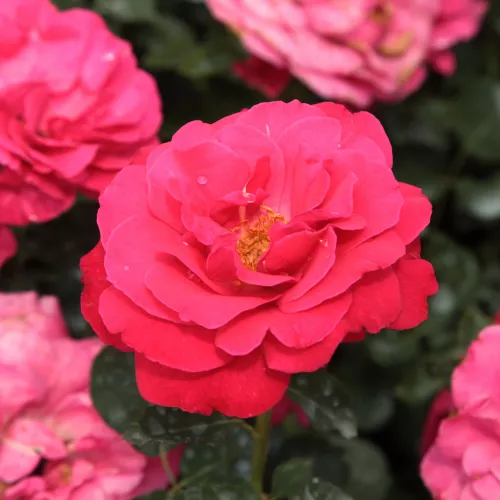
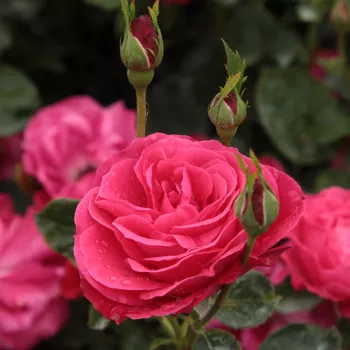
Large, very double, cupped blooms with 40+ petals, borne mainly in clusters; remontant with abundant second flush; typical flower size L (approx. 2.75–3.95 in), suited to both bedding display and informal cutting. |
| Colour data and phenology |
Vivid cyclamen‑raspberry pink overall, carmine outer petals and deeper inner shades; edges lighten as blooms mature, softening to burgundy‑raspberry with rosy‑powdery margins; colour retention generally good across the flowering season. |
| Fragrance and aroma |
Fragrance is very weak and only lightly perceptible at close range, with a delicate, classic rosy character that adds refinement without dominating nearby seating or dining areas, particularly suitable for fragrance-sensitive users. |
| Hip characteristics |
Hip set is usually sparse due to the very double flowers; when present, produces small, ellipsoidal hips around 10–14 mm in diameter, coloured orange‑red and mainly of ornamental rather than wildlife or culinary value. |
| Resistance and winter hardiness |
Displays moderate overall disease resistance, with good tolerance to powdery mildew and black spot and moderate susceptibility to rust; hardy to approximately −21 to −18 °C (RHS H7, USDA 6b, Swedish zone 3) under typical garden conditions. |
| Horticultural recommendations |
Best in sunny positions with well-prepared soil; spacing 50 cm for bedding, 40 cm for hedges, 80 cm as specimens; maintenance medium, needing occasional pest control, watering in drought, and deadheading due to weak self-cleaning. |
DAUPHINE™ offers compact, upright structure, generous repeat flowering and dependable long-term performance from its own-root form, making it a refined choice for low-fuss coastal-style beds or patios you can enjoy for many seasons to come.