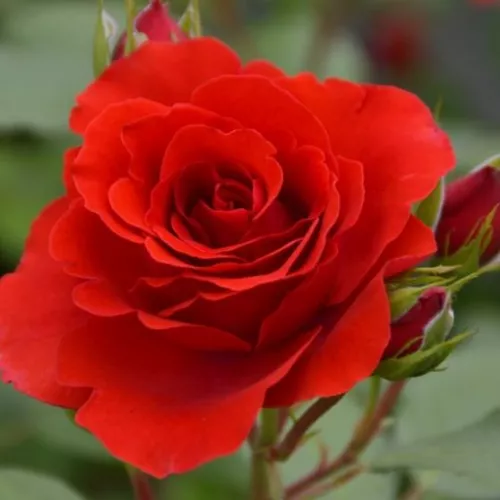
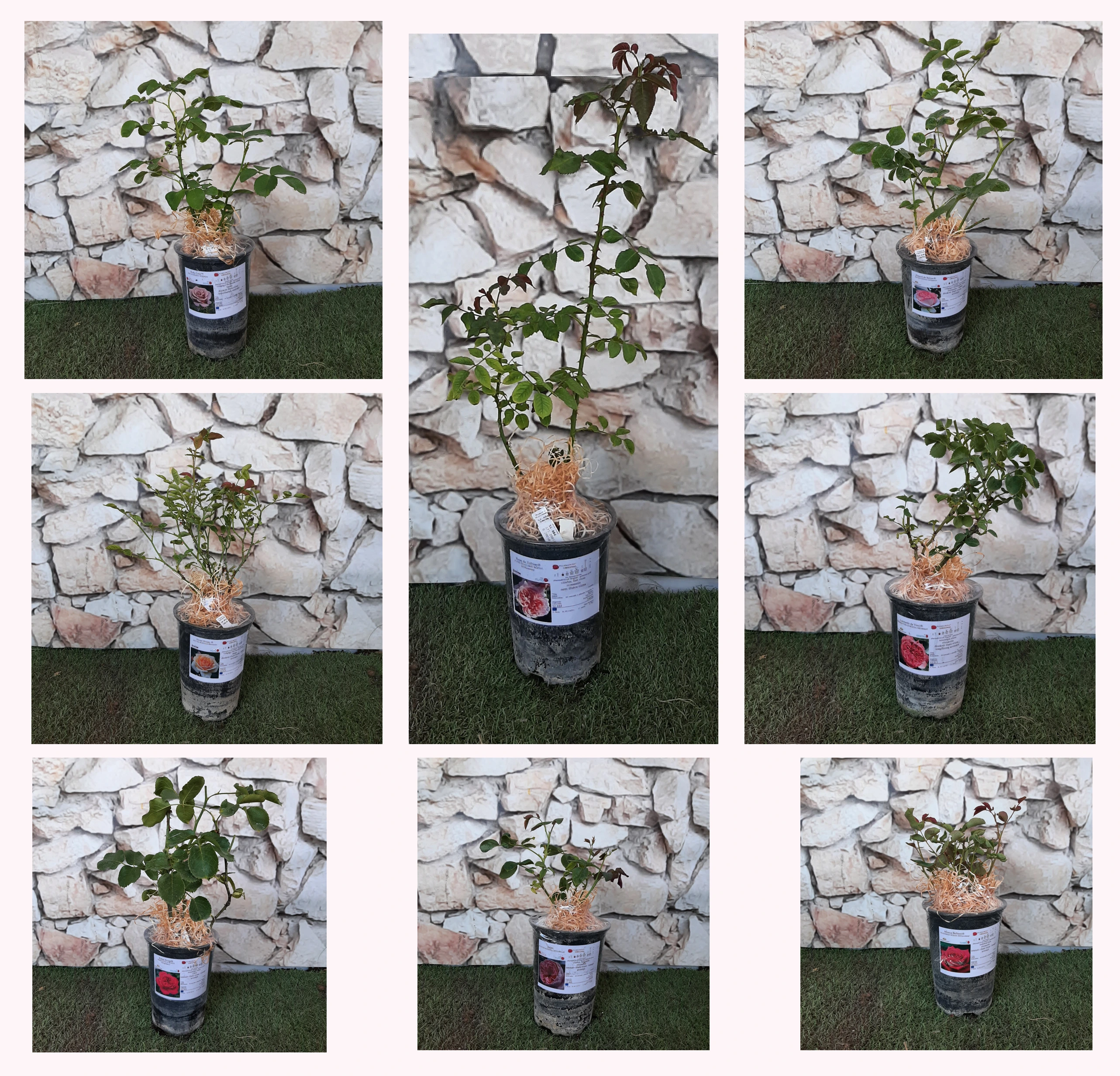
DELGROUGE – red climbing rose for coastal arches and walls
Imagine returning from the shore to sit with afternoon tea, a light breeze carrying the scent of salt as the velvety red blooms of DELGROUGE climb around you, creating a sheltered sanctuary for family moments. This own-root climber is bred for reliable structure and long life, giving you a stable, leafy screen that copes well with blustery UK weather while still enjoying a well-drained, thoughtfully prepared planting pocket. In its first seasons it focuses on settling in, then pushes stronger new shoots, and by the third year it typically reaches full ornamental impact, rewarding patient gardeners with a generous flush, a plentiful second flowering and dense, slightly glossy foliage. On a Cornish or Devon veranda or along a shingle garden fence, its rich red flowers lend a subtly romantic character to small, wind-kissed spaces and pair beautifully with low, silver-greys and coastal perennials for an easy-care, quietly refreshing display.
Usage options
| Target area | Reasoning |
|---|
| Coastal veranda windbreak |
Trained on a trellis or wire frame, this climber forms a leafy, flowered screen that softens wind while leaving you a bright, open seating area, ideal where breezes are frequent but you still want a calm corner for beginners. |
| Family garden arch or arbour |
Its medium maintenance needs and strong framework make it well suited to arches and arbours, where it can be tied in once or twice a year, then left to provide a long-lived, romantic entrance for relaxed homeowners. |
| House wall or sunny fence |
Against a warm wall or sheltered fence it uses vertical space efficiently, giving you height and colour without taking over the border, an easy way to add drama where ground space is limited for busy urbanites. |
| Shingle or gravel strip with improved pocket |
Planted into a good-sized, well-drained soil pocket within shingle, it anchors securely yet still appreciates moisture, a practical solution where you want structure without reworking the whole garden for coastal-style gardens. |
| Large container on sheltered terrace |
In a sturdy 40–50 litre container with regular watering, this own-root climber offers vertical colour on terraces where digging is impossible, and can be moved slightly if wind direction changes, ideal for flexible layouts. |
| Year-round structure for mixed coastal border |
The dense, dark green foliage and steady framework provide background structure outside flowering times, allowing seasonal perennials to shine against it, a long-term backbone for thoughtfully planned borders. |
| Low-input, long-term planting scheme |
Once established from its own roots, it regenerates well from the base and maintains ornamental value with minimal intervention, fitting neatly into low-input planting plans that still expect decades of service for patient gardeners. |
| Romantic “girly” seating nook |
The velvety dark red blooms and remontant second flush create a softly dramatic backdrop to bistro sets or benches, perfect for tea, reading or seaside daydreaming in compact, mood-led corners cherished by stylists. |
Styling ideas
- Sea‑view pergola – Train DELGROUGE along a simple timber pergola, underplant with sea kale and low Festuca for a soft blue-grey base – perfect for coastal veranda owners who want structure without fuss.
- Harbour balcony – Grow in a 40–50 litre container with trailing sweet alyssum at the base to echo seaside shingle – ideal for flat dwellers overlooking busy quays who crave an easy romantic vertical accent.
- Red‑velvet arch – Cover a narrow arch with this rose, edging the path with Lavandula and pink Verbena hastata for a “girly” colour story – suited to beginners planning a simple but striking garden entrance.
- Sheltered tea corner – Use DELGROUGE as a partial windbreak on wires around a small patio, combining with potted grasses for movement – a calming choice for homeowners wanting a quiet spot for afternoon tea.
- Coastal cottage fence – Let stems weave along a picket or post‑and‑rail fence, softened with hemp‑agrimony in the border – appealing to those recreating a relaxed Cornish cottage feel with minimal training work.
Technical cultivar profile
| Property | Data |
|---|
| Name and registration |
Climbing rose cultivar DELgrouge, marketed as DELGROUGE – red climbing rose, climber - Delbard, also known in exhibition circles as Liliana; belongs to the Large Colours collection of large-flowered climbing roses. |
| Origin and breeding |
Bred by Georges Delbard, Pépinières et Roseraies Georges Delbard SA, France; parentage not disclosed; introduced and first distributed by Delbard in 2001, with the same year used for formal registration. |
| Growth and structural characteristics |
Vigorous climbing habit, typically 200–320 cm high with a 140–230 cm spread; moderately thorny shoots carry dense, slightly glossy dark green foliage, forming a substantial, trainable vertical framework for supports. |
| Flower morphology |
Large, cup-shaped, semi-double clustered blooms with approximately 13–25 petals; remontant flowering pattern provides a generous first flush followed by a notably plentiful second display through the main season. |
| Colour data and phenology |
Velvety mid- to dark red flowers (RHS 53A, 46A; ARS mr) with excellent colour retention, only slightly fading in strong sun; newly opened blooms are bright ruby-red, deepening towards dark claret as they age. |
| Fragrance and aroma |
Fragrance is very weak and only subtly noticeable at close range; aromatic value is secondary to the variety’s visual and structural impact, making it primarily a colour and form feature rather than a scent-led rose. |
| Hip characteristics |
Limited hip set due to semi-double flower form, but where present, hips are ovoid, bright red, around 12–16 mm in diameter, offering modest late-season interest without seeding the area excessively. |
| Resistance and winter hardiness |
Hardy to approximately −21 to −18 °C (RHS H7, USDA 6b, Swedish Zone 3); disease resistance is moderate to powdery mildew, black spot and rust, performing reliably with basic monitoring and timely care. |
| Horticultural recommendations |
Best on pergolas, arches, walls, fences or trellises; prefers full sun to partial shade with improved drainage; plant about 165–300 cm apart depending on use, allowing space for training and future framework development. |
DELGROUGE offers long-lived vertical structure, generous repeat flowering and reliable foliage from an own-root plant that settles in for the long term, making it a thoughtful choice for your next coastal or family-garden feature.