DELMILLON – red bedding floribunda rose – Delbard
Imagine late afternoon light over a Cornish veranda, sea breeze in your hair and a low hedge of deep red DELMILLON roses giving gentle shelter while you sip tea and shake sand from your shoes. This compact floribunda offers season-long clusters of romantic, very double blooms that keep their rich colour, creating reliable drama in even the smallest family garden. Its naturally healthy foliage and proven hardiness mean solid, low-fuss resilience in exposed, breezy spots. As an own-root plant it builds strength steadily, rewarding basic care with long-lived stability and easy regeneration if cut back hard. Ideal for coastal beds, shingle borders or a statement pot of at least 40–50 litres, where its bushy habit brings full coverage without complicated pruning. Over the first three years it quietly anchors in, first concentrating on roots, then on sturdy shoots, before finally delivering its full ornamental impact and long-season flowering in your everyday outdoor rituals.
Usage options
| Target area | Reasoning |
|---|
| Coastal shingle or exposed Cornish/Devon beds |
The bushy, medium-height framework makes an excellent living wind filter for low seating areas, especially in coastal gardens where reliable structure matters more than perfection, supporting those who favour relaxed, weather-tolerant planting for the family. |
| Long-season flowering family borders |
Remontant clusters of dark red, very double blooms keep beds lively from early summer well into autumn, extending interest between school holidays and weekends without needing constant deadheading, ideal for time-poor gardeners seeking colour for the everyday. |
| Low-maintenance, climate-conscious planting schemes |
Good resistance to common rose diseases reduces spraying and fuss, while hardy growth takes typical UK winters in its stride, a sound choice when you want dependable structure and flowers with fewer inputs, particularly appealing to environmentally aware households. |
| Own-root planting for long-lived rose areas |
As an own-root rose it can regenerate strongly from the base if cut back by weather or pruning mishaps, avoiding graft failures and maintaining a stable look over many seasons, reassuring anyone planning a garden to grow with their children. |
| Coastal veranda containers (40–50 litres+) |
In a large, well-drained pot of at least 40–50 litres, its compact, bushy habit gives generous flowering without overwhelming small terraces, echoing the feel of a seaside bed while keeping care to watering and light feeding for busy urban owners. |
| Small front gardens and path edging |
The medium height and dense foliage form a neat, legible line along paths or drives, while the rich red colour reads clearly from the pavement, bringing formality without complexity, well suited to homeowners wanting easy kerb appeal for visiting friends. |
| Mixed beds with grasses and coastal perennials |
Its steady, upright framework and saturated flower colour balance the movement of Festuca and the shapes of sea kale and sedges, working especially well where good drainage and anchoring are considered together to handle wet, windy spells for aesthetic-minded beginners. |
| Roses for cooler, exposed or inland UK sites |
With hardiness down to around –30 °C and reliable disease resistance, this cultivar copes confidently with colder snaps and changeable weather, building a tough backbone of flowering shrubs for gardeners who want certainty through the seasons as novices. |
Styling ideas
- Seaside-Hedge – Plant a loose single row along a shingle path, underplant with Festuca and sea kale to echo dunes, letting the deep red blooms glow against silvery foliage – for coastal-style enthusiasts.
- Veranda-Pot – Use one plant in a 50-litre clay pot by a sheltered seating corner, with trailing thyme at the rim to soften edges, creating an easy-maintenance, evening-tea focus – for busy veranda owners.
- Ruby-Ribbon – Edge a family lawn with a staggered line, spaced for airflow, weaving in lavender clumps between plants for scent and pollinator support – for hobby gardeners who like simple structure.
- Cornish-Mix – Combine with Carex morrowii and pale stone mulch in a raised bed, letting the glossy foliage contrast with grasses for a neat but relaxed look – for design-conscious small-garden keepers.
- Classic-Bed – Mass-plant in a square or hexagonal grid to form a solid red carpet, leaving room for a central bench or birdbath as a focal pause point – for those seeking traditional rose presence.
Technical cultivar profile
| Parameter | Data |
|---|
| Name and registration |
Floribunda bed rose from the Bedding roses collection; registered as DELmillon, marketed as Delmillon – red bedding floribunda rose – Delbard; exhibition category shrub rose. |
| Origin and breeding |
Bred by Georges Armand Delbard at Pépinières et Roseraies Georges Delbard, France; parentage unknown; introduced and registered in 2010 by Georges Delbard SA. |
| Growth and structural characteristics |
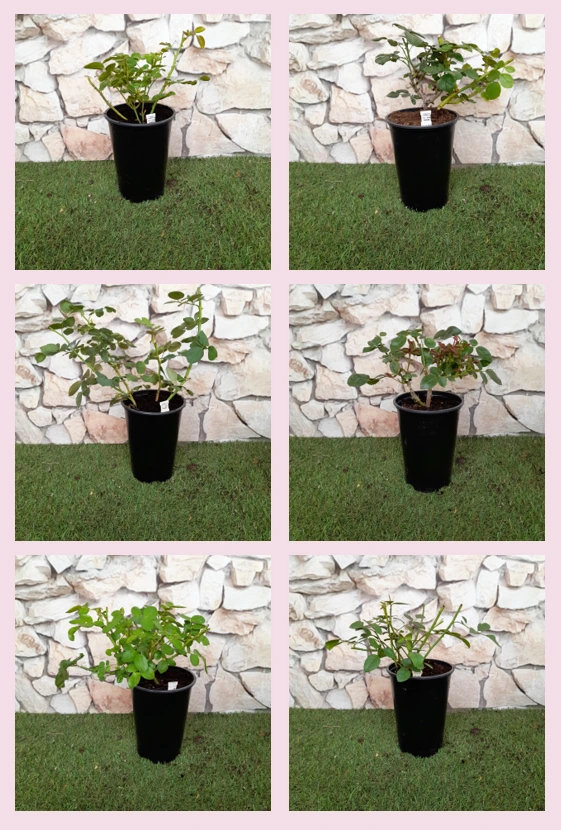
Bushy, well-branched shrub, typically 70–95 cm high and 80–120 cm wide; dense, glossy mid-green foliage; moderately thorny shoots forming a compact, cohesive bedding plant. |
| Flower morphology |
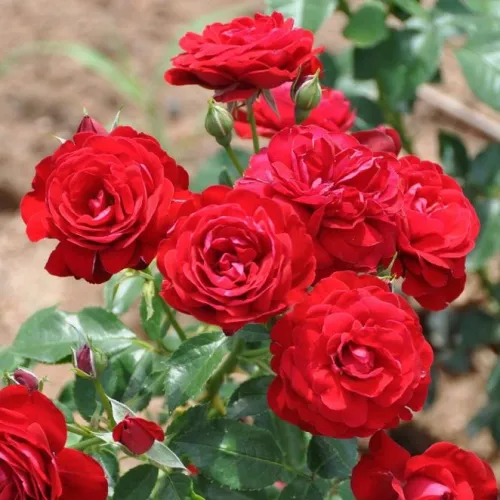
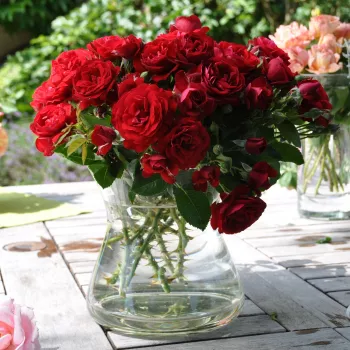
Floribunda clusters of medium-sized, cup-shaped, very double blooms with over 40 petals; remontant flowering with an especially generous second flush in suitable conditions. |
| Colour data and phenology |
Rich, dark red flowers (RHS 46A, ARS DR); colour lightens only slightly with age, holding a deep crimson effect from bud to fall, providing strong visual impact across the flowering period. |
| Fragrance and aroma |
Primarily ornamental; fragrance is very weak and barely noticeable, suiting gardeners who prefer visual effect without strong scent or who combine it with other aromatic companion plants. |
| Hip characteristics |
Produces few hips due to very double flowers; occasional small, globose, orange-red hips around 5–8 mm in diameter may appear late in the season without dominating the plant. |
| Resistance and winter hardiness |
Rated resistant to powdery mildew, black spot and rust; hardy approximately to –32 to –29 °C (RHS H7, Swedish Zone 5, USDA 4b), suitable for most exposed UK garden conditions. |
| Horticultural recommendations |
Best in sunny positions with free-draining soil; suitable for beds, low hedging, and large pots; plant 80 cm apart for mass bedding or 70 cm for edging; maintenance generally low. |
DELMILLON combines compact, richly coloured flowering, strong disease resistance and durable own-root growth, making it a thoughtful choice for long-lived, easy-care family planting you can select with confidence.