DENTELLE DE BRUXELLES – carmine-red rambler climbing rose – Lens
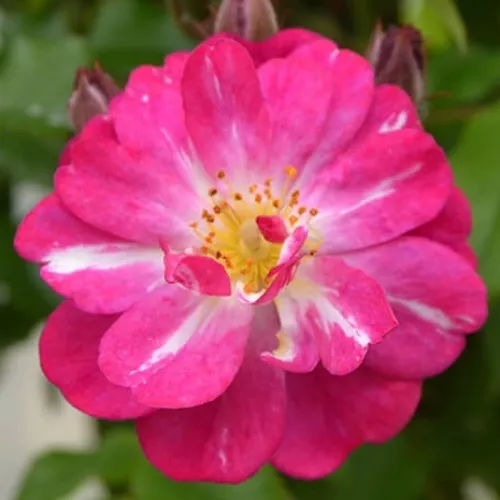
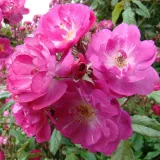
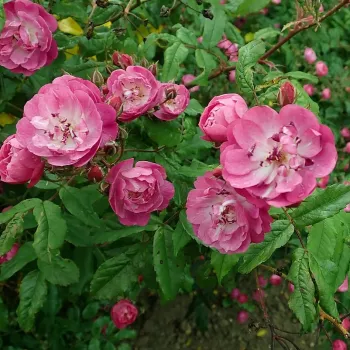
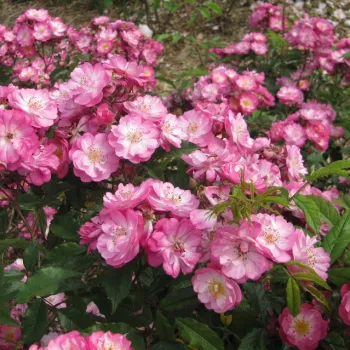
Along a breezy Cornish veranda or Devon shingle path, DENTELLE DE BRUXELLES offers softly cascading clusters of carmine-red blooms, creating a living screen that feels like fine garden lace. This bushy rambler forms dense, mid-green foliage that quickly knits together into a natural windbreak, giving you a more sheltered corner for tea outdoors and quietly resisting blustery coastal days with reliable anchoring in well-drained soil. Its compact height for a rambler makes it easier to place in family gardens and small terraces, while its own-root form favours long-term stability, steady regrowth and an extended lifespan with less intervention. Small, semi-double flowers appear in generous clusters through summer, with a second flush that keeps the display continuous, and mild fragrance plus open centres welcome visiting pollinators without demanding expert care. In autumn, strings of small carmine-red hips add extra seasonality against the foliage, carrying the coastal mood from high summer right into the colder months.
Usage options
| Target area |
Reasoning |
| Coastal veranda windbreak |
Trained along a rail or trellis, its dense foliage and bushy habit build a green, lacy screen that softens salty breezes yet stays manageable in height, suiting relaxed coastal corners for beginners. |
| Shingle or gravel front garden |
On well-drained shingle, its consistent growth and own-root resilience form a long-lived feature that copes well with exposed sites, gradually settling into a naturalistic coastal scene for busy homeowners. |
| Family terrace in a large container |
In a 40–50 litre pot with a sturdy obelisk, it offers vertical colour without taking much floor space, and the self-cleaning blooms reduce deadheading work for time-pressed gardeners. |
| Small pollinator-friendly corner |
The semi-double flowers with easily reached stamens attract bees, while remontant blooming ensures nectar over a long season, adding gentle movement and life for wildlife lovers. |
| Romantic “girly” archway |
Clusters of carmine-red flowers fading to soft pink and lilac tones create a delicate, lace-like effect on an arch, forming a playful, feminine entrance for coastal-style enthusiasts. |
| Low-maintenance boundary screen |
Its bushy, medium-height rambler habit covers fences with fewer gaps, and moderate disease resistance stays acceptable with simple care routines for casual gardeners. |
| Long-season focal point in clay soils |
Given improved drainage, deep planting and room to root, its own-root structure builds strength year by year, giving fuller top growth and flowers after a patient first establishment phase for forward planners. |
| Autumn interest in mixed planting |
After summer flowering, abundant small carmine-red hips keep the display going into autumn, pairing well with late perennials and grasses for four-season planners. |
Styling ideas
- Seaside-Veranda Screen – Train it along a veranda balustrade with blue Festuca and white sea kale beneath to echo breakers and foam – ideal for coastal-style lovers.
- Romantic-Girly Arch – Let the carmine-red clusters soften over a metal arch, underplant with pale pink penstemons for a playful, feminine entrance – perfect for dreamier gardeners.
- Compact-Cottage Corner – Grow in a 50 litre tub with a slim obelisk, edging with lavender to add scent and structure – suited to small-terrace owners.
- Wildlife-Ribbon Border – Allow it to scramble along a low fence mixed with bee balm and liatris, creating a loose, pollinator-friendly tapestry – good for nature-focused families.
- Autumn-Hip Showcase – Combine its red hips with ornamental grasses and dusky perennials in a narrow side bed for subtle late-season colour – appealing to low-maintenance planners.
Technical cultivar profile
| Parameter |
Data |
| Name and registration |
Rambler and shrub type climbing rose, registered as LENkivi, marketed as DENTELLE DE BRUXELLES; exhibition category climbing rose and garden display plant for varied landscape use. |
| Origin and breeding |
Bred by Louis Lens in Belgium from ‘Kiftsgate’ × ‘Violet Hood’; registered in 1986 and introduced in 1988 by Lens Roses and Pépinières Louis Lens SA. |
| Growth and structural characteristics |
Bushy climber to around 180–280 cm high and 120–200 cm wide, moderately thorny, with dense, slightly glossy mid-green foliage flushed red when young, forming good cover. |
| Flower morphology |
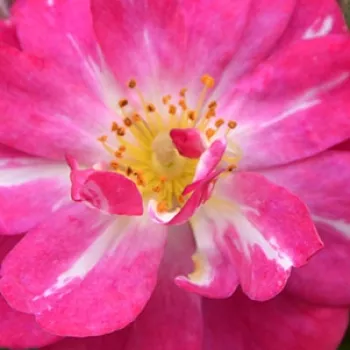
Small, semi-double cup-shaped flowers, 0.5–1.5 inches, in generous clusters; around 13–25 petals; remontant with a notably abundant second flush in suitable conditions. |
| Colour data and phenology |
Deep carmine-red with subtle violet tones; buds dark carmine, opening vivid, then fading to pale pink with whitish-lilac centre; very good colour retention with a luminous, soft glow. |
| Fragrance and aroma |
Mildly scented blooms with a subtle, unobtrusive rose fragrance; semi-double form and accessible stamens provide good bee appeal while remaining discreet near seating. |
| Hip characteristics |
Produces many small, spherical hips, about 6–10 mm across, carmine-red in colour and of noticeable ornamental value from late season into autumn and early winter. |
| Resistance and winter hardiness |
Medium resistance to common rose diseases; tolerates moderate heat and drought with watering in dry spells; hardy to about −32 to −29 °C, RHS H7, USDA zone 4b, Swedish zone 5. |
| Horticultural recommendations |
Suited to beds, parks, specimen and urban spaces; plant 140–240 cm apart, 0.4–0.5 plants/m²; prefers sun or partial shade with reliable drainage and occasional plant protection. |
DENTELLE DE BRUXELLES offers long-season colour, a refined wind-softening screen and attractive hips, while its own-root form supports dependable, low-fuss growth over many years, making it a thoughtful choice for relaxed coastal-style gardens.